Category: Bitcoin News

  • Solv Replaces LayerZero With Chainlink for Safer Bitcoin

    Solv Replaces LayerZero With Chainlink for Safer Bitcoin

    The rapid growth of tokenized Bitcoin has transformed the decentralized finance landscape, allowing Bitcoin holders to unlock liquidity and participate in cross-chain ecosystems without selling their BTC. As blockchain interoperability becomes increasingly important, protocols handling tokenized assets face mounting pressure to ensure security, transparency, and reliability. This is especially true for projects managing billions of dollars in digital assets across multiple networks.

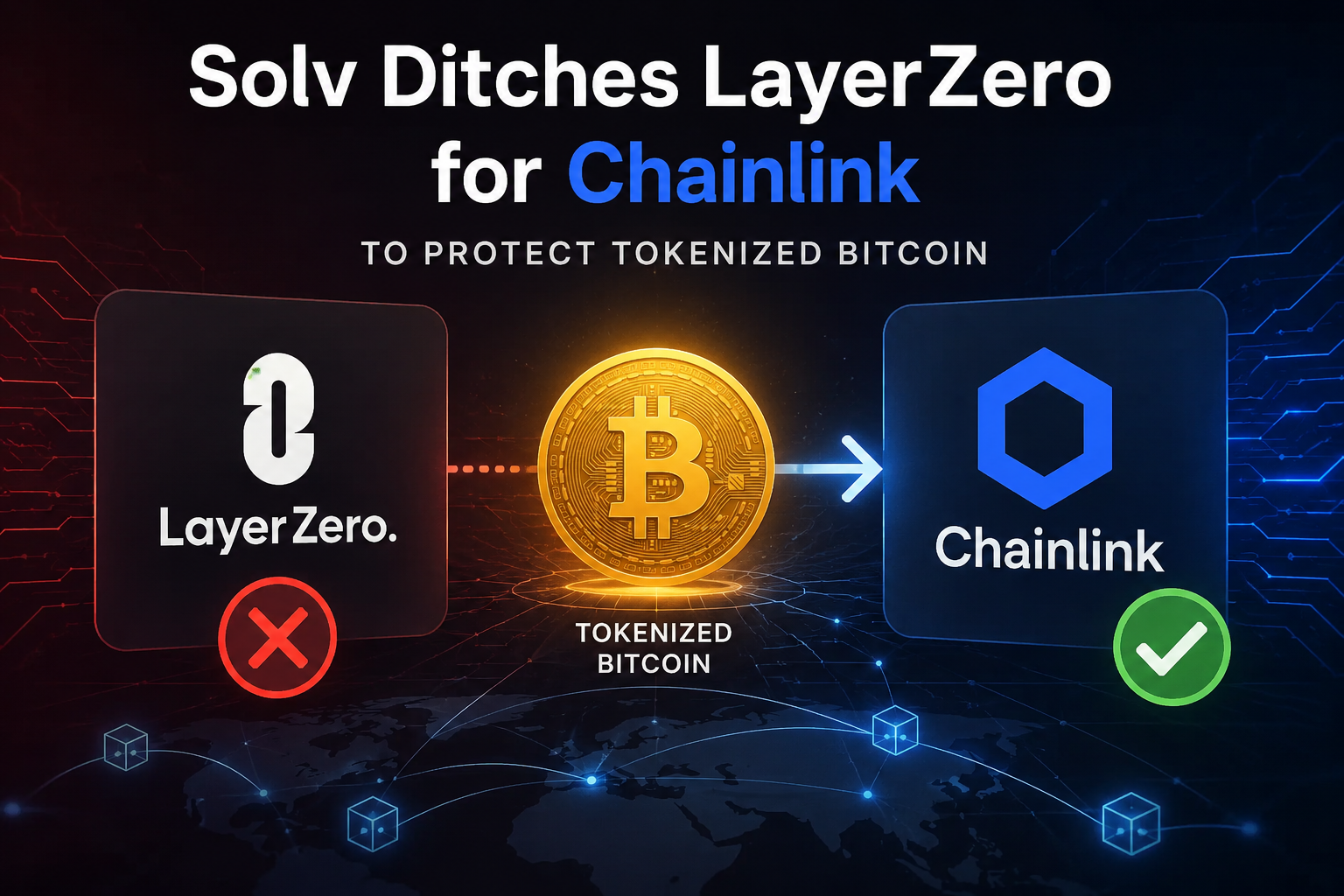
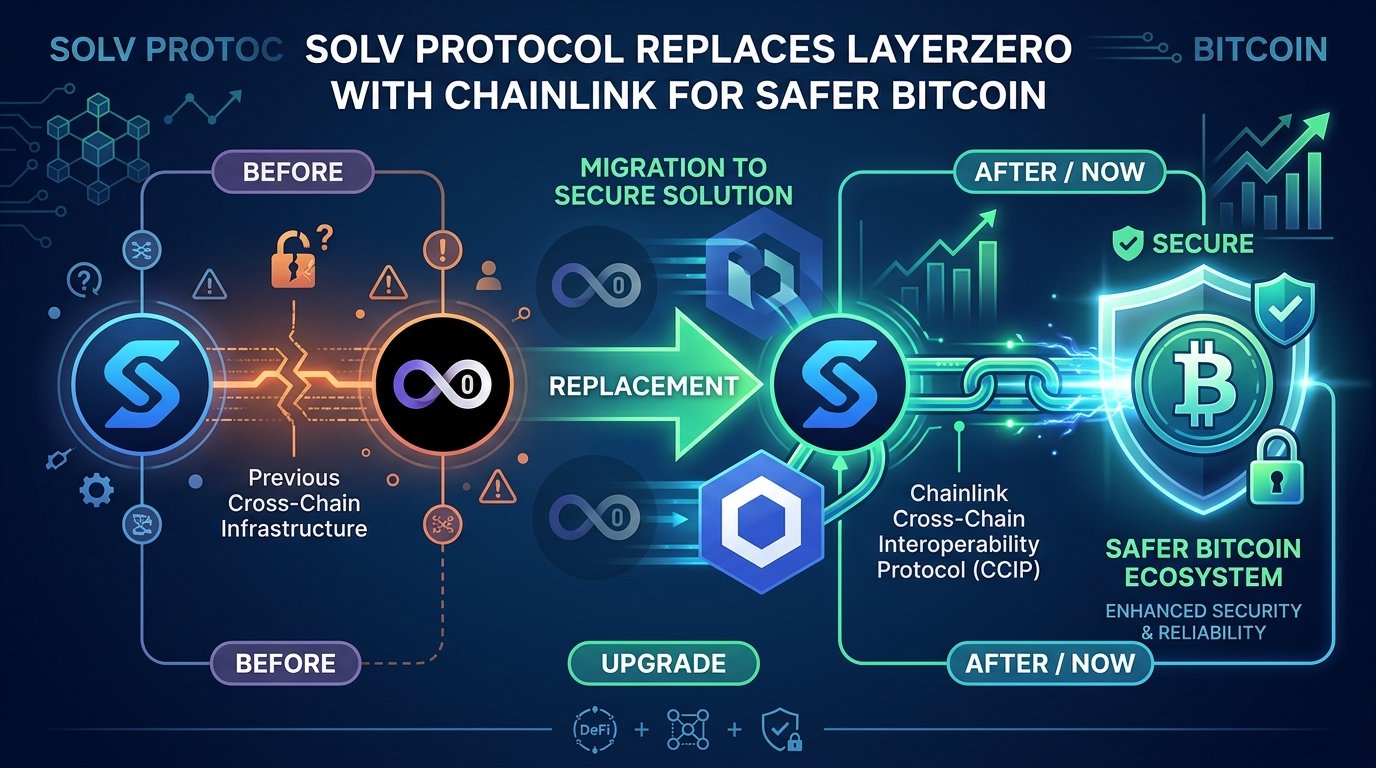
    In a significant development for the crypto industry, Solv Protocol has decided to move away from LayerZero and adopt Chainlink infrastructure to secure and manage its tokenized Bitcoin ecosystem. The decision reflects a broader trend within decentralized finance, where projects are prioritizing proven security frameworks and decentralized oracle solutions over experimental bridging systems.

    The move has sparked intense discussion among investors, developers, and the broader blockchain community. Many see the migration as a strategic step toward improving cross-chain security and reducing vulnerabilities associated with interoperability protocols. Others view it as a strong endorsement of Chainlink’s growing dominance in blockchain infrastructure and tokenized asset management.

    As tokenized Bitcoin continues expanding across DeFi applications, Solv’s decision may influence how future protocols approach security, interoperability, and decentralized asset transfers. Understanding why Solv abandoned LayerZero for Chainlink offers valuable insight into the future direction of the crypto market and the increasing importance of secure cross-chain communication.

    Understanding Solv Protocol and Tokenized Bitcoin

    Solv Protocol has emerged as one of the leading platforms focused on Bitcoin-based decentralized finance solutions. The protocol aims to bridge traditional Bitcoin liquidity into modern DeFi ecosystems by enabling tokenized representations of BTC across multiple blockchains. Through this mechanism, Bitcoin holders can access staking opportunities, lending platforms, yield farming, and liquidity pools without leaving the decentralized environment.

    Tokenized Bitcoin refers to digital assets that represent real Bitcoin on another blockchain network. These assets maintain a peg to BTC while offering compatibility with smart contract ecosystems like Ethereum, BNB Chain, and other decentralized networks. As the demand for Bitcoin DeFi grows, tokenized Bitcoin has become a crucial component of cross-chain finance.

    However, managing tokenized Bitcoin requires secure interoperability infrastructure. Since these assets move between different chains, protocols depend heavily on bridging technologies and messaging systems to ensure assets remain safe and properly accounted for. A single exploit or messaging failure can potentially place millions of dollars at risk.

    This growing importance of interoperability security likely played a major role in Solv’s decision to transition away from LayerZero and embrace Chainlink infrastructure.

    Why Solv Abandoned LayerZero

    LayerZero gained popularity as a cross-chain messaging protocol designed to enable seamless communication between blockchains. Many DeFi applications integrated LayerZero because of its lightweight architecture and ability to support omnichain functionality. Despite its innovation, concerns surrounding cross-chain bridge vulnerabilities and messaging security have remained persistent within the industry.

    Solv’s decision to leave LayerZero appears rooted in the need for stronger infrastructure protection for tokenized Bitcoin assets. The crypto industry has witnessed several devastating bridge hacks over the last few years, resulting in billions of dollars in losses. Since tokenized assets rely heavily on accurate messaging and verification mechanisms, even minor weaknesses in infrastructure can lead to catastrophic outcomes.

    Security has become the top priority for protocols managing institutional-scale Bitcoin liquidity. As tokenized Bitcoin adoption increases, projects can no longer rely solely on speed and scalability; they must also ensure robust decentralization and tamper-resistant validation systems.

    By switching to Chainlink, Solv signals its preference for highly decentralized infrastructure backed by extensive security testing and industry adoption. The move suggests that Solv believes Chainlink offers a more resilient framework for safeguarding tokenized Bitcoin across multiple blockchain environments.

    The Growing Importance of Tokenized Bitcoin Security
    Solv Replaces LayerZero With Chainlink for Safer Bitcoin

    The rise of tokenized Bitcoin has introduced new opportunities but also new risks. Bitcoin was originally designed as a secure and decentralized store of value, but integrating BTC into DeFi ecosystems requires additional layers of infrastructure that can create vulnerabilities.

    Cross-chain bridges have become one of the most targeted areas in the crypto industry. Attackers often exploit weaknesses in validators, message relayers, or smart contract logic to steal funds. Because tokenizedBitcoin represents real BTC locked elsewhere, any exploit can directly threaten the underlying collateral backing those assets.

    Security concerns are amplified when billions of dollars are involved. Institutional investors and large Bitcoin holders increasingly demand enterprise-grade security before participating in DeFi ecosystems. Protocols that fail to demonstrate reliable protection mechanisms may struggle to attract long-term adoption.

    Solv’s migration to Chainlink highlights the evolving standards within decentralized finance. Instead of prioritizing experimental interoperability models, protocols are now focusing on battle-tested infrastructure capable of handling high-value assets securely.

    This transition also reflects the growing maturity of the crypto industry. Investors are becoming more aware of infrastructure risks, and projects are adapting by partnering with providers that have strong reputations for decentralization and operational reliability.

    How Chainlink Enhances Cross-Chain Security

    Chainlink has become one of the most trusted infrastructure providers in blockchain technology. Initially known for decentralized oracle services, Chainlink has expanded into interoperability solutions through its Cross-Chain Interoperability Protocol, commonly known as CCIP.

    CCIP was designed to facilitate secure communication between different blockchain networks while minimizing the risks associated with traditional bridges. Unlike some interoperability systems that rely on smaller validator sets or centralized components, Chainlink leverages decentralized oracle networks and advanced security models to verify cross-chain messages.

    One of Chainlink’s biggest advantages is its emphasis on layered security. The protocol uses decentralized nodes, independent risk management systems, and multiple verification mechanisms to reduce the chances of malicious activity or system failure. This approach aligns well with the security demands of tokenized Bitcoin ecosystems.

    For Solv, adopting Chainlink infrastructure could provide several important benefits. The protocol may gain stronger resistance against exploits, improved transparency for cross-chain operations, and enhanced trust among institutional participants. Since tokenized Bitcoin often serves as collateral for DeFi activities, maintaining confidence in the underlying infrastructure is essential.

    Chainlink’s reputation within decentralized finance also adds credibility to Solv’s ecosystem. Many leading DeFi protocols already rely on Chainlink for price feeds, automation, and interoperability services, making it one of the most established infrastructure providers in the industry.

    The Competitive Landscape Between LayerZero and Chainlink

    The competition between LayerZero and Chainlink reflects a broader battle for dominance in blockchain interoperability. As decentralized ecosystems expand, the need for secure and efficient communication between chains has become one of the industry’s most critical challenges.

    LayerZero positioned itself as an omnichain messaging solution capable of enabling seamless interoperability between networks. Its lightweight approach attracted many developers seeking scalability and flexibility. However, critics have occasionally raised concerns regarding centralization risks and the complexity of securing omnichain environments.

    Chainlink, on the other hand, has focused heavily on security-first infrastructure. Rather than prioritizing aggressive expansion alone, Chainlink emphasizes decentralized verification, risk mitigation, and enterprise-grade reliability. This difference in philosophy may explain why Solv chose to migrate its tokenized Bitcoin ecosystem.

    The move also underscores how interoperability is evolving beyond simple connectivity. Modern protocols are increasingly evaluating infrastructure providers based on security guarantees, institutional trust, and long-term sustainability rather than solely transaction speed or cost efficiency.

    As more projects adopt tokenized real-world assets and Bitcoin-based DeFi solutions, interoperability providers will likely face increasing scrutiny regarding their security architecture.

    Institutional Interest in Bitcoin DeFi

    Institutional interest in Bitcoin DeFi has grown significantly over the past two years. Traditionally, Bitcoin holders had limited opportunities to generate yield without selling their assets. Tokenized Bitcoin and decentralized finance platforms have changed this dynamic by enabling BTC holders to participate in lending, staking, and liquidity provision.

    Large investors, however, are highly sensitive to infrastructure risks. Institutions require robust custody mechanisms, transparent security practices, and reliable interoperability solutions before allocating significant capital to DeFi ecosystems.

    Solv’s transition to Chainlink may help position the protocol as a more institution-friendly platform for tokenized Bitcoin. By aligning with infrastructure known for security and decentralization, Solv can potentially strengthen investor confidence and attract larger pools of liquidity.

    This trend also highlights the broader convergence between traditional finance and decentralized finance. As institutional adoption grows, blockchain protocols are increasingly expected to meet higher standards for operational security, compliance readiness, and infrastructure resilience.

    The Future of Cross-Chain Interoperability

    Cross-chain interoperability remains one of the most important areas of blockchain innovation. The crypto ecosystem is fragmented across numerous networks, each with its own strengths, communities, and applications. Without secure interoperability, users face barriers when transferring assets or interacting with decentralized applications across different chains.

    The future of interoperability will likely depend on protocols capable of balancing scalability with strong security guarantees. The industry has already learned painful lessons from bridge exploits and infrastructure failures. As a result, projects managing high-value assets are becoming far more selective about the technology they integrate.

    Chainlink’s growing influence suggests that decentralized verification systems may become the preferred model for securing cross-chain communication. Solv’s migration reinforces this possibility by demonstrating that infrastructure decisions are increasingly driven by security considerations rather than marketing hype.

    Tokenized Bitcoin could become one of the largest sectors within decentralized finance over the next decade. If that happens, infrastructure providers capable of safely supporting Bitcoin liquidity across multiple chains will play a central role in shaping the future of blockchain finance.

    What This Means for the Crypto Industry

    Solv’s decision to replace LayerZero with Chainlink carries broader implications for the cryptocurrency industry. It sends a clear message that security is becoming the defining factor in infrastructure adoption decisions.

    Projects managing tokenized assets can no longer afford to overlook interoperability risks. As DeFi ecosystems mature, users expect protocols to implement highly secure frameworks capable of protecting funds even during extreme market conditions or sophisticated attack attempts.

    The migration may also encourage other protocols to reevaluate their own infrastructure choices. If Solv experiences improved security, operational stability, and institutional trust after adopting Chainlink, competing projects may follow a similar path.

    At the same time, the development intensifies competition within the interoperability sector. Providers will need to demonstrate not only technical innovation but also long-term reliability and resilience against attacks.

    The crypto industry is gradually moving toward an era where infrastructure quality matters just as much as user experience and scalability. Protocols that successfully combine security, decentralization, and interoperability are likely to dominate the next phase of blockchain adoption.

    Conclusion

    Solv’s decision to ditch LayerZero in favor of Chainlink marks a major shift in the evolving landscape of tokenized Bitcoin and cross-chain interoperability. As decentralized finance continues expanding, security concerns surrounding bridges and messaging protocols are becoming impossible to ignore.

    By choosing Chainlink infrastructure, Solv is prioritizing decentralized security, institutional trust, and long-term resilience for its tokenized Bitcoin ecosystem. The move reflects broader industry trends where protocols managing valuable digital assets are increasingly favoring battle-tested infrastructure providers over newer experimental alternatives.

    The transition also highlights the growing importance of secure interoperability in the future of blockchain technology. Tokenized Bitcoin is expected to remain a major force within decentralized finance, and the infrastructure supporting these assets will play a critical role in determining the success of the broader crypto ecosystem.

    As competition between interoperability providers intensifies, projects that can offer strong security guarantees and scalable cross-chain functionality will likely emerge as industry leaders. Solv’s migration to Chainlink may ultimately represent more than a simple technical upgrade — it could signal the beginning of a new era where security-first infrastructure becomes the standard for decentralized finance.

    FAQs

    Q. Why did Solv switch from LayerZero to Chainlink?

    Solv switched to Chainlink primarily to improve the security and reliability of its tokenized Bitcoin ecosystem. The move reflects growing concerns about cross-chain bridge vulnerabilities and the need for stronger interoperability infrastructure.

    Q. What is tokenized Bitcoin?

    Tokenized Bitcoin is a digital asset that represents Bitcoin on another blockchain network. It allows BTC holders to use their assets in decentralized finance applications such as lending, staking, and liquidity pools.

    Q. What is Chainlink CCIP?

    Chainlink CCIP stands for Cross-Chain Interoperability Protocol. It is a secure messaging and interoperability framework designed to enable safe communication and asset transfers between different blockchain networks.

    Q. Is LayerZero insecure?

    LayerZero is widely used in the blockchain industry, but like all interoperability solutions, it faces scrutiny regarding security and decentralization. Solv’s decision suggests the protocol preferred Chainlink’s security-focused architecture for protecting high-value tokenized Bitcoin assets.

    Q. How does this impact the future of Bitcoin DeFi?

    The migration highlights the growing importance of security in Bitcoin DeFi. As institutional interest increases, protocols managing tokenized Bitcoin will likely prioritize trusted infrastructure providers capable of offering decentralized and resilient cross-chain solutions.

  • Core Scientific Bitcoin Sale Fuels AI Expansion

    Core Scientific Bitcoin Sale Fuels AI Expansion

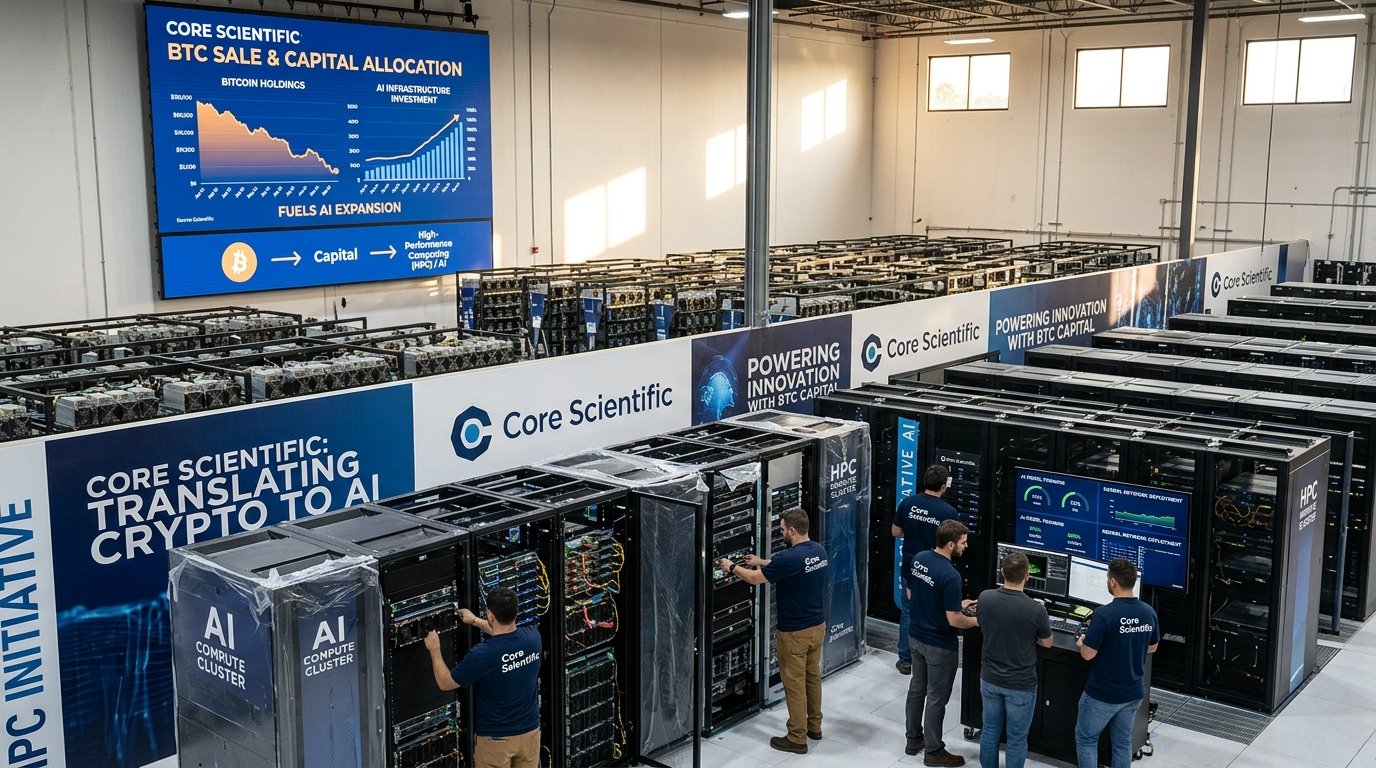
    The cryptocurrency mining industry is undergoing a dramatic transformation as companies search for new revenue streams beyond traditional bitcoin mining. One of the biggest examples of this shift is the recent move by Core Scientific dumps bitcoin to fund AI shift, a development that has sparked widespread debate across the digital asset sector. The company’s decision to sell portions of its bitcoin holdings to accelerate investments in artificial intelligence infrastructure marks a turning point not only for Core Scientific but for the broader crypto mining landscape as well.

    For years, bitcoin miners focused almost exclusively on generating profits from digital asset production. However, changing market conditions, rising energy costs, increased competition, and the growing demand for AI computing power have encouraged miners to rethink their long-term strategies. As the artificial intelligence boom continues to reshape global technology markets, data centers and high-performance computing facilities are becoming some of the most valuable digital infrastructure assets in the world.

    Core Scientific’s pivot demonstrates how crypto mining companies are increasingly leveraging their existing power infrastructure, cooling systems, and data center expertise to enter the AI sector. The company’s move to liquidate bitcoin assets in order to fund artificial intelligence expansion reflects a broader trend where mining firms are evolving into diversified technology infrastructure providers.

    The announcement has generated significant attention among investors, crypto analysts, and AI industry observers. Some see the decision as a visionary strategy designed to future-proof the company in an increasingly competitive market. Others worry that reducing bitcoin exposure could weaken the firm’s long-term position if cryptocurrency prices continue to rise. Regardless of perspective, the Core Scientific bitcoin sale highlights the growing intersection between blockchain technology and artificial intelligence.

    The Growing Pressure on Bitcoin Mining Companies

    Bitcoin mining has always been a capital-intensive industry, but recent years have introduced even greater financial challenges. Mining firms must constantly upgrade hardware, manage electricity expenses, and maintain operational efficiency to remain profitable. At the same time, bitcoin price volatility can create unpredictable revenue streams that complicate long-term planning.

    The latest halving events have intensified pressure on miners because mining rewards are reduced periodically. As mining rewards shrink, companies must either improve operational efficiency or find alternative sources of income. This economic reality has encouraged many mining firms to explore opportunities outside pure cryptocurrency mining.

    For Core Scientific, the decision to fund AI infrastructure through bitcoin sales reflects these industry pressures. Rather than relying solely on mining revenue, the company is repositioning itself within the rapidly expanding artificial intelligence ecosystem. This strategy could help stabilize earnings while opening access to entirely new markets.

    The rise of AI technologies such as machine learning, generative AI, and large language models has dramatically increased demand for high-performance computing facilities. Tech companies require enormous amounts of processing power to train AI systems, and data centers with robust energy infrastructure are in particularly high demand. Crypto mining companies already possess many of these assets, making them natural candidates for AI expansion.

    Why Core Scientific Is Shifting Toward AI

    The decision behind the Core Scientific AI strategy is largely driven by economics. Artificial intelligence infrastructure currently offers potentially higher and more stable revenue opportunities compared to traditional bitcoin mining. Demand for AI computing resources continues to grow at an extraordinary pace as companies across industries invest heavily in automation and machine learning capabilities.

    Unlike cryptocurrency markets, which can experience sudden downturns, AI infrastructure contracts often provide predictable long-term income streams. This financial stability is highly attractive for companies seeking to reduce dependence on volatile digital asset markets.

    Core Scientific already operates large-scale data centers equipped with advanced cooling systems and substantial electrical capacity. These facilities are ideal for both bitcoin mining and AI computing workloads. By repurposing portions of its infrastructure for artificial intelligence applications, the company can maximize asset utilization while expanding into a booming sector.

    Another factor influencing the transition is investor sentiment. Financial markets have increasingly rewarded companies connected to AI growth. Firms associated with artificial intelligence infrastructure often receive stronger valuations than pure-play crypto miners. Core Scientific’s shift toward AI may therefore improve investor confidence and attract new institutional interest.

    The company’s strategy also reflects a broader convergence between blockchain and artificial intelligence technologies. Both industries rely heavily on computational power and advanced infrastructure. As a result, many crypto mining firms are discovering that their operational expertise can be applied effectively within AI ecosystems.

    The Significance of Selling Bitcoin Holdings

    The decision to sell bitcoin reserves carries symbolic and financial importance. Traditionally, many mining companies accumulated bitcoin as a long-term treasury asset, betting on future price appreciation. Selling those holdings to finance AI infrastructure signals a strategic reallocation of capital toward a different growth narrative.

    For some investors, the move raises concerns about confidence in bitcoin’s future upside potential. However, the decision does not necessarily indicate bearish sentiment toward cryptocurrency. Instead, it may reflect a pragmatic assessment of where near-term growth opportunities are strongest.

    By converting bitcoin holdings into funding for AI projects, Core Scientific gains liquidity without relying entirely on debt financing or equity dilution. This can help maintain financial flexibility while supporting expansion initiatives. In a highly competitive industry, having access to capital is essential for maintaining technological leadership.

    The bitcoin liquidation also demonstrates how digital assets can function as strategic balance sheet tools. During bullish market periods, mining firms may accumulate substantial cryptocurrency reserves. Later, those assets can be monetized to support diversification or infrastructure development.

    This approach illustrates the evolving financial sophistication of major crypto mining companies. Rather than simply mining and holding bitcoin indefinitely, firms are increasingly managing digital assets dynamically to support broader corporate objectives.

    How AI Infrastructure Is Reshaping Data Centers

    Artificial intelligence has transformed data center economics in profound ways. Traditional cloud computing already required large-scale infrastructure, but AI workloads demand even greater computational intensity. Training advanced AI models consumes vast amounts of electricity and requires specialized hardware such as GPUs and accelerated computing systems.

    Data centers capable of supporting these requirements have become highly valuable assets. Companies with existing power access and cooling capabilities are now positioned to capitalize on the AI boom. This dynamic explains why many bitcoin miners are pivoting toward high-performance computing.

    Core Scientific’s AI expansion reflects this industry-wide evolution. The company’s facilities already contain much of the infrastructure necessary for large-scale computing operations. Transitioning part of that infrastructure toward AI hosting services could generate substantial new revenue opportunities.

    The convergence between crypto mining and AI also highlights the growing importance of energy infrastructure in the digital economy. Both industries compete for access to affordable electricity and scalable computing capacity. Companies capable of managing these resources efficiently may gain significant competitive advantages.

    As AI adoption accelerates globally, demand for computing infrastructure is expected to continue rising. This trend may encourage even more mining firms to diversify into artificial intelligence services over the coming years.

    Investor Reactions to the Core Scientific AI Shift

    Market reactions to the Core Scientific bitcoin sale have been mixed but highly engaged. Some investors view the company’s AI pivot as a forward-thinking strategy aligned with emerging technology trends. These supporters argue that artificial intelligence represents one of the most promising growth sectors in the global economy.

    Others remain cautious, particularly among traditional crypto investors who prefer companies to maintain strong bitcoin exposure. Critics worry that shifting resources away from mining could reduce long-term upside potential if bitcoin prices surge significantly in future market cycles.

    Despite differing opinions, most analysts agree that diversification may improve operational resilience. The cryptocurrency industry has historically experienced extreme volatility, and companies dependent on a single revenue stream often face significant financial risk during downturns.

    By entering AI infrastructure markets, Core Scientific may reduce exposure to fluctuations in mining profitability. This diversification could help stabilize revenue while enhancing long-term sustainability.

    Institutional investors have shown growing interest in companies positioned at the intersection of AI and digital infrastructure. As a result, the market may ultimately reward firms capable of adapting successfully to evolving technology trends.

    The Broader Trend Among Crypto Mining Firms
    Core Scientific Bitcoin Sale Fuels AICore Scientific is not alone in exploring artificial intelligence opportunities. Across the crypto mining industry, companies are increasingly repositioning themselves as broader infrastructure providers rather than purely mining-focused businesses.


    Several miners have announced partnerships related to AI hosting, cloud computing, and high-performance computing services. This shift reflects recognition that mining infrastructure can support multiple types of computational workloads.

    The overlap between AI and bitcoin mining is particularly significant because both sectors require similar operational capabilities. Large-scale facilities, cooling systems, network connectivity, and energy management expertise are essential for success in both industries.

    As competition intensifies in bitcoin mining, diversification may become necessary for survival. AI infrastructure offers an attractive avenue because global demand continues expanding rapidly. Companies that can successfully integrate AI services into existing operations may gain substantial financial advantages.

    This transformation also signals maturation within the crypto industry. Early mining firms often focused narrowly on cryptocurrency production, but modern operators increasingly resemble sophisticated technology infrastructure companies with diversified business models.

    Potential Risks of the AI Pivot

    Although the Core Scientific AI strategy offers promising opportunities, it also involves significant risks. Artificial intelligence infrastructure requires major capital investment, and competition in the sector is growing quickly. Large technology companies already dominate many segments of the AI computing market.

    Successfully transitioning from crypto mining to AI hosting also requires operational adjustments. Managing AI workloads differs from traditional mining operations, particularly regarding hardware optimization and customer relationships.

    There is also the risk that bitcoin prices could rise substantially after the company sells its holdings. In that scenario, critics may argue that retaining bitcoin reserves would have generated greater long-term returns.

    Regulatory uncertainty presents another challenge. Both cryptocurrency and artificial intelligence industries face evolving legal frameworks that could impact operational costs or business strategies in the future.

    Additionally, AI demand growth may eventually slow if market saturation occurs or technological advancements reduce computing requirements. Companies investing heavily in infrastructure must carefully manage these long-term uncertainties.

    The Relationship Between AI and Cryptocurrency

    The growing relationship between artificial intelligence and cryptocurrency is becoming increasingly important across technology markets. While the two industries were once viewed separately, they now share overlapping infrastructure needs and investment trends.

    Blockchain networks and AI systems both rely on large-scale computing power. This common requirement has encouraged collaboration between sectors and created new business opportunities for infrastructure providers.

    Some analysts believe AI could eventually improve blockchain technology through enhanced automation, fraud detection, and smart contract optimization. Others predict that decentralized AI networks may emerge using blockchain-based incentive systems.

    Core Scientific’s transition illustrates how these industries are converging operationally. Crypto mining infrastructure can often be adapted for AI workloads, enabling companies to diversify efficiently without starting entirely from scratch.

    This convergence may ultimately create hybrid technology ecosystems where blockchain and AI services operate alongside one another within shared infrastructure environments.

    What This Means for the Future of Bitcoin Mining

    The Core Scientific bitcoin sale may represent a broader turning point for the mining industry. As profitability pressures continue mounting, miners may increasingly diversify into adjacent technology sectors rather than relying solely on digital asset production.

    Artificial intelligence infrastructure currently appears to be one of the most attractive opportunities because of explosive demand growth and strong investor interest. However, other diversification paths may also emerge, including cloud computing, energy management services, and decentralized computing networks.

    Bitcoin mining itself is unlikely to disappear, particularly if cryptocurrency adoption continues expanding globally. However, the industry may evolve into a more diversified and infrastructure-focused sector over time.

    Companies capable of balancing mining operations with AI services could become particularly resilient during future market cycles. Diversification may allow firms to maintain profitability even during periods of weak cryptocurrency prices.

    Core Scientific’s strategy therefore serves as an important case study for how crypto infrastructure companies may adapt to changing technological and economic conditions.

    Conclusion

    The decision by Core Scientific to dump bitcoin in order to fund an AI shift represents one of the most significant strategic transformations currently unfolding in the cryptocurrency mining industry. The company’s move reflects changing market realities, growing demand for artificial intelligence infrastructure, and the increasing convergence between blockchain technology and high-performance computing.

    While opinions remain divided regarding the wisdom of reducing bitcoin exposure, the broader logic behind the transition is clear. Artificial intelligence has become one of the fastest-growing sectors in the global economy, and companies with existing data center infrastructure are uniquely positioned to benefit from this trend.

    Core Scientific’s AI expansion demonstrates how mining firms are evolving beyond traditional cryptocurrency production into diversified digital infrastructure providers. This transformation may ultimately redefine the future of the mining industry itself.

    As AI adoption accelerates and computational demand continues rising, the relationship between cryptocurrency infrastructure and artificial intelligence is likely to grow even stronger. Whether Core Scientific’s strategy proves visionary or premature will depend on future market developments, but its decision has already become a defining moment in the evolution of crypto mining.

    FAQs

    Q. Why did Core Scientific sell bitcoin holdings?

    Core Scientific sold portions of its bitcoin reserves to generate capital for expanding into artificial intelligence infrastructure and high-performance computing services.

    Q. How does AI infrastructure relate to bitcoin mining?

    Both industries require significant computing power, energy resources, cooling systems, and large-scale data centers, making mining facilities suitable for AI workloads.

    Q. Is Core Scientific abandoning bitcoin mining completely?

    No, the company is not completely exiting bitcoin mining. Instead, it is diversifying operations by adding AI infrastructure services alongside existing mining activities.

    Q. Why are crypto mining companies interested in AI?

    Artificial intelligence offers potentially more stable and profitable revenue streams compared to the volatility of cryptocurrency mining markets.

    Q. Could other mining companies follow the same strategy?

    Yes, many mining firms are already exploring AI hosting and high-performance computing opportunities as part of broader diversification efforts.

  • Bitcoin Market Activity Surges in 2026

    Bitcoin Market Activity Surges in 2026

    The global cryptocurrency landscape is undergoing a remarkable transformation, with Bitcoin standing firmly at the center of this evolution. Over the past few years, the Bitcoin market activity has surged significantly, driven by a combination of technological advancements, institutional adoption, and changing investor behavior. What was once considered a niche digital asset has now matured into a dynamic financial ecosystem attracting diverse participants from across the globe.

    The surge in Bitcoin trading participation is not merely a reflection of price volatility or speculative interest; rather, it highlights a broader shift in how individuals and institutions perceive digital assets. From hedge funds and asset managers to retail investors and decentralized finance enthusiasts, the spectrum of market participants continues to expand. This evolution is reshaping the structure of the crypto market, making it more resilient, liquid, and interconnected than ever before.

    As infrastructure strengthens and accessibility improves, the barriers to entry for Bitcoin trading have diminished. Advanced trading platforms, regulatory clarity in key markets, and the emergence of innovative financial products have all contributed to increased engagement. In this article, we explore how Bitcoin market activity is surging, the factors driving this growth, and how evolving participation is redefining the future of digital finance.

    The Rise of Bitcoin Market Activity

    The recent surge in Bitcoin market activity can be attributed to multiple interconnected factors that have fueled both demand and engagement. One of the most notable drivers is the growing confidence in Bitcoin as a legitimate asset class. Institutional investors, once skeptical of cryptocurrencies, are now actively participating in the market, bringing with them substantial capital and long-term investment strategies.

    This influx of institutional interest has had a cascading effect on overall market activity. As large players enter the ecosystem, they contribute to increased liquidity, reduced volatility over time, and improved market efficiency. Consequently, retail investors are gaining confidence, further amplifying Bitcoin trading volumes and participation levels.

    Another critical factor behind the surge is the evolution of trading infrastructure. Modern cryptocurrency exchanges offer sophisticated tools such as derivatives trading, margin accounts, and algorithmic strategies, enabling traders to engage with the market in more complex ways. These developments have transformed Bitcoin trading from a simple buy-and-hold strategy into a multifaceted financial activity.

    Evolution of Trading Participation

    Institutional Investors Reshape the Market

    Institutional participation has played a pivotal role in redefining Bitcoin market dynamics. Large financial institutions are no longer on the sidelines; they are actively investing, trading, and even building products around Bitcoin. This shift has elevated Bitcoin’s status from a speculative asset to a recognized component of diversified portfolios.

    Institutional investors bring a level of discipline and long-term perspective that was previously lacking in the market. Their involvement has led to the development of structured financial products such as Bitcoin exchange-traded funds (ETFs), futures contracts, and custody solutions. These innovations have made it easier for traditional investors to gain exposure to Bitcoin without directly holding the asset.

    As a result, Bitcoin market activity has become more stable and predictable, encouraging further participation from both institutional and retail segments.

    Retail Investors Drive Volume Growth

    While institutions have added credibility to the market, retail investors remain a powerful force behind the surge in Bitcoin trading participation. The accessibility of user-friendly trading platforms and mobile applications has democratized access to Bitcoin, enabling individuals from all backgrounds to participate in the market.

    Social media, online communities, and educational resources have also played a significant role in attracting new investors. As awareness grows, more people are exploring Bitcoin as a store of value, a hedge against inflation, and an alternative investment opportunity.

    The combined effect of institutional and retail participation has created a vibrant and diverse market ecosystem, where different types of investors coexist and contribute to overall activity.

    Technological Advancements Fueling Growth

    The rapid evolution of blockchain technology has been instrumental in driving Bitcoin market activity. Improvements in scalability, security, and transaction efficiency have made the network more robust and capable of handling increased demand.

    Layer 2 solutions, such as the Lightning Network, have enhanced Bitcoin’s usability by enabling faster and cheaper transactions. This has opened the door for new use cases, including microtransactions and cross-border payments, further expanding the scope of Bitcoin adoption.

    In addition, advancements in trading technology have revolutionized how participants interact with the market. Automated trading bots, artificial intelligence-driven analytics, and real-time data tools allow traders to make more informed decisions. These innovations have not only increased efficiency but also attracted a new generation of tech-savvy investors.

    The Role of Market Infrastructure

    Enhanced Liquidity and Market Depth

    A key indicator of rising Bitcoin market activity is the improvement in liquidity and market depth. As more participants enter the market, the availability of buy and sell orders increases, reducing price slippage and enabling smoother transactions.

    Liquidity is essential for maintaining market stability, especially during periods of high volatility. The presence of institutional market makers and high-frequency trading firms has further strengthened liquidity, ensuring that the market can handle large trades without significant disruptions.

    This enhanced liquidity has made Bitcoin more attractive to both short-term traders and long-term investors, contributing to sustained growth in trading activity.

    Regulatory Developments and Compliance

    Regulatory clarity has also played a crucial role in shaping Bitcoin trading participation. Governments and regulatory bodies around the world are gradually establishing frameworks to oversee cryptocurrency markets, providing a sense of legitimacy and security for investors.

    Clear regulations help mitigate risks such as fraud and market manipulation, encouraging more participants to enter the market. Compliance measures, including Know Your Customer (KYC) and Anti-Money Laundering (AML) protocols, have further strengthened trust in the ecosystem.

    As regulatory environments continue to evolve, they are likely to have a significant impact on the future trajectory of Bitcoin market activity.

    Changing Investor Behavior

    The surge in Bitcoin market activity is also a reflection of changing investor behavior. Traditional investment strategies are being redefined as individuals seek alternative assets that offer higher returns and diversification benefits.

    Bitcoin is increasingly viewed as a digital store of value, often compared to gold. This perception has led to a shift from short-term speculative trading to long-term holding strategies, commonly referred to as “HODLing.” At the same time, active trading remains prevalent, driven by volatility and market opportunities.

    The coexistence of different investment approaches has created a dynamic market environment where liquidity and activity continue to thrive.

    Global Adoption and Market Expansion
    Global Adoption and Market ExpansionBitcoin’s global reach has expanded significantly, contributing to the surge in Bitcoin trading participation. Emerging markets, in particular, have embraced Bitcoin as a means of financial inclusion and economic empowerment.

    In regions with unstable currencies or limited access to traditional banking systems, Bitcoin provides an alternative financial infrastructure. This has led to increased adoption and trading activity, further strengthening the global Bitcoin ecosystem.

    Cross-border transactions, remittances, and decentralized finance applications are also driving demand, highlighting Bitcoin’s potential as a universal financial asset.

    Impact of Macroeconomic Factors

    Macroeconomic conditions have a profound influence on Bitcoin market activity. Factors such as inflation, interest rates, and geopolitical uncertainties often drive investors toward alternative assets like Bitcoin.

    During periods of economic instability, Bitcoin is frequently perceived as a hedge against currency devaluation and financial system risks. This perception has contributed to increased demand and trading activity, particularly during times of global uncertainty.

    As the global economy continues to evolve, Bitcoin’s role as a macroeconomic asset is likely to become even more prominent.

    The Future of Bitcoin Trading Participation

    The evolution of Bitcoin market activity is far from complete. As technology continues to advance and adoption grows, the market is expected to become even more sophisticated and inclusive.

    Decentralized exchanges, tokenized assets, and integration with traditional financial systems are likely to shape the next phase of Bitcoin’s development. These innovations will not only enhance accessibility but also create new opportunities for participation.

    Furthermore, the convergence of blockchain technology with artificial intelligence and big data analytics has the potential to revolutionize trading strategies and market analysis, paving the way for a more efficient and transparent ecosystem.

    Conclusion

    The surge in Bitcoin market activity reflects a broader transformation in the financial landscape. As trading participation evolves, driven by institutional involvement, retail engagement, technological advancements, and global adoption, Bitcoin is solidifying its position as a key player in the digital economy.

    This evolution is not just about increased trading volumes; it represents a fundamental shift in how value is perceived, transferred, and stored. The growing diversity of market participants has created a more resilient and dynamic ecosystem, capable of adapting to changing economic conditions and technological innovations.

    As we look ahead, the continued growth of Bitcoin trading participation is likely to shape the future of finance, offering new opportunities and challenges for investors worldwide.

    FAQs

    Q. Why is Bitcoin market activity increasing?

    Bitcoin market activity is increasing due to growing institutional adoption, improved trading infrastructure, and rising global awareness of cryptocurrencies as an investment asset.

    Q. How are institutions influencing Bitcoin trading?

    Institutions bring large capital, stability, and credibility to the market, which enhances liquidity and encourages more participation from other investors.

    Q. What role do retail investors play in Bitcoin trading?

    Retail investors contribute significantly to trading volume and market activity, especially through accessible platforms and increasing interest in digital assets.

    Q. How does technology impact Bitcoin market growth?

    Technological advancements such as faster transactions, improved security, and advanced trading tools make Bitcoin more accessible and efficient, driving market activity.

    Q. Is Bitcoin a long-term investment or a trading asset?

    Bitcoin can serve both purposes. Some investors hold it as a long-term store of value, while others actively trade it to capitalize on market volatility.