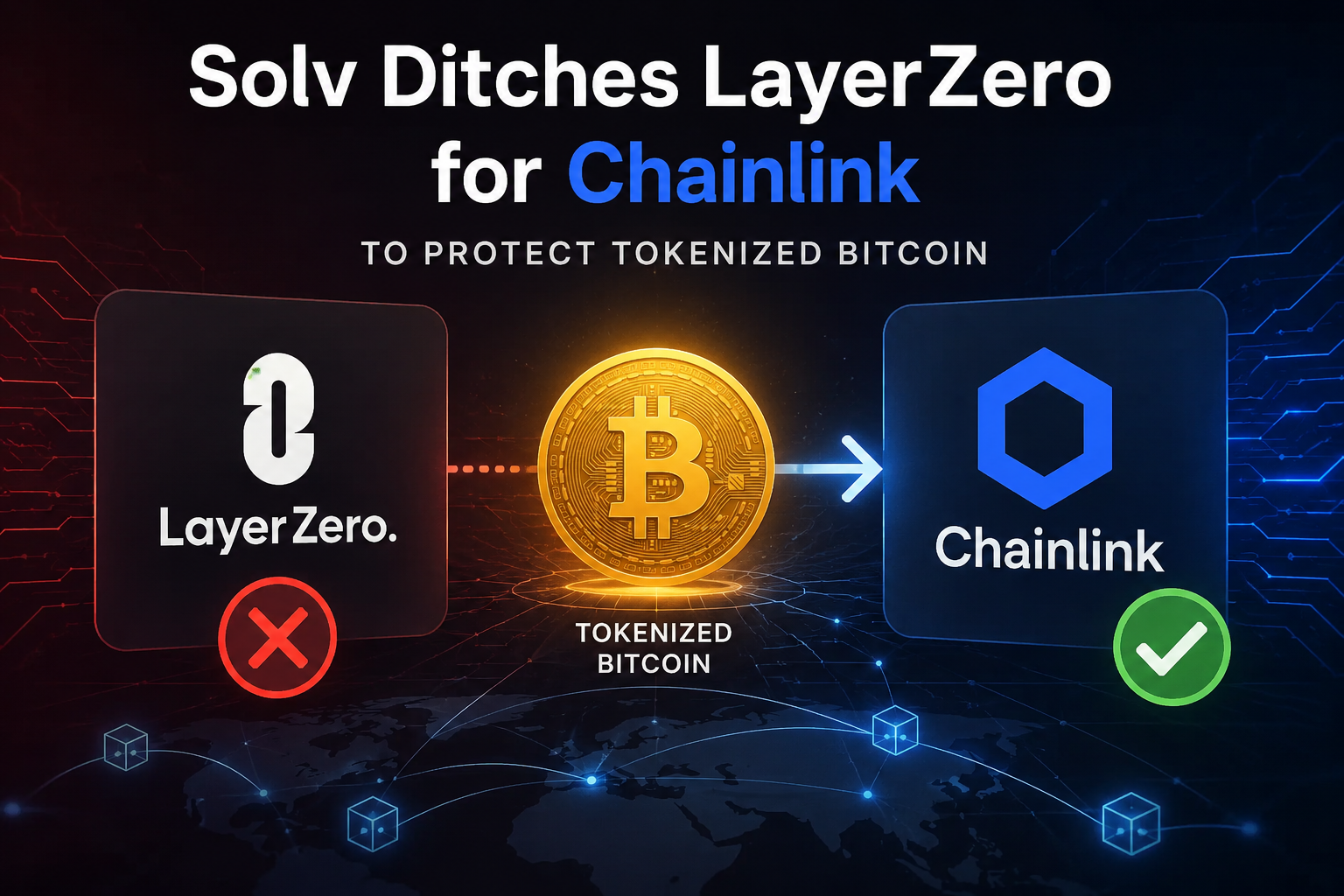
The rapid growth of tokenized Bitcoin has transformed the decentralized finance landscape, allowing Bitcoin holders to unlock liquidity and participate in cross-chain ecosystems without selling their BTC. As blockchain interoperability becomes increasingly important, protocols handling tokenized assets face mounting pressure to ensure security, transparency, and reliability. This is especially true for projects managing billions of dollars in digital assets across multiple networks.
In a significant development for the crypto industry, Solv Protocol has decided to move away from LayerZero and adopt Chainlink infrastructure to secure and manage its tokenized Bitcoin ecosystem. The decision reflects a broader trend within decentralized finance, where projects are prioritizing proven security frameworks and decentralized oracle solutions over experimental bridging systems.
The move has sparked intense discussion among investors, developers, and the broader blockchain community. Many see the migration as a strategic step toward improving cross-chain security and reducing vulnerabilities associated with interoperability protocols. Others view it as a strong endorsement of Chainlink’s growing dominance in blockchain infrastructure and tokenized asset management.
As tokenized Bitcoin continues expanding across DeFi applications, Solv’s decision may influence how future protocols approach security, interoperability, and decentralized asset transfers. Understanding why Solv abandoned LayerZero for Chainlink offers valuable insight into the future direction of the crypto market and the increasing importance of secure cross-chain communication.
Understanding Solv Protocol and Tokenized Bitcoin
Solv Protocol has emerged as one of the leading platforms focused on Bitcoin-based decentralized finance solutions. The protocol aims to bridge traditional Bitcoin liquidity into modern DeFi ecosystems by enabling tokenized representations of BTC across multiple blockchains. Through this mechanism, Bitcoin holders can access staking opportunities, lending platforms, yield farming, and liquidity pools without leaving the decentralized environment.
Tokenized Bitcoin refers to digital assets that represent real Bitcoin on another blockchain network. These assets maintain a peg to BTC while offering compatibility with smart contract ecosystems like Ethereum, BNB Chain, and other decentralized networks. As the demand for Bitcoin DeFi grows, tokenized Bitcoin has become a crucial component of cross-chain finance.
However, managing tokenized Bitcoin requires secure interoperability infrastructure. Since these assets move between different chains, protocols depend heavily on bridging technologies and messaging systems to ensure assets remain safe and properly accounted for. A single exploit or messaging failure can potentially place millions of dollars at risk.
This growing importance of interoperability security likely played a major role in Solv’s decision to transition away from LayerZero and embrace Chainlink infrastructure.
Why Solv Abandoned LayerZero
LayerZero gained popularity as a cross-chain messaging protocol designed to enable seamless communication between blockchains. Many DeFi applications integrated LayerZero because of its lightweight architecture and ability to support omnichain functionality. Despite its innovation, concerns surrounding cross-chain bridge vulnerabilities and messaging security have remained persistent within the industry.
Solv’s decision to leave LayerZero appears rooted in the need for stronger infrastructure protection for tokenized Bitcoin assets. The crypto industry has witnessed several devastating bridge hacks over the last few years, resulting in billions of dollars in losses. Since tokenized assets rely heavily on accurate messaging and verification mechanisms, even minor weaknesses in infrastructure can lead to catastrophic outcomes.
Security has become the top priority for protocols managing institutional-scale Bitcoin liquidity. As tokenized Bitcoin adoption increases, projects can no longer rely solely on speed and scalability; they must also ensure robust decentralization and tamper-resistant validation systems.
By switching to Chainlink, Solv signals its preference for highly decentralized infrastructure backed by extensive security testing and industry adoption. The move suggests that Solv believes Chainlink offers a more resilient framework for safeguarding tokenized Bitcoin across multiple blockchain environments.
The Growing Importance of Tokenized Bitcoin Security
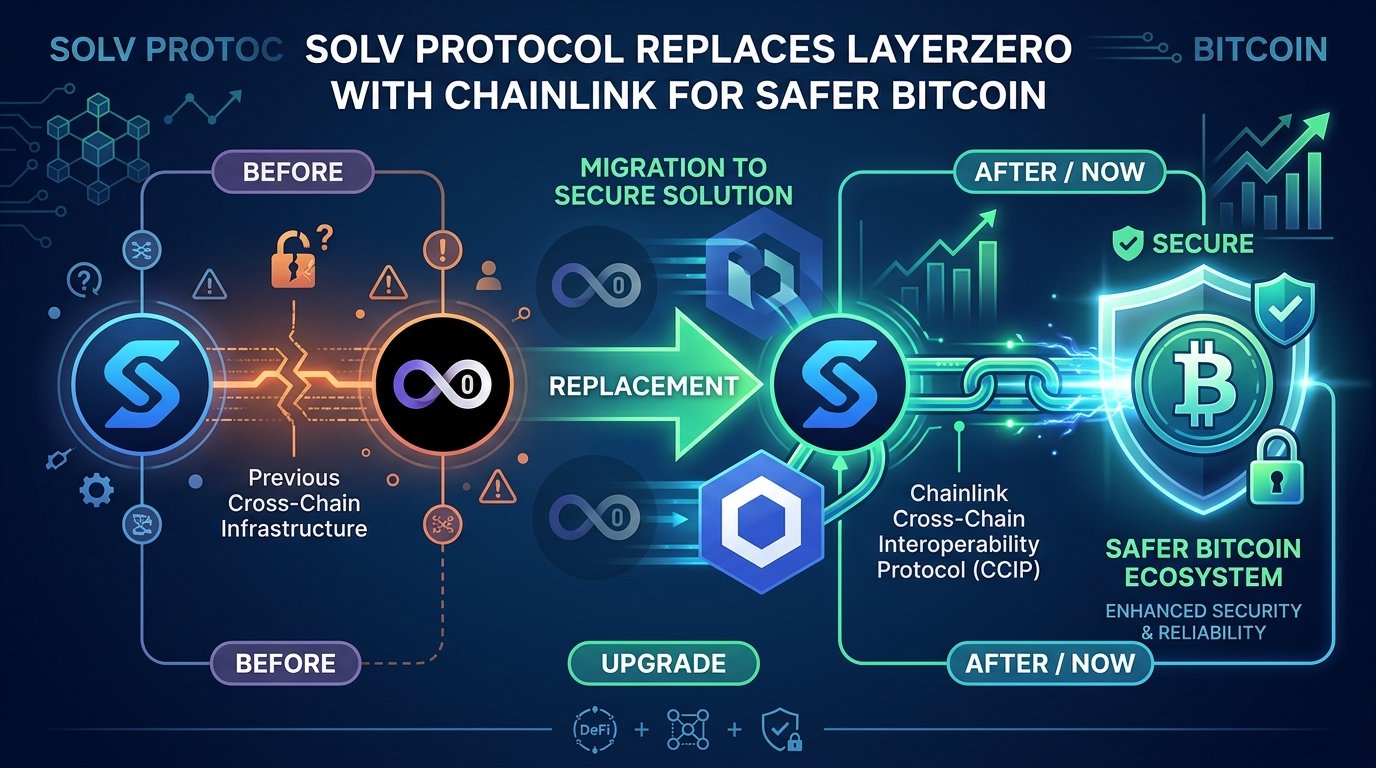
The rise of tokenized Bitcoin has introduced new opportunities but also new risks. Bitcoin was originally designed as a secure and decentralized store of value, but integrating BTC into DeFi ecosystems requires additional layers of infrastructure that can create vulnerabilities.
Cross-chain bridges have become one of the most targeted areas in the crypto industry. Attackers often exploit weaknesses in validators, message relayers, or smart contract logic to steal funds. Because tokenizedBitcoin represents real BTC locked elsewhere, any exploit can directly threaten the underlying collateral backing those assets.
Security concerns are amplified when billions of dollars are involved. Institutional investors and large Bitcoin holders increasingly demand enterprise-grade security before participating in DeFi ecosystems. Protocols that fail to demonstrate reliable protection mechanisms may struggle to attract long-term adoption.
Solv’s migration to Chainlink highlights the evolving standards within decentralized finance. Instead of prioritizing experimental interoperability models, protocols are now focusing on battle-tested infrastructure capable of handling high-value assets securely.
This transition also reflects the growing maturity of the crypto industry. Investors are becoming more aware of infrastructure risks, and projects are adapting by partnering with providers that have strong reputations for decentralization and operational reliability.
How Chainlink Enhances Cross-Chain Security
Chainlink has become one of the most trusted infrastructure providers in blockchain technology. Initially known for decentralized oracle services, Chainlink has expanded into interoperability solutions through its Cross-Chain Interoperability Protocol, commonly known as CCIP.
CCIP was designed to facilitate secure communication between different blockchain networks while minimizing the risks associated with traditional bridges. Unlike some interoperability systems that rely on smaller validator sets or centralized components, Chainlink leverages decentralized oracle networks and advanced security models to verify cross-chain messages.
One of Chainlink’s biggest advantages is its emphasis on layered security. The protocol uses decentralized nodes, independent risk management systems, and multiple verification mechanisms to reduce the chances of malicious activity or system failure. This approach aligns well with the security demands of tokenized Bitcoin ecosystems.
For Solv, adopting Chainlink infrastructure could provide several important benefits. The protocol may gain stronger resistance against exploits, improved transparency for cross-chain operations, and enhanced trust among institutional participants. Since tokenized Bitcoin often serves as collateral for DeFi activities, maintaining confidence in the underlying infrastructure is essential.
Chainlink’s reputation within decentralized finance also adds credibility to Solv’s ecosystem. Many leading DeFi protocols already rely on Chainlink for price feeds, automation, and interoperability services, making it one of the most established infrastructure providers in the industry.
The Competitive Landscape Between LayerZero and Chainlink
The competition between LayerZero and Chainlink reflects a broader battle for dominance in blockchain interoperability. As decentralized ecosystems expand, the need for secure and efficient communication between chains has become one of the industry’s most critical challenges.
LayerZero positioned itself as an omnichain messaging solution capable of enabling seamless interoperability between networks. Its lightweight approach attracted many developers seeking scalability and flexibility. However, critics have occasionally raised concerns regarding centralization risks and the complexity of securing omnichain environments.
Chainlink, on the other hand, has focused heavily on security-first infrastructure. Rather than prioritizing aggressive expansion alone, Chainlink emphasizes decentralized verification, risk mitigation, and enterprise-grade reliability. This difference in philosophy may explain why Solv chose to migrate its tokenized Bitcoin ecosystem.
The move also underscores how interoperability is evolving beyond simple connectivity. Modern protocols are increasingly evaluating infrastructure providers based on security guarantees, institutional trust, and long-term sustainability rather than solely transaction speed or cost efficiency.
As more projects adopt tokenized real-world assets and Bitcoin-based DeFi solutions, interoperability providers will likely face increasing scrutiny regarding their security architecture.
Institutional Interest in Bitcoin DeFi
Institutional interest in Bitcoin DeFi has grown significantly over the past two years. Traditionally, Bitcoin holders had limited opportunities to generate yield without selling their assets. Tokenized Bitcoin and decentralized finance platforms have changed this dynamic by enabling BTC holders to participate in lending, staking, and liquidity provision.
Large investors, however, are highly sensitive to infrastructure risks. Institutions require robust custody mechanisms, transparent security practices, and reliable interoperability solutions before allocating significant capital to DeFi ecosystems.
Solv’s transition to Chainlink may help position the protocol as a more institution-friendly platform for tokenized Bitcoin. By aligning with infrastructure known for security and decentralization, Solv can potentially strengthen investor confidence and attract larger pools of liquidity.
This trend also highlights the broader convergence between traditional finance and decentralized finance. As institutional adoption grows, blockchain protocols are increasingly expected to meet higher standards for operational security, compliance readiness, and infrastructure resilience.
The Future of Cross-Chain Interoperability
Cross-chain interoperability remains one of the most important areas of blockchain innovation. The crypto ecosystem is fragmented across numerous networks, each with its own strengths, communities, and applications. Without secure interoperability, users face barriers when transferring assets or interacting with decentralized applications across different chains.
The future of interoperability will likely depend on protocols capable of balancing scalability with strong security guarantees. The industry has already learned painful lessons from bridge exploits and infrastructure failures. As a result, projects managing high-value assets are becoming far more selective about the technology they integrate.
Chainlink’s growing influence suggests that decentralized verification systems may become the preferred model for securing cross-chain communication. Solv’s migration reinforces this possibility by demonstrating that infrastructure decisions are increasingly driven by security considerations rather than marketing hype.
Tokenized Bitcoin could become one of the largest sectors within decentralized finance over the next decade. If that happens, infrastructure providers capable of safely supporting Bitcoin liquidity across multiple chains will play a central role in shaping the future of blockchain finance.
What This Means for the Crypto Industry
Solv’s decision to replace LayerZero with Chainlink carries broader implications for the cryptocurrency industry. It sends a clear message that security is becoming the defining factor in infrastructure adoption decisions.
Projects managing tokenized assets can no longer afford to overlook interoperability risks. As DeFi ecosystems mature, users expect protocols to implement highly secure frameworks capable of protecting funds even during extreme market conditions or sophisticated attack attempts.
The migration may also encourage other protocols to reevaluate their own infrastructure choices. If Solv experiences improved security, operational stability, and institutional trust after adopting Chainlink, competing projects may follow a similar path.
At the same time, the development intensifies competition within the interoperability sector. Providers will need to demonstrate not only technical innovation but also long-term reliability and resilience against attacks.
The crypto industry is gradually moving toward an era where infrastructure quality matters just as much as user experience and scalability. Protocols that successfully combine security, decentralization, and interoperability are likely to dominate the next phase of blockchain adoption.
Conclusion
Solv’s decision to ditch LayerZero in favor of Chainlink marks a major shift in the evolving landscape of tokenized Bitcoin and cross-chain interoperability. As decentralized finance continues expanding, security concerns surrounding bridges and messaging protocols are becoming impossible to ignore.
By choosing Chainlink infrastructure, Solv is prioritizing decentralized security, institutional trust, and long-term resilience for its tokenized Bitcoin ecosystem. The move reflects broader industry trends where protocols managing valuable digital assets are increasingly favoring battle-tested infrastructure providers over newer experimental alternatives.
The transition also highlights the growing importance of secure interoperability in the future of blockchain technology. Tokenized Bitcoin is expected to remain a major force within decentralized finance, and the infrastructure supporting these assets will play a critical role in determining the success of the broader crypto ecosystem.
As competition between interoperability providers intensifies, projects that can offer strong security guarantees and scalable cross-chain functionality will likely emerge as industry leaders. Solv’s migration to Chainlink may ultimately represent more than a simple technical upgrade — it could signal the beginning of a new era where security-first infrastructure becomes the standard for decentralized finance.
FAQs
Q. Why did Solv switch from LayerZero to Chainlink?
Solv switched to Chainlink primarily to improve the security and reliability of its tokenized Bitcoin ecosystem. The move reflects growing concerns about cross-chain bridge vulnerabilities and the need for stronger interoperability infrastructure.
Q. What is tokenized Bitcoin?
Tokenized Bitcoin is a digital asset that represents Bitcoin on another blockchain network. It allows BTC holders to use their assets in decentralized finance applications such as lending, staking, and liquidity pools.
Q. What is Chainlink CCIP?
Chainlink CCIP stands for Cross-Chain Interoperability Protocol. It is a secure messaging and interoperability framework designed to enable safe communication and asset transfers between different blockchain networks.
Q. Is LayerZero insecure?
LayerZero is widely used in the blockchain industry, but like all interoperability solutions, it faces scrutiny regarding security and decentralization. Solv’s decision suggests the protocol preferred Chainlink’s security-focused architecture for protecting high-value tokenized Bitcoin assets.
Q. How does this impact the future of Bitcoin DeFi?
The migration highlights the growing importance of security in Bitcoin DeFi. As institutional interest increases, protocols managing tokenized Bitcoin will likely prioritize trusted infrastructure providers capable of offering decentralized and resilient cross-chain solutions.
Leave a Reply