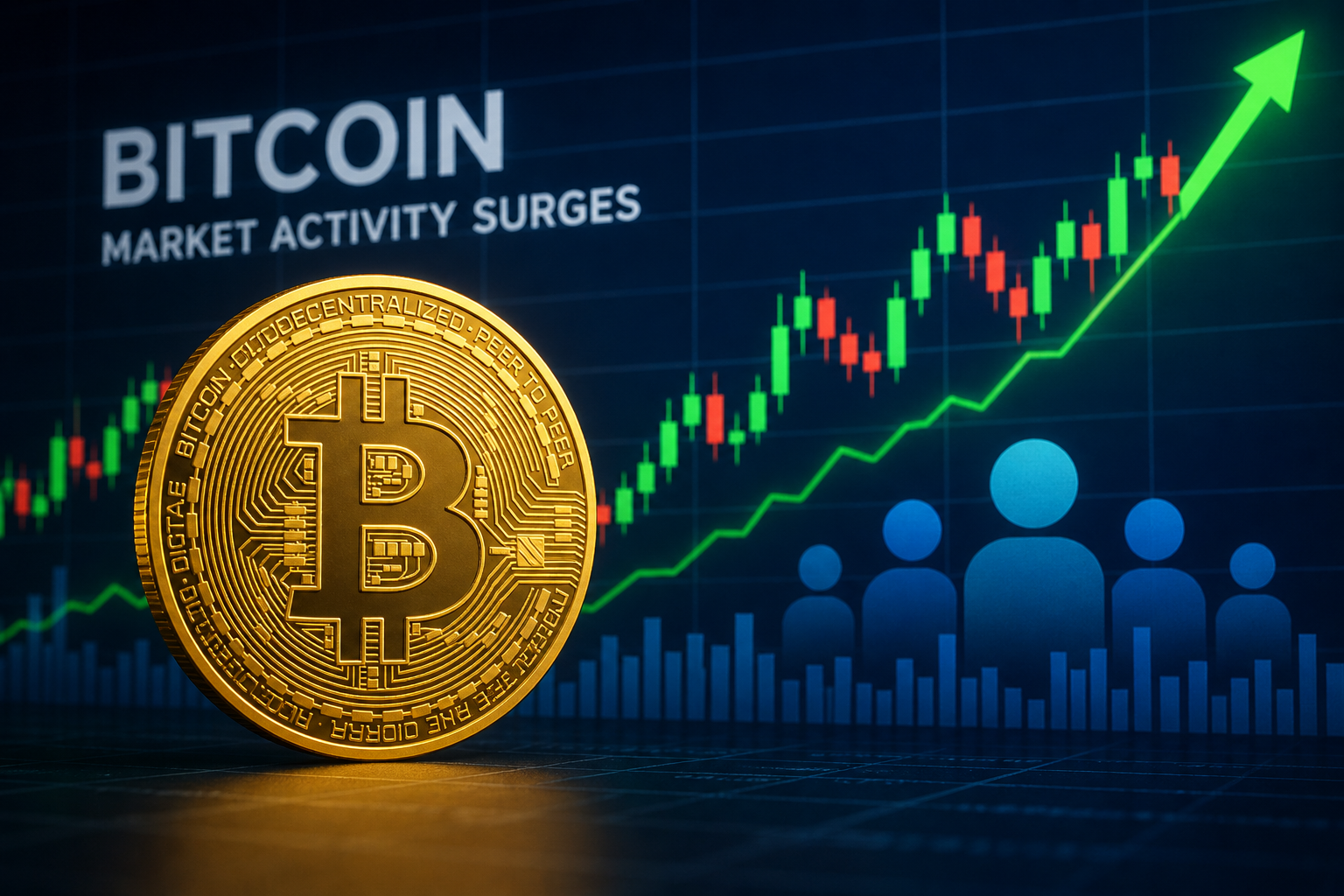
The global cryptocurrency landscape is undergoing a remarkable transformation, with Bitcoin standing firmly at the center of this evolution. Over the past few years, the Bitcoin market activity has surged significantly, driven by a combination of technological advancements, institutional adoption, and changing investor behavior. What was once considered a niche digital asset has now matured into a dynamic financial ecosystem attracting diverse participants from across the globe.
The surge in Bitcoin trading participation is not merely a reflection of price volatility or speculative interest; rather, it highlights a broader shift in how individuals and institutions perceive digital assets. From hedge funds and asset managers to retail investors and decentralized finance enthusiasts, the spectrum of market participants continues to expand. This evolution is reshaping the structure of the crypto market, making it more resilient, liquid, and interconnected than ever before.
As infrastructure strengthens and accessibility improves, the barriers to entry for Bitcoin trading have diminished. Advanced trading platforms, regulatory clarity in key markets, and the emergence of innovative financial products have all contributed to increased engagement. In this article, we explore how Bitcoin market activity is surging, the factors driving this growth, and how evolving participation is redefining the future of digital finance.
The Rise of Bitcoin Market Activity
The recent surge in Bitcoin market activity can be attributed to multiple interconnected factors that have fueled both demand and engagement. One of the most notable drivers is the growing confidence in Bitcoin as a legitimate asset class. Institutional investors, once skeptical of cryptocurrencies, are now actively participating in the market, bringing with them substantial capital and long-term investment strategies.
This influx of institutional interest has had a cascading effect on overall market activity. As large players enter the ecosystem, they contribute to increased liquidity, reduced volatility over time, and improved market efficiency. Consequently, retail investors are gaining confidence, further amplifying Bitcoin trading volumes and participation levels.
Another critical factor behind the surge is the evolution of trading infrastructure. Modern cryptocurrency exchanges offer sophisticated tools such as derivatives trading, margin accounts, and algorithmic strategies, enabling traders to engage with the market in more complex ways. These developments have transformed Bitcoin trading from a simple buy-and-hold strategy into a multifaceted financial activity.
Evolution of Trading Participation
Institutional Investors Reshape the Market
Institutional participation has played a pivotal role in redefining Bitcoin market dynamics. Large financial institutions are no longer on the sidelines; they are actively investing, trading, and even building products around Bitcoin. This shift has elevated Bitcoin’s status from a speculative asset to a recognized component of diversified portfolios.
Institutional investors bring a level of discipline and long-term perspective that was previously lacking in the market. Their involvement has led to the development of structured financial products such as Bitcoin exchange-traded funds (ETFs), futures contracts, and custody solutions. These innovations have made it easier for traditional investors to gain exposure to Bitcoin without directly holding the asset.
As a result, Bitcoin market activity has become more stable and predictable, encouraging further participation from both institutional and retail segments.
Retail Investors Drive Volume Growth
While institutions have added credibility to the market, retail investors remain a powerful force behind the surge in Bitcoin trading participation. The accessibility of user-friendly trading platforms and mobile applications has democratized access to Bitcoin, enabling individuals from all backgrounds to participate in the market.
Social media, online communities, and educational resources have also played a significant role in attracting new investors. As awareness grows, more people are exploring Bitcoin as a store of value, a hedge against inflation, and an alternative investment opportunity.
The combined effect of institutional and retail participation has created a vibrant and diverse market ecosystem, where different types of investors coexist and contribute to overall activity.
Technological Advancements Fueling Growth
The rapid evolution of blockchain technology has been instrumental in driving Bitcoin market activity. Improvements in scalability, security, and transaction efficiency have made the network more robust and capable of handling increased demand.
Layer 2 solutions, such as the Lightning Network, have enhanced Bitcoin’s usability by enabling faster and cheaper transactions. This has opened the door for new use cases, including microtransactions and cross-border payments, further expanding the scope of Bitcoin adoption.
In addition, advancements in trading technology have revolutionized how participants interact with the market. Automated trading bots, artificial intelligence-driven analytics, and real-time data tools allow traders to make more informed decisions. These innovations have not only increased efficiency but also attracted a new generation of tech-savvy investors.
The Role of Market Infrastructure
Enhanced Liquidity and Market Depth
A key indicator of rising Bitcoin market activity is the improvement in liquidity and market depth. As more participants enter the market, the availability of buy and sell orders increases, reducing price slippage and enabling smoother transactions.
Liquidity is essential for maintaining market stability, especially during periods of high volatility. The presence of institutional market makers and high-frequency trading firms has further strengthened liquidity, ensuring that the market can handle large trades without significant disruptions.
This enhanced liquidity has made Bitcoin more attractive to both short-term traders and long-term investors, contributing to sustained growth in trading activity.
Regulatory Developments and Compliance
Regulatory clarity has also played a crucial role in shaping Bitcoin trading participation. Governments and regulatory bodies around the world are gradually establishing frameworks to oversee cryptocurrency markets, providing a sense of legitimacy and security for investors.
Clear regulations help mitigate risks such as fraud and market manipulation, encouraging more participants to enter the market. Compliance measures, including Know Your Customer (KYC) and Anti-Money Laundering (AML) protocols, have further strengthened trust in the ecosystem.
As regulatory environments continue to evolve, they are likely to have a significant impact on the future trajectory of Bitcoin market activity.
Changing Investor Behavior
The surge in Bitcoin market activity is also a reflection of changing investor behavior. Traditional investment strategies are being redefined as individuals seek alternative assets that offer higher returns and diversification benefits.
Bitcoin is increasingly viewed as a digital store of value, often compared to gold. This perception has led to a shift from short-term speculative trading to long-term holding strategies, commonly referred to as “HODLing.” At the same time, active trading remains prevalent, driven by volatility and market opportunities.
The coexistence of different investment approaches has created a dynamic market environment where liquidity and activity continue to thrive.
Global Adoption and Market Expansion
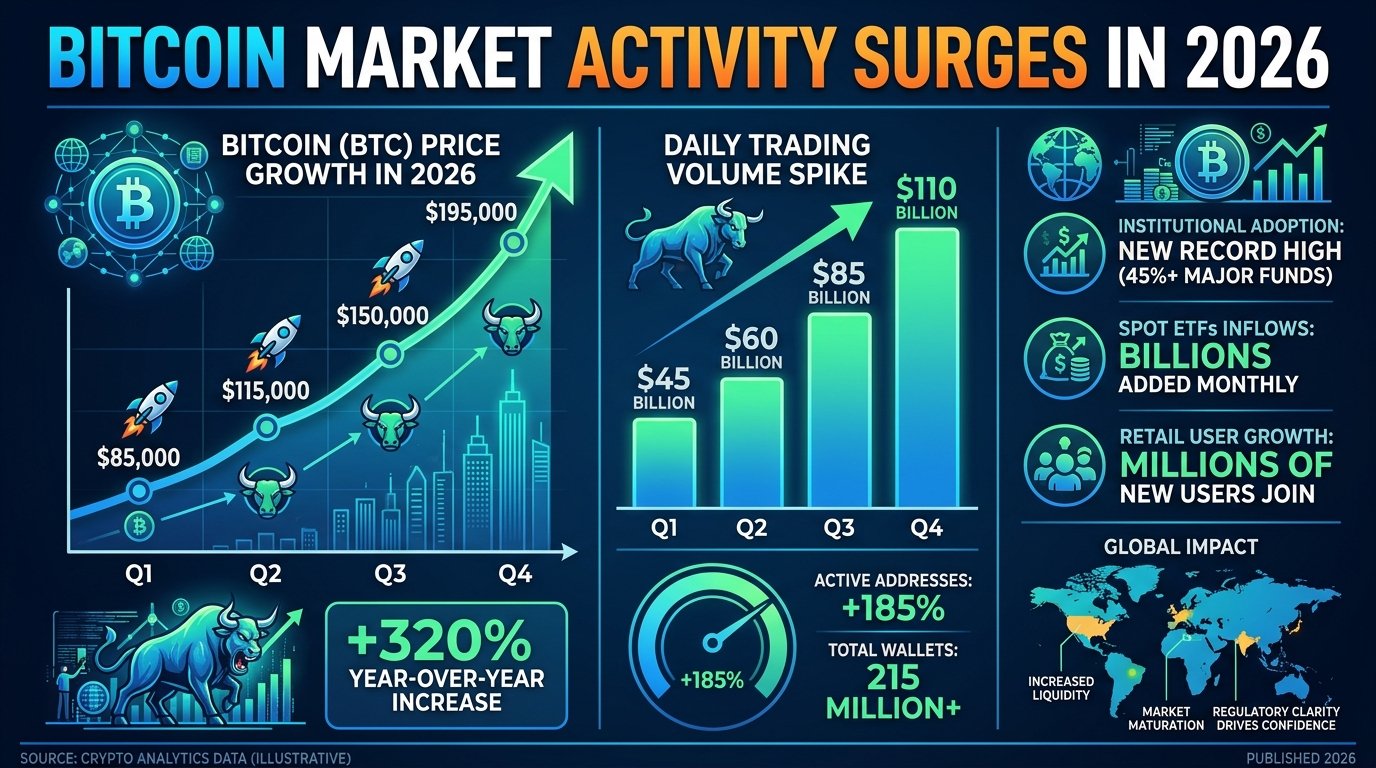 Bitcoin’s global reach has expanded significantly, contributing to the surge in Bitcoin trading participation. Emerging markets, in particular, have embraced Bitcoin as a means of financial inclusion and economic empowerment.
In regions with unstable currencies or limited access to traditional banking systems, Bitcoin provides an alternative financial infrastructure. This has led to increased adoption and trading activity, further strengthening the global Bitcoin ecosystem.
Cross-border transactions, remittances, and decentralized finance applications are also driving demand, highlighting Bitcoin’s potential as a universal financial asset.
Impact of Macroeconomic Factors
Macroeconomic conditions have a profound influence on Bitcoin market activity. Factors such as inflation, interest rates, and geopolitical uncertainties often drive investors toward alternative assets like Bitcoin.
During periods of economic instability, Bitcoin is frequently perceived as a hedge against currency devaluation and financial system risks. This perception has contributed to increased demand and trading activity, particularly during times of global uncertainty.
As the global economy continues to evolve, Bitcoin’s role as a macroeconomic asset is likely to become even more prominent.
The Future of Bitcoin Trading Participation
The evolution of Bitcoin market activity is far from complete. As technology continues to advance and adoption grows, the market is expected to become even more sophisticated and inclusive.
Decentralized exchanges, tokenized assets, and integration with traditional financial systems are likely to shape the next phase of Bitcoin’s development. These innovations will not only enhance accessibility but also create new opportunities for participation.
Furthermore, the convergence of blockchain technology with artificial intelligence and big data analytics has the potential to revolutionize trading strategies and market analysis, paving the way for a more efficient and transparent ecosystem.
Conclusion
The surge in Bitcoin market activity reflects a broader transformation in the financial landscape. As trading participation evolves, driven by institutional involvement, retail engagement, technological advancements, and global adoption, Bitcoin is solidifying its position as a key player in the digital economy.
This evolution is not just about increased trading volumes; it represents a fundamental shift in how value is perceived, transferred, and stored. The growing diversity of market participants has created a more resilient and dynamic ecosystem, capable of adapting to changing economic conditions and technological innovations.
As we look ahead, the continued growth of Bitcoin trading participation is likely to shape the future of finance, offering new opportunities and challenges for investors worldwide.
FAQs
Q. Why is Bitcoin market activity increasing?
Bitcoin market activity is increasing due to growing institutional adoption, improved trading infrastructure, and rising global awareness of cryptocurrencies as an investment asset.
Q. How are institutions influencing Bitcoin trading?
Institutions bring large capital, stability, and credibility to the market, which enhances liquidity and encourages more participation from other investors.
Q. What role do retail investors play in Bitcoin trading?
Retail investors contribute significantly to trading volume and market activity, especially through accessible platforms and increasing interest in digital assets.
Q. How does technology impact Bitcoin market growth?
Technological advancements such as faster transactions, improved security, and advanced trading tools make Bitcoin more accessible and efficient, driving market activity.
Q. Is Bitcoin a long-term investment or a trading asset?
Bitcoin can serve both purposes. Some investors hold it as a long-term store of value, while others actively trade it to capitalize on market volatility.
Leave a Reply