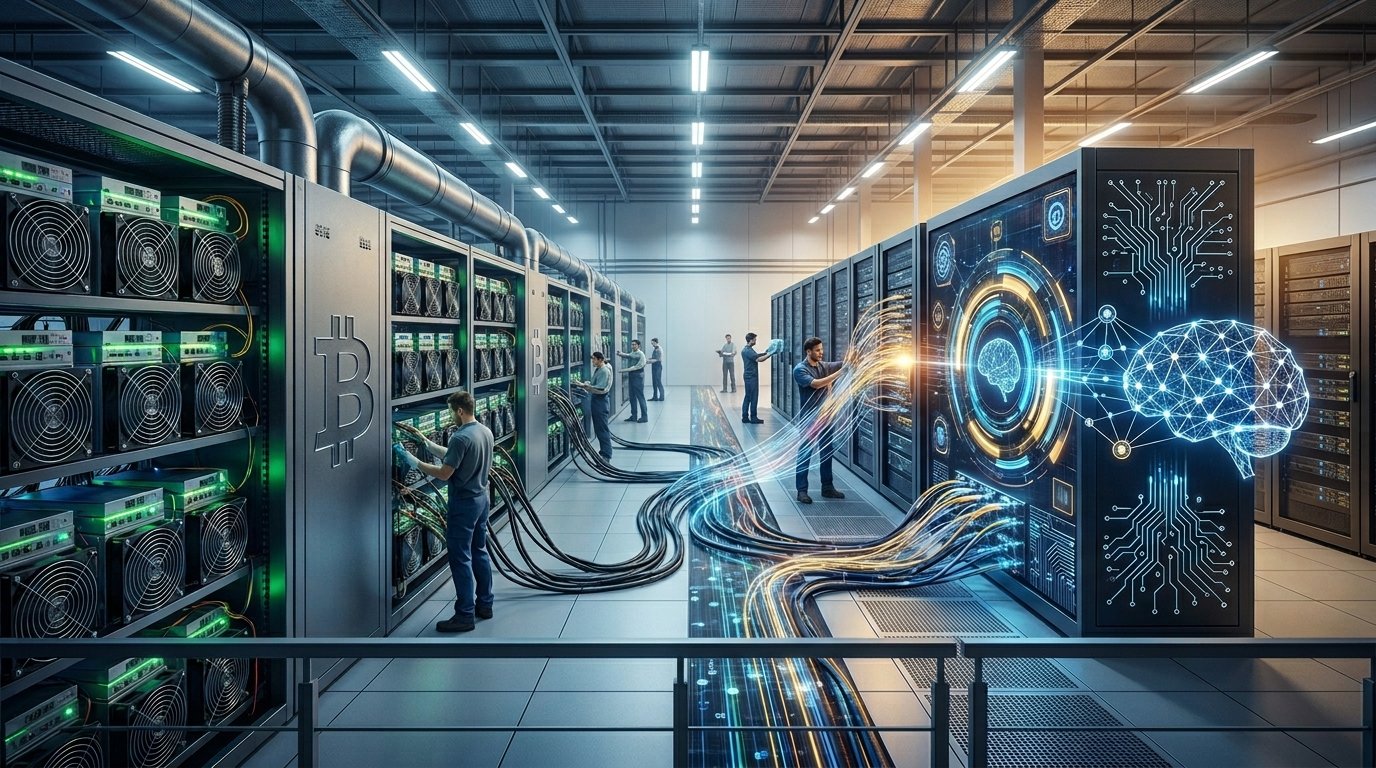
The cryptocurrency mining industry is undergoing a major transformation, and one of the biggest developments comes from MARA Holdings. Known for being one of the largest publicly traded Bitcoin mining firms, the company has reportedly started redirecting capital away from Bitcoin accumulation and toward artificial intelligence infrastructure. This strategic shift signals a broader evolution happening across the digital asset and technology sectors, where AI computing demand is rapidly becoming as valuable as crypto mining operations.
For years, Bitcoin miners focused almost entirely on expanding hash rate capacity, securing low-cost energy agreements, and building massive mining farms. However, changing market conditions, increasing competition, volatile cryptocurrency prices, and the explosive growth of artificial intelligence have forced many companies to reconsider their long-term strategies. MARA Holdings dumping bitcoin for AI infrastructure represents more than just a portfolio adjustment; it reflects a larger movement within the tech and blockchain ecosystem.
The growing need for high-performance computing, AI data centers, machine learning infrastructure, and cloud computing resources has created new opportunities for companies that already possess large-scale energy-intensive facilities. Bitcoin miners are uniquely positioned to capitalize on this transition because they already operate advanced hardware environments, maintain energy partnerships, and understand how to manage large computing operations efficiently.
As AI adoption accelerates worldwide, investors are closely watching whether crypto-focused firms can successfully diversify into artificial intelligence infrastructure. MARA Holdings appears determined to become one of the early leaders in this evolving market, and the decision could reshape both its financial future and the broader crypto mining industry.
Why MARA Holdings Is Moving Beyond Bitcoin
The decision by MARA Holdings to reduce its Bitcoin exposure and invest in AI infrastructure did not emerge overnight. Several economic and technological factors have been pushing mining companies toward diversification for years. Bitcoin mining remains profitable during bullish market cycles, but the industry is also highly vulnerable to price crashes, regulatory pressure, and rising energy costs.
Mining companies experienced significant pressure following Bitcoin halving events, which reduced mining rewards and squeezed profit margins across the sector. At the same time, operational expenses continued rising due to higher electricity costs, equipment upgrades, and increased global mining competition. These challenges encouraged firms like MARA Holdings to search for more stable and scalable revenue sources.
Artificial intelligence infrastructure offers an attractive alternative because demand for AI computing continues to grow at an extraordinary pace. Businesses worldwide are investing billions into machine learning models, AI cloud services, data processing systems, and advanced GPU-powered computing facilities. Unlike Bitcoin mining, which largely depends on cryptocurrency prices, AI infrastructure can generate recurring enterprise revenue through long-term service agreements and computing contracts.
Another important factor behind MARA Holdings dumping bitcoin for AI infrastructure is investor sentiment. Financial markets have increasingly rewarded companies tied to artificial intelligence. AI-related firms have attracted enormous institutional interest, while traditional crypto mining companies have sometimes struggled to maintain investor confidence during bearish cycles. By entering the AI infrastructure market, MARA Holdings may be seeking stronger long-term valuation growth and reduced dependence on Bitcoin volatility.
The Growing Connection Between Bitcoin Mining and AI Computing
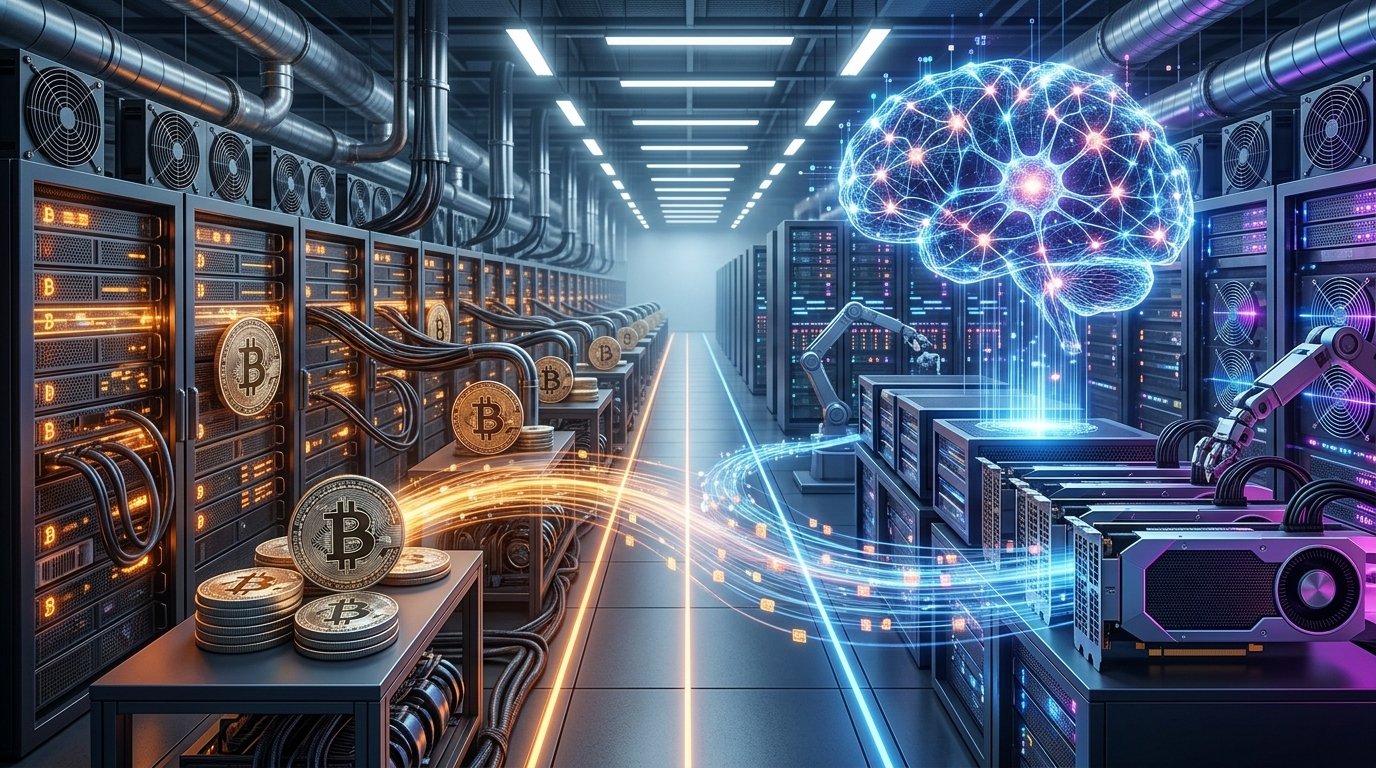
The relationship between crypto mining and AI infrastructure is becoming increasingly interconnected. Both industries rely heavily on high-powered computing systems, cooling technology, electricity management, and data center operations. Because of these similarities, many mining firms are discovering they can adapt existing facilities for AI-related workloads.
Bitcoin mining primarily depends on ASIC hardware designed specifically for cryptographic calculations. AI computing, however, often requires GPUs and specialized processors capable of handling machine learning tasks, neural network training, and complex data analysis. Despite these hardware differences, the underlying infrastructure requirements remain similar.
MARA Holdings already possesses extensive operational expertise in managing large-scale energy-intensive facilities. This gives the company a competitive advantage when transitioning toward AI infrastructure development. Instead of building entirely new systems from scratch, the company can potentially repurpose portions of its existing facilities to support high-performance computing services.
The rise of generative AI has further accelerated this opportunity. Companies developing advanced language models, automation tools, robotics systems, and AI analytics platforms require enormous computing capacity. Data centers capable of handling these workloads are in extremely high demand, creating a profitable market for infrastructure providers.
This shift also demonstrates how digital asset firms are evolving into broader technology infrastructure companies. The era when crypto miners focused solely on producing Bitcoin may gradually give way to hybrid business models combining blockchain operations with AI services, cloud hosting, and enterprise computing solutions.
How AI Infrastructure Could Reshape MARA Holdings
MARA Holdings dumping bitcoin for AI infrastructure could fundamentally change the company’s long-term business model. Traditionally, the company’s financial performance was closely tied to Bitcoin price movements. During bullish periods, mining revenues surged dramatically, but during downturns, profitability often weakened.
AI infrastructure offers a different economic structure. Instead of depending entirely on cryptocurrency market conditions, MARA Holdings could generate more predictable cash flow through enterprise computing services. Companies seeking AI processing power often sign long-term agreements, which may provide greater revenue stability than Bitcoin mining alone.
Another major advantage is scalability. Artificial intelligence demand is projected to grow for many years as industries integrate automation, machine learning, predictive analytics, and AI-powered applications into daily operations. This creates opportunities for infrastructure providers to expand continuously alongside the AI economy.
The move may also improve the company’s reputation among institutional investors. Some traditional investors remain cautious about pure-play crypto businesses due to regulatory uncertainty and market volatility. However, AI infrastructure is viewed as a strategic growth industry with substantial long-term potential. By aligning itself with artificial intelligence, MARA Holdings could attract broader investment interest from technology-focused funds and institutional capital providers.
The transition also highlights how technology sectors are converging. Blockchain, cloud computing, artificial intelligence, and data center infrastructure are no longer isolated industries. Companies capable of integrating expertise across multiple technological domains may gain a stronger competitive position in the coming decade.
The Financial Risks Behind the Strategy
Although the pivot toward AI infrastructure appears promising, MARA Holdings still faces considerable financial and operational risks. Building AI computing infrastructure requires enormous capital investment. Advanced GPUs, cooling systems, networking equipment, and modern data centers are extremely expensive to develop and maintain.
Competition within the AI sector is also intense. Large technology companies already dominate much of the AI infrastructure market. Firms such as NVIDIA, Microsoft, and Amazon possess massive financial resources and established enterprise relationships. MARA Holdings will need to carve out a specialized niche to compete effectively.
Additionally, reducing Bitcoin holdings could create opportunity costs if cryptocurrency prices continue rising. Bitcoin has historically experienced strong long-term appreciation, and many mining companies accumulated large reserves precisely to benefit from future price growth. Selling or reallocating Bitcoin assets too aggressively could expose MARA Holdings to criticism from crypto-focused investors if the market rallies significantly.
There are also operational transition challenges. Running AI infrastructure differs from managing Bitcoin mining operations. AI clients demand reliable uptime, advanced technical support, cybersecurity protections, and scalable cloud integration. Successfully transitioning into this environment requires specialized expertise and significant operational adjustments.
Despite these risks, MARA Holdings appears willing to accept short-term uncertainty in exchange for long-term diversification opportunities. The company’s leadership likely views AI infrastructure as a strategic necessity rather than simply an experimental side project.
The Broader Trend of Crypto Miners Entering AI
MARA Holdings is not the only crypto mining company exploring artificial intelligence infrastructure. Across the industry, several miners are evaluating ways to repurpose their energy resources and computing facilities for AI applications.
This trend emerged partly because the AI boom created massive demand for data center capacity at the same time Bitcoin mining profitability became less predictable. Mining firms recognized that their existing facilities could potentially support AI workloads with the right hardware modifications.
The overlap between mining infrastructure and AI data centers makes this transition economically attractive. Both industries require efficient cooling systems, stable power supplies, large-scale hardware deployment, and optimized facility management. Instead of abandoning existing mining infrastructure, companies can adapt portions of their operations to serve AI markets.
Some analysts believe this convergence could create an entirely new category of hybrid technology firms. These businesses may simultaneously operate cryptocurrency mining services, AI cloud platforms, high-performance computing networks, and blockchain infrastructure solutions.
Investor enthusiasm surrounding artificial intelligence has also accelerated this movement. AI-focused companies currently receive significantly higher market valuations than many crypto mining firms. By associating themselves with AI growth narratives, miners hope to improve shareholder confidence and attract additional capital investment.
MARA Holdings dumping bitcoin for AI infrastructure may therefore represent the beginning of a broader industry transformation rather than an isolated corporate decision.
Energy Infrastructure as a Competitive Advantage
One of the strongest advantages MARA Holdings possesses is its experience with energy management. Both Bitcoin mining and AI computing consume enormous amounts of electricity, making energy efficiency a critical factor in profitability.
Over the years, crypto mining companies have invested heavily in securing low-cost power agreements and optimizing energy consumption. These capabilities may become extremely valuable in the AI infrastructure market, where electricity demand continues rising rapidly.
AI data centers require continuous computing power for machine learning training, data analysis, and cloud processing services. Companies capable of delivering reliable computing at competitive energy costs may gain a major advantage in attracting enterprise clients.
MARA Holdings already understands how to operate large-scale computing environments under energy-intensive conditions. This operational experience could reduce some of the barriers involved in transitioning toward AI-focused infrastructure services.
Sustainability concerns are also becoming increasingly important. Environmental criticism has long surrounded Bitcoin mining due to its electricity consumption. AI infrastructure faces similar scrutiny as global data center demand expands. Companies capable of integrating renewable energy sources and improving energy efficiency may achieve stronger regulatory positioning and investor support.
By leveraging its energy expertise, MARA Holdings could potentially position itself as a next-generation computing infrastructure provider focused on both blockchain and artificial intelligence technologies.
Market Reactions to MARA Holdings’ AI Pivot
Financial markets have responded with significant interest to reports that MARA Holdings is reallocating resources toward AI infrastructure. Investors increasingly view artificial intelligence as one of the most transformative technological trends of the decade, and companies connected to AI development often experience heightened market attention.
Some analysts believe the move demonstrates strategic foresight. They argue that diversifying revenue streams can help protect MARA Holdings from future crypto market downturns while opening access to rapidly expanding AI-related opportunities.
Others remain cautious. Critics argue that Bitcoin mining companies may underestimate the complexity of competing in the AI infrastructure market. While the operational overlap exists, enterprise AI services require different customer relationships, software ecosystems, and technological capabilities.
Crypto investors are also divided on the strategy. Some support diversification and view AI as a natural evolution for mining companies. Others worry that reducing Bitcoin exposure could weaken the company’s core identity and long-term crypto positioning.
Regardless of differing opinions, one reality is clear: the market is paying close attention to how crypto miners adapt to the AI revolution. MARA Holdings dumping bitcoin for AI infrastructure has become one of the most closely watched strategic pivots within the digital asset sector.
Could AI Become More Profitable Than Bitcoin Mining?
An important question emerging from this transition is whether AI infrastructure could eventually generate higher profits than Bitcoin mining itself. While Bitcoin mining profitability fluctuates with cryptocurrency prices and mining difficulty levels, AI computing demand may offer more stable long-term growth.
The global artificial intelligence industry is expected to expand dramatically over the next decade. Businesses across healthcare, finance, manufacturing, cybersecurity, entertainment, and logistics increasingly rely on AI-powered technologies. This creates sustained demand for computing infrastructure capable of supporting advanced machine learning systems.
AI infrastructure providers can potentially earn recurring revenue through subscription services, enterprise contracts, cloud computing agreements, and dedicated processing resources. These revenue streams may prove more predictable than cryptocurrency mining income, which remains closely tied to market cycles.
However, profitability depends heavily on execution. Building competitive AI infrastructure requires advanced technical capabilities, reliable service delivery, and substantial ongoing investment. Success is far from guaranteed.
For MARA Holdings, the ideal outcome may not involve abandoning Bitcoin mining entirely. Instead, the company could pursue a hybrid strategy that combines digital asset operations with AI infrastructure services. Such diversification might allow the company to benefit from both cryptocurrency appreciation and artificial intelligence expansion simultaneously.
The Future of MARA Holdings and the Crypto Industry
The decision by MARA Holdings to shift resources toward AI infrastructure reflects a broader reality facing the crypto industry. Companies can no longer rely solely on Bitcoin mining growth to sustain long-term expansion. Diversification, innovation, and technological adaptability are becoming increasingly essential.
Artificial intelligence represents one of the largest infrastructure opportunities in modern technology markets. By entering this space early, MARA Holdings hopes to establish itself as more than just a crypto mining company. The firm appears determined to become a diversified digital infrastructure provider capable of participating in multiple high-growth sectors.
This transformation could influence the strategies of other mining firms as well. If MARA Holdings successfully builds profitable AI operations, competitors may accelerate similar transitions. The line between crypto infrastructure companies and AI computing providers may continue blurring in the years ahead.
At the same time, Bitcoin mining is unlikely to disappear. Cryptocurrency remains a major global industry, and miners will continue playing a critical role in securing blockchain networks. Instead, the future may involve hybrid companies balancing blockchain operations with AI services, cloud computing, and advanced data center management.
The coming years will determine whether MARA Holdings dumping bitcoin for AI infrastructure becomes a visionary strategic move or a risky deviation from its core business. Either way, the decision highlights how rapidly the technology landscape is evolving.
Conclusion
MARA Holdings’ decision to redirect resources from Bitcoin accumulation toward AI infrastructure marks a significant turning point for both the company and the broader crypto mining industry. The move reflects growing recognition that artificial intelligence is becoming one of the world’s most valuable technological sectors, with enormous demand for computing power and data center infrastructure.
By leveraging its experience in energy management, large-scale computing operations, and infrastructure deployment, MARA Holdings hopes to position itself at the intersection of blockchain technology and artificial intelligence. While the strategy carries substantial risks, it also offers opportunities for diversification, long-term revenue stability, and expanded investor interest.
The shift demonstrates how crypto companies are adapting to changing market realities. Bitcoin mining alone may no longer provide sufficient growth potential for publicly traded firms seeking long-term expansion. AI infrastructure, cloud computing, and enterprise technology services are emerging as critical new frontiers.
Whether MARA Holdings ultimately succeeds will depend on execution, market conditions, and its ability to compete within the rapidly evolving AI ecosystem. However, one thing is certain: the convergence of cryptocurrency infrastructure and artificial intelligence is becoming one of the most important trends shaping the future of technology.
FAQs
Q.Why is MARA Holdings investing in AI infrastructure?
MARA Holdings is investing in AI infrastructure to diversify revenue streams, reduce dependence on Bitcoin price volatility, and capitalize on growing global demand for artificial intelligence computing services.
Q.Does this mean MARA Holdings is abandoning Bitcoin mining?
No, the company is not necessarily abandoning Bitcoin mining entirely. Instead, it appears to be pursuing a broader strategy that combines crypto operations with AI infrastructure development.
Q.Why are crypto miners interested in artificial intelligence?
Crypto miners already operate large-scale computing facilities with advanced energy systems and cooling infrastructure. These capabilities can be adapted to support AI data centers and high-performance computing services.
Q.What risks does MARA Holdings face with this strategy?
The company faces risks including high infrastructure costs, strong competition from established AI companies, operational transition challenges, and potential opportunity costs if Bitcoin prices continue rising.
Q.Could AI infrastructure become more profitable than Bitcoin mining?
Potentially yes. AI infrastructure may provide more stable and recurring revenue through enterprise contracts and cloud services, while Bitcoin mining profitability often fluctuates with cryptocurrency market conditions.