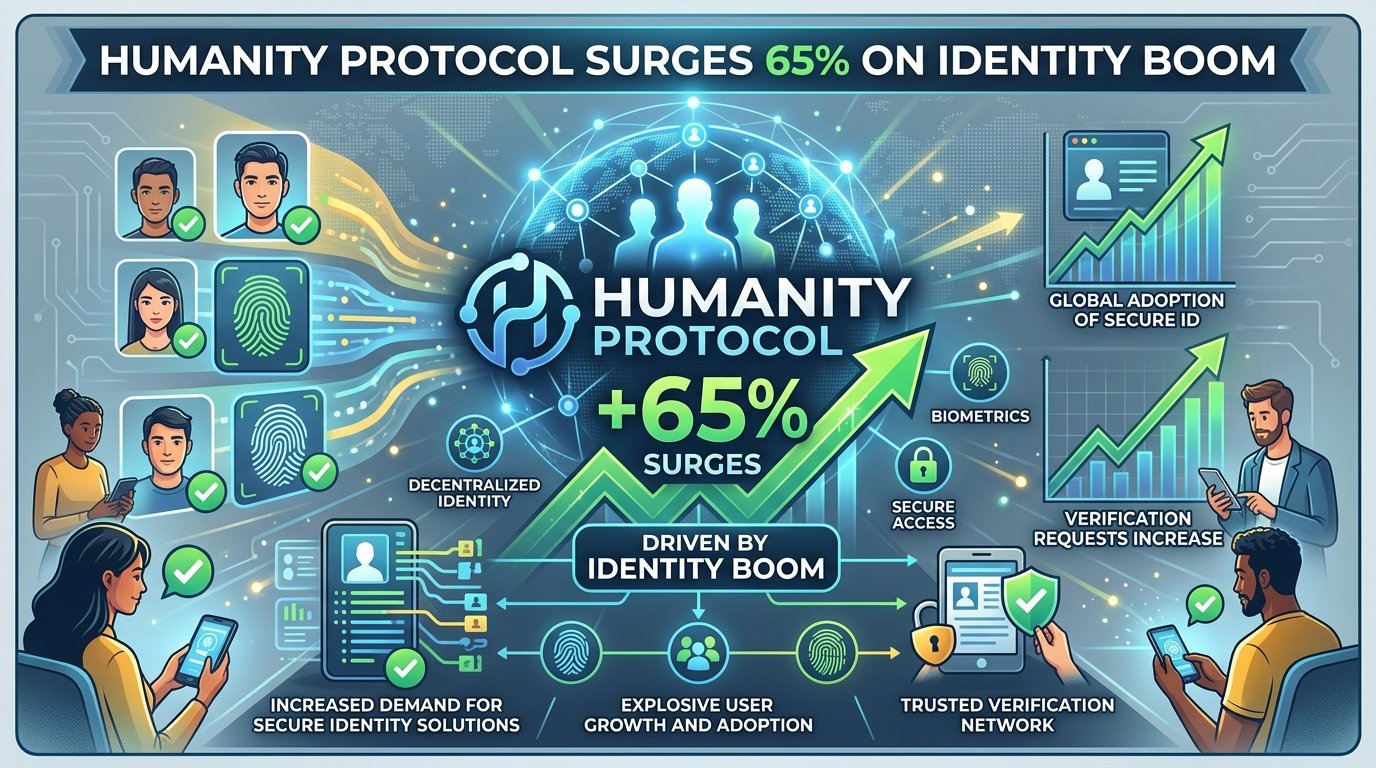
The cryptocurrency market thrives on narratives, and in 2026, one of the most powerful emerging themes is biometric identity in Web3. At the center of this shift is Humanity Protocol, a decentralized identity project that has surged dramatically—recording a 65% price increase in a short span amid growing investor interest and technological breakthroughs.
This rally is not just another speculative pump. Instead, it reflects a deeper transformation in how the digital world approaches identity, privacy, and trust. As artificial intelligence rapidly advances and synthetic identities become indistinguishable from real users, the need for verifiable human identity has become critical. Humanity Protocol is positioning itself as a foundational infrastructure layer in this new paradigm, leveraging biometric verification, zero-knowledge proofs, and decentralized architecture to solve one of the internet’s biggest problems.
The surge in Humanity Protocol is also tied to broader industry dynamics. Competing projects have faced scrutiny, while demand for secure identity solutions has intensified. This has allowed Humanity Protocol to step into the spotlight, benefiting from a narrative shift that prioritizes proof-of-humanity systems, privacy-first identity frameworks, and AI-resis tant authentication mechanisms.
In this article, we will explore the factors behind Humanity Protocol’s explosive growth, the technology powering its ecosystem, the evolving biometric identity narrative, and what the future holds for this rapidly rising crypto asset.
The 65% Surge: What Triggered the Rally?
The recent rally in Humanity Protocol did not occur in isolation. Multiple converging factors contributed to the sudden spike in price and market attention.
One of the most significant catalysts was the changing competitive landscape in biometric crypto projects. As rival platforms encountered credibility issues and regulatory scrutiny, investors began rotating capital into alternatives perceived as more robust and privacy-conscious. This shift directly benefited Humanity Protocol, which saw a surge in trading volume and market capitalization.
At the same time, on-chain data revealed increasing whale accumulation, indicating that large investors were positioning themselves ahead of anticipated growth. This type of accumulation often signals strong confidence in a project’s long-term potential and tends to precede sustained bullish momentum.
Another key factor was the broader AI identity narrative. As concerns about bots, deepfakes, and AI-generated personas intensified, projects offering verifiable human identity gained traction. Humanity Protocol was increasingly viewed not just as a crypto token but as essential infrastructure for the next phase of the internet.
The result was a perfect storm of market rotation, narrative alignment, and institutional interest, driving the token’s rapid ascent.
Understanding Humanity Protocol’s Core Technology
Biometric Identity Meets Blockchain
At its core, Humanity Protocol is designed to solve a fundamental problem: how to verify that someone is human without compromising their privacy.
The project uses palm-scan biometrics as its primary verification method. Unlike traditional systems that store sensitive biometric data, Humanity Protocol employs zero-knowledge proofs, allowing users to prove their identity without revealing the underlying data.
This approach aligns with the growing demand for self-sovereign identity, where individuals control their personal data rather than relying on centralized institutions.
Zero-Knowledge Proofs and Privacy
Zero-knowledge proofs (ZK proofs) are a cornerstone of Humanity Protocol’s architecture. These cryptographic techniques enable a user to verify a claim—such as being a unique human—without exposing any additional information.
This means users can authenticate across platforms without repeatedly sharing sensitive data, reducing the risk of data breaches and identity theft. It also ensures compliance with global privacy standards, making the protocol attractive for enterprise adoption.
The Trust Layer Vision
Humanity Protocol is evolving beyond simple identity verification into what it calls a “Trust Layer”—a foundational infrastructure for the internet.
This layer aims to enable applications ranging from secure login systems to fraud-resistant transactions and decentralized governance. By embedding trust directly into digital interactions, Humanity Protocol seeks to redefine how online ecosystems operate.
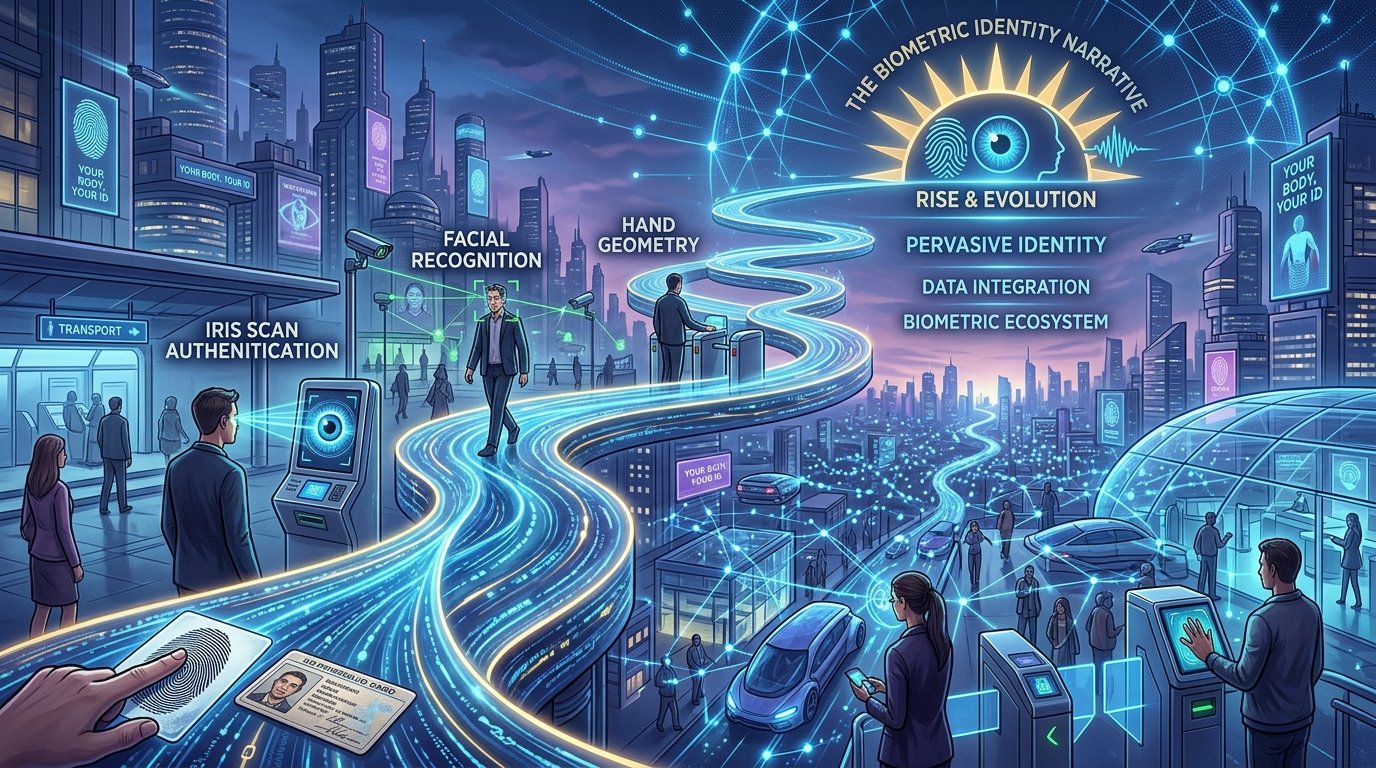
The Rise of the Biometric Identity Narrative
Why Identity Matters More Than Ever
The internet was originally built without a robust identity layer. As a result, platforms have struggled with fake accounts, bots, and fraudulent activities for decades.
Today, the problem is magnified by the rise of AI. Advanced algorithms can generate realistic personas, making it increasingly difficult to distinguish between humans and machines. This has created a pressing need for proof-of-humanity solutions.
Humanity Protocol addresses this challenge by providing a scalable, privacy-preserving identity framework that can be integrated across both Web2 and Web3 environments.
From Proof of Personhood to Proof of Trust
The evolution of identity systems has moved from simple verification to more complex frameworks that incorporate trust and reputation.
Humanity Protocol is leading this transition by shifting from proof of personhood to proof of trust, enabling users to verify not just their existence but also their credibility in a decentralized environment.
This shift is crucial for applications such as decentralized finance, online marketplaces, and governance systems, where trust plays a central role.
Competing Approaches in the Market
The biometric identity space is becoming increasingly competitive, with multiple projects exploring different approaches.
Some platforms rely on iris scanning, while others use facial recognition or social verification. However, these methods often face challenges related to privacy, scalability, and regulatory compliance.
Humanity Protocol’s use of palm biometrics and ZK proofs offers a unique balance between security, privacy, and usability, positioning it as a strong contender in the race to define digital identity standards.
Market Dynamics and Investor Sentiment
Whale Activity and Institutional Interest
Large-scale investors have played a significant role in Humanity Protocol’s recent surge. Whale accumulation indicates growing confidence in the project’s fundamentals and long-term potential.
Institutional interest has also increased, driven by the protocol’s innovative approach to identity and its potential applications across multiple industries.
Technical Breakout and Momentum
From a technical perspective, Humanity Protocol has shown strong bullish signals. Analysts have identified key support and resistance levels, with the token forming patterns that suggest continued upward momentum.
This technical strength, combined with positive sentiment, has attracted both retail and institutional traders.
Narrative-Driven Markets
Crypto markets are heavily influenced by narratives, and the biometric identity narrative is gaining traction rapidly.
As more investors recognize the importance of identity in the digital age, projects like Humanity Protocol are likely to benefit from sustained interest and capital inflows.
Real-World Use Cases and Adoption Potential
Fraud Prevention and Security
One of the most immediate applications of Humanity Protocol is in fraud prevention. By ensuring that users are real humans, the protocol can significantly reduce the risk of scams, bots, and fake accounts.
This is particularly valuable for industries such as finance, e-commerce, and social media.
Decentralized Finance (DeFi)
In the DeFi space, identity verification can enhance security and enable new use cases such as undercollateralized lending and reputation-based systems.
Humanity Protocol’s technology allows for secure and private identity verification, making it a valuable addition to the DeFi ecosystem.
Web2 Integration
Humanity Protocol is not limited to blockchain applications. Its infrastructure can be integrated into traditional platforms, enabling seamless identity verification across different environments.
This interoperability is a key factor in its potential for widespread adoption.
Challenges and Risks
Privacy Concerns
Despite its privacy-focused design, biometric systems inherently raise concerns about data security and misuse.
Humanity Protocol addresses these concerns through zero-knowledge proofs, but public perception remains a critical factor in adoption.
Regulatory Uncertainty
The regulatory landscape for biometric data and cryptocurrency is still evolving. Governments may impose restrictions that could impact the growth of identity-focused projects.
Competition
The biometric identity space is becoming increasingly crowded, with multiple projects competing for market share.
Humanity Protocol will need to continue innovating to maintain its competitive edge.
Future Outlook: What Lies Ahead?
The future of Humanity Protocol looks promising, driven by strong fundamentals and a compelling narrative.
As the internet evolves, the need for secure, decentralized identity solutions will only increase. Humanity Protocol is well-positioned to capitalize on this trend, potentially becoming a key infrastructure layer for the digital economy.
The upcoming developments, including enhancements to its Trust Layer and expanded partnerships, could further strengthen its position in the market.
Conclusion
Humanity Protocol’s 65% surge is more than just a price movement—it represents a significant shift in the crypto narrative toward biometric identity and decentralized trust. As AI continues to blur the lines between human and machine, the importance of verifiable identity will only grow.
By combining palm biometrics, zero-knowledge proofs, and a decentralized architecture, Humanity Protocol is addressing one of the most critical challenges of the digital age. Its recent rally reflects growing recognition of this potential, as investors and developers alike look toward a future where trust is built into the very fabric of the internet.
While challenges remain, the trajectory of Humanity Protocol suggests that it could play a central role in shaping the next generation of digital identity systems.
FAQs
Q. What is Humanity Protocol?
Humanity Protocol is a blockchain-based identity platform that uses biometric verification and zero-knowledge proofs to confirm that users are real humans without exposing personal data.
Q. Why did Humanity Protocol surge 65%?
The surge was driven by a combination of narrative shifts toward biometric identity, whale accumulation, technical breakouts, and increased demand for AI-resistant identity solutions.
Q. How does Humanity Protocol protect user privacy?
It uses zero-knowledge proofs, allowing users to verify their identity without revealing sensitive biometric data.
Q. What makes Humanity Protocol different from competitors?
Its use of palm biometrics, decentralized architecture, and focus on privacy sets it apart from other identity solutions that rely on more intrusive methods.
Q. What are the future prospects of Humanity Protocol?
With growing demand for decentralized identity solutions, Humanity Protocol has strong potential to become a key infrastructure layer in Web3 and beyond.
Leave a Reply