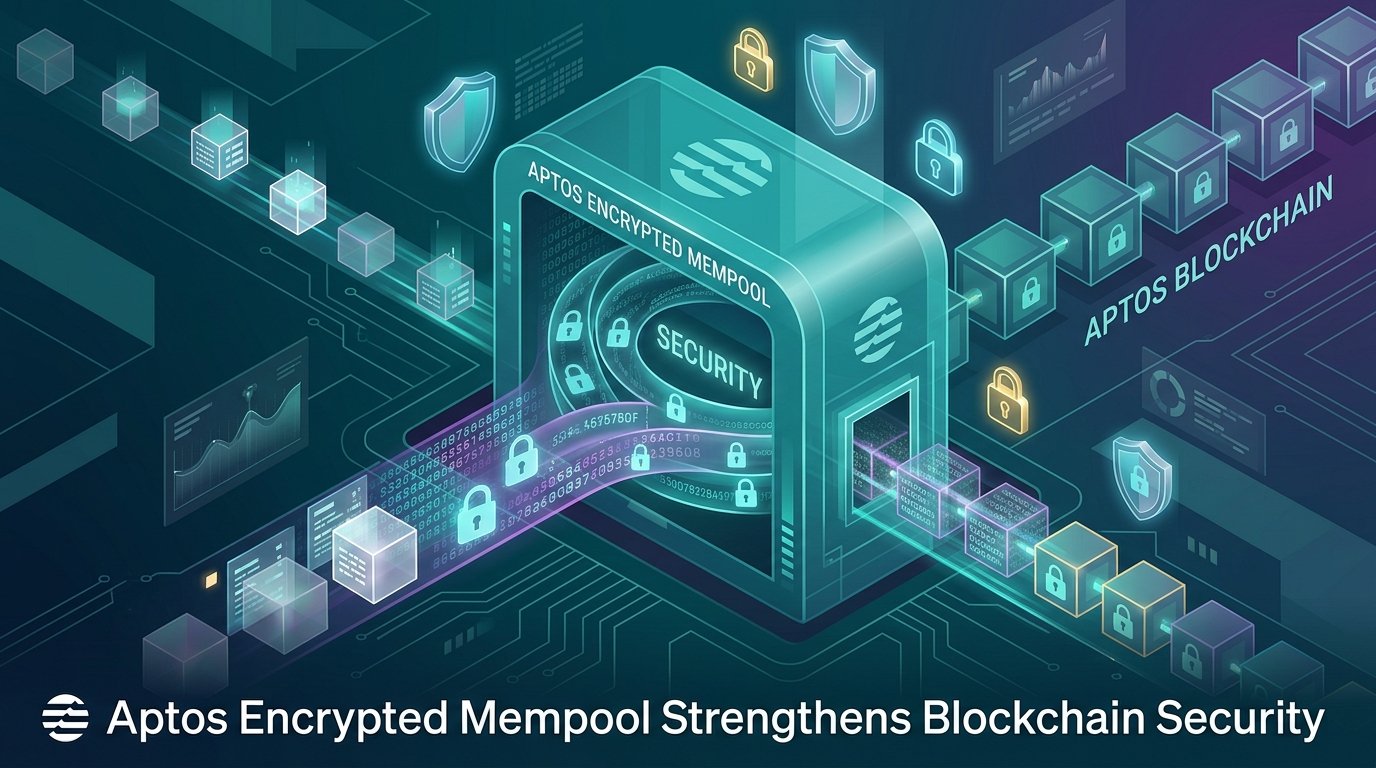
The blockchain industry continues to evolve rapidly as networks compete to provide faster, safer, and more scalable ecosystems for decentralized applications. One of the biggest concerns in modern blockchain infrastructure is the growing problem of frontrunning, transaction manipulation, and network censorship. These issues have become increasingly visible across decentralized finance ecosystems, where malicious actors exploit transaction visibility to gain unfair advantages. In response to these challenges, Aptos encrypted mempool technology has emerged as a major innovation designed to improve transaction privacy and network fairness.
The launch of the Aptos encrypted mempool represents an important step toward protecting users from manipulation within decentralized systems. By encrypting pending transactions before validators process them, Aptos aims to prevent bad actors from observing and exploiting sensitive transaction information. This approach can significantly reduce MEV attacks, protect traders from unfair losses, and create a more transparent and equitable blockchain environment.
As blockchain adoption grows globally, networks are under pressure to solve long-standing security and scalability problems without sacrificing decentralization. The implementation of encrypted mempool technology demonstrates how Aptos is positioning itself as a forward-thinking Layer-1 blockchain focused on user protection, performance, and long-term sustainability. The development also reflects a broader industry trend toward privacy-enhancing technologies that can strengthen trust in decentralized finance.
This article explores how the Aptos encrypted mempool works, why it matters for the blockchain ecosystem, and how it could influence the future of decentralized networks. It also examines the impact on traders, validators, developers, and institutional participants looking for safer blockchain infrastructure.
Understanding the Aptos Encrypted Mempool
A mempool is essentially a waiting area where blockchain transactions remain before they are validated and permanently added to the blockchain. In traditional blockchain systems, pending transactions are often visible to anyone monitoring the network. This transparency allows bots and sophisticated traders to inspect transaction details and exploit them for profit.
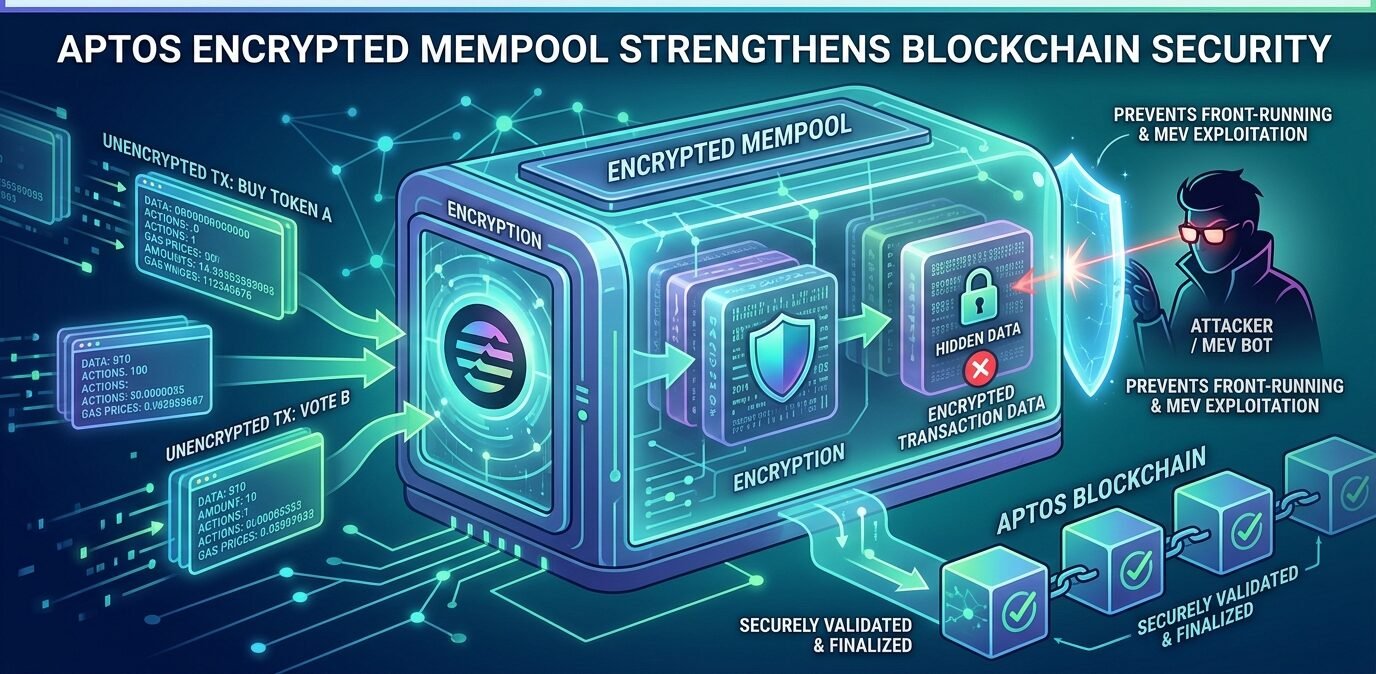
The Aptos encrypted mempool changes this model by encrypting transaction data while it is waiting for validation. Instead of exposing transaction contents publicly, the system hides critical information until the transaction is finalized. This process significantly reduces opportunities for malicious actors to manipulate transaction ordering or execute frontrunning strategies.
The innovation is particularly important for decentralized finance applications, where even milliseconds of visibility can create opportunities for arbitrage bots to exploit traders. By preventing observers from accessing transaction details prematurely, Aptos creates a more secure and fair transaction environment.
The encrypted mempool approach aligns with growing demand for blockchain privacy, enhanced transaction confidentiality, and stronger network integrity. It also demonstrates how Layer-1 networks are evolving beyond speed and scalability to address fairness and user protection.
Why Frontrunning Is a Major Blockchain Problem
The Mechanics Behind Frontrunning
Frontrunning occurs when a malicious actor sees a pending transaction and quickly submits another transaction ahead of it to profit from expected market movements. This tactic is common in decentralized exchanges and DeFi protocols where transaction visibility can reveal trading opportunities.
For example, if a large buy order is detected in the mempool, bots may purchase the asset first and then sell it at a higher price after the original trade increases demand. This manipulation harms regular users by increasing slippage and transaction costs.
The rise of MEV bots, automated trading algorithms, and high-frequency blockchain trading has intensified this issue across major blockchain ecosystems. Traders often lose value simply because their transactions are visible before confirmation.
Impact on Decentralized Finance
The consequences of frontrunning extend beyond individual losses. Persistent transaction manipulation can damage trust in decentralized finance systems. Users may feel disadvantaged when competing against automated bots with advanced infrastructure and faster transaction execution capabilities.
The Aptos encrypted mempool seeks to solve this issue by limiting access to transaction data until the validation process is complete. This significantly reduces the ability of bots to monitor and exploit pending trades.
As DeFi platforms continue expanding, reducing frontrunning becomes essential for mainstream adoption. Institutional investors, in particular, require more secure and predictable transaction environments before committing significant capital to blockchain ecosystems.
How the Aptos Encrypted Mempool Works
The architecture behind the Aptos encrypted mempool focuses on protecting transaction details while maintaining network efficiency. Instead of broadcasting readable transaction information across the network immediately, Aptos encrypts transaction data during the mempool phase.
Validators receive encrypted transactions that cannot be interpreted until the correct stage of consensus and execution. This mechanism prevents external observers and malicious validators from exploiting sensitive information before transactions are finalized.
The encrypted mempool system also supports improved fairness in transaction ordering. Since transaction details remain hidden, validators have fewer opportunities to reorder transactions for personal profit or external incentives.
One of the most important aspects of this design is that it attempts to preserve blockchain performance while improving privacy. Many privacy-focused systems sacrifice speed or scalability, but Aptos aims to integrate encryption without significantly reducing throughput or increasing latency.
The network’s architecture leverages advanced cryptographic techniques alongside the Aptos consensus mechanism to maintain efficiency and security simultaneously. This balance is critical for supporting high-performance decentralized applications.
The Role of MEV in Blockchain Ecosystems
Understanding Miner Extractable Value
Miner Extractable Value, commonly known as MEV, refers to profits generated by manipulating transaction ordering within a blockchain. Validators or bots can exploit transaction visibility to maximize profits through arbitrage, liquidations, and frontrunning strategies.
MEV has become a controversial issue in blockchain ecosystems because it creates unfair advantages for sophisticated participants. While some forms of MEV are considered unavoidable, excessive exploitation can harm ordinary users and reduce confidence in decentralized systems.
The Aptos encrypted mempool directly targets one of the primary enablers of MEV exploitation: public transaction visibility. By encrypting transactions, Aptos makes it harder for bots and validators to predict profitable opportunities before confirmation.
Reducing Harmful MEV Practices
Not all MEV activity is inherently harmful, but frontrunning and censorship-based strategies often create negative user experiences. Traders may receive worse prices, while smaller participants struggle to compete with automated systems.
Aptos aims to create a healthier DeFi ecosystem by limiting these exploitative behaviors. The encrypted mempool can help reduce transaction manipulation while still allowing decentralized markets to function efficiently.
This development may encourage other blockchain networks to adopt similar protections as the industry seeks more equitable transaction processing systems.
How Encrypted Mempools Improve Blockchain Fairness
Fairness has become one of the defining challenges in decentralized finance. While blockchain technology promotes openness and transparency, excessive visibility can paradoxically create opportunities for exploitation.
The Aptos encrypted mempool addresses this contradiction by introducing selective privacy during the transaction validation process. Users can still benefit from blockchain transparency after confirmation while avoiding manipulation beforehand.
This approach enhances fairness for retail traders, developers, and institutional participants alike. Smaller users no longer face the same level of disadvantage against high-speed trading bots capable of analyzing mempool data in real time.
Improved fairness can also strengthen user confidence in decentralized applications. When participants believe the network operates equitably, they are more likely to engage with DeFi platforms, NFT marketplaces, and blockchain-based financial services.
In many ways, encrypted mempool technology represents an evolution in blockchain design philosophy. Instead of prioritizing visibility at every stage, networks are beginning to recognize the importance of protecting users during vulnerable phases of transaction processing.
The Connection Between Privacy and Decentralization
Privacy has become increasingly important in blockchain discussions. Public transaction visibility can expose trading strategies, financial behavior, and sensitive user activity. While transparency remains valuable, complete exposure can discourage institutional participation and reduce user security.
The Aptos encrypted mempool demonstrates how privacy-enhancing technologies can coexist with decentralization. The system does not eliminate transparency entirely but introduces confidentiality during critical transaction phases.
This balance is especially important for enterprise adoption. Businesses and institutional investors often require stronger privacy guarantees before using blockchain infrastructure for large-scale financial operations.
Encrypted mempool technology may therefore contribute to broader blockchain adoption by addressing concerns around confidentiality, manipulation, and transaction security.
Advantages for Developers and dApps
Developers building decentralized applications on Aptos could benefit significantly from the encrypted mempool system. Applications involving trading, lending, gaming, and financial services are particularly vulnerable to transaction manipulation.
By reducing frontrunning risks, developers can create more reliable and trustworthy user experiences. This can increase adoption rates and improve application performance within competitive markets.
The Aptos encrypted mempool may also encourage innovation in areas requiring stronger transaction confidentiality. Developers can design applications that rely on secure execution environments without exposing sensitive information prematurely.
Enhanced network fairness can additionally improve ecosystem reputation, attracting more projects and liquidity providers to the Aptos blockchain.
Potential Challenges and Limitations
Although the Aptos encrypted mempool offers significant benefits, implementing encrypted transaction systems also presents technical challenges. Encryption processes can introduce computational overhead, potentially affecting network performance if not optimized carefully.
Another concern involves validator coordination and key management. Securely handling encrypted transactions requires sophisticated infrastructure to prevent vulnerabilities or decryption failures.
There is also ongoing debate regarding the balance between transparency and privacy in blockchain ecosystems. Some critics argue that excessive privacy mechanisms could reduce accountability or complicate auditing processes.
However, Aptos appears focused on maintaining a balance that protects users without undermining decentralization or network integrity. The long-term effectiveness of encrypted mempool technology will depend on how well the system performs under real-world conditions.
Industry Implications of the Aptos Encrypted Mempool
The introduction of encrypted mempool technology could influence the broader blockchain industry significantly. Competing Layer-1 networks may feel pressure to develop similar protections as users demand stronger defenses against frontrunning and censorship.
The Aptos encrypted mempool may also accelerate innovation in cryptographic infrastructure, transaction privacy tools, and decentralized consensus mechanisms. Privacy-enhancing technologies are increasingly becoming a competitive differentiator among blockchain ecosystems.
Institutional investors could view encrypted mempool systems as a positive step toward creating more mature and secure blockchain environments. Reduced manipulation risks may encourage larger financial firms to explore decentralized finance participation.
Additionally, regulators observing blockchain markets may appreciate efforts to reduce exploitative trading behavior. Fairer transaction systems can improve market integrity and support broader acceptance of decentralized technologies.
How Aptos Positions Itself in the Layer-1 Blockchain Race
The industry is highly competitive, with networks constantly introducing innovations to attract developers and users. Aptos has focused heavily on scalability, transaction speed, and developer-friendly infrastructure since its launch.
The addition of the Aptos encrypted mempool strengthens the network’s position as a technologically advanced Layer-1 blockchain capable of addressing real-world DeFi challenges. Rather than focusing solely on throughput, Aptos is emphasizing transaction fairness and user protection.
This strategy may help the network differentiate itself from competitors that continue struggling with MEV exploitation and transaction manipulation issues.
As blockchain ecosystems mature, users are increasingly prioritizing security, fairness, and reliability alongside performance metrics. Aptos appears to recognize this shift and is adapting its infrastructure accordingly.
The Future of Encrypted Blockchain Infrastructure
Encrypted mempool technology may represent the beginning of a broader transformation in blockchain architecture. Future decentralized systems could integrate more advanced privacy-preserving mechanisms while maintaining scalability and decentralization.
The Aptos encrypted mempool highlights how blockchain innovation is evolving beyond simple transaction speed improvements. Networks are now addressing complex economic and security problems that directly impact user experience.
Emerging technologies such as zero-knowledge proofs, confidential transactions, and secure multi-party computation may further enhance blockchain privacy in the coming years. Aptos could potentially integrate additional cryptographic tools to strengthen transaction confidentiality even further.
The broader industry will likely monitor the effectiveness of Aptos’ approach closely. If successful, encrypted mempools could become a standard feature across major blockchain ecosystems.
Conclusion
The introduction of the Aptos encrypted mempool marks an important milestone in the evolution of blockchain security and decentralized finance infrastructure. By encrypting pending transactions, Aptos aims to reduce frontrunning, minimize harmful MEV exploitation, and strengthen resistance to censorship.
This innovation addresses one of the most persistent problems facing modern blockchain ecosystems: the vulnerability created by publicly visible pending transactions. Through enhanced privacy and fairer transaction processing, Aptos seeks to create a more equitable environment for traders, developers, and institutional participants.
As decentralized finance continues expanding globally, networks capable of balancing transparency, privacy, scalability, and security will likely gain a competitive advantage. The Aptos encrypted mempool reflects a growing industry recognition that protecting users from manipulation is essential for long-term blockchain adoption.
While challenges remain, encrypted mempool technology could significantly influence the future direction of decentralized systems. If Aptos successfully demonstrates the effectiveness of this approach, it may inspire widespread adoption of similar privacy-focused infrastructure across the blockchain industry.
FAQs
Q.What is the Aptos encrypted mempool?
The Aptos encrypted mempool is a blockchain mechanism that encrypts pending transactions before validation to reduce frontrunning, MEV exploitation, and transaction censorship.
Q.How does encrypted mempool technology prevent frontrunning?
Encrypted mempool systems hide transaction details while they wait for confirmation. This prevents bots and malicious actors from seeing pending trades and exploiting them for profit.
Q.Why is frontrunning harmful in decentralized finance?
Frontrunning can increase trading costs, create unfair market conditions, and reduce trust in DeFi platforms by allowing bots to manipulate transaction ordering for financial gain.
Q.Does the Aptos encrypted mempool improve blockchain privacy?
Yes, the encrypted mempool enhances privacy by protecting transaction information during the validation phase while still maintaining blockchain transparency after confirmation.
Q.Could other blockchain networks adopt encrypted mempool systems?
Many industry experts believe encrypted mempool technology could become more common as blockchain ecosystems seek better protection against MEV attacks, censorship, and transaction manipulation.
Leave a Reply