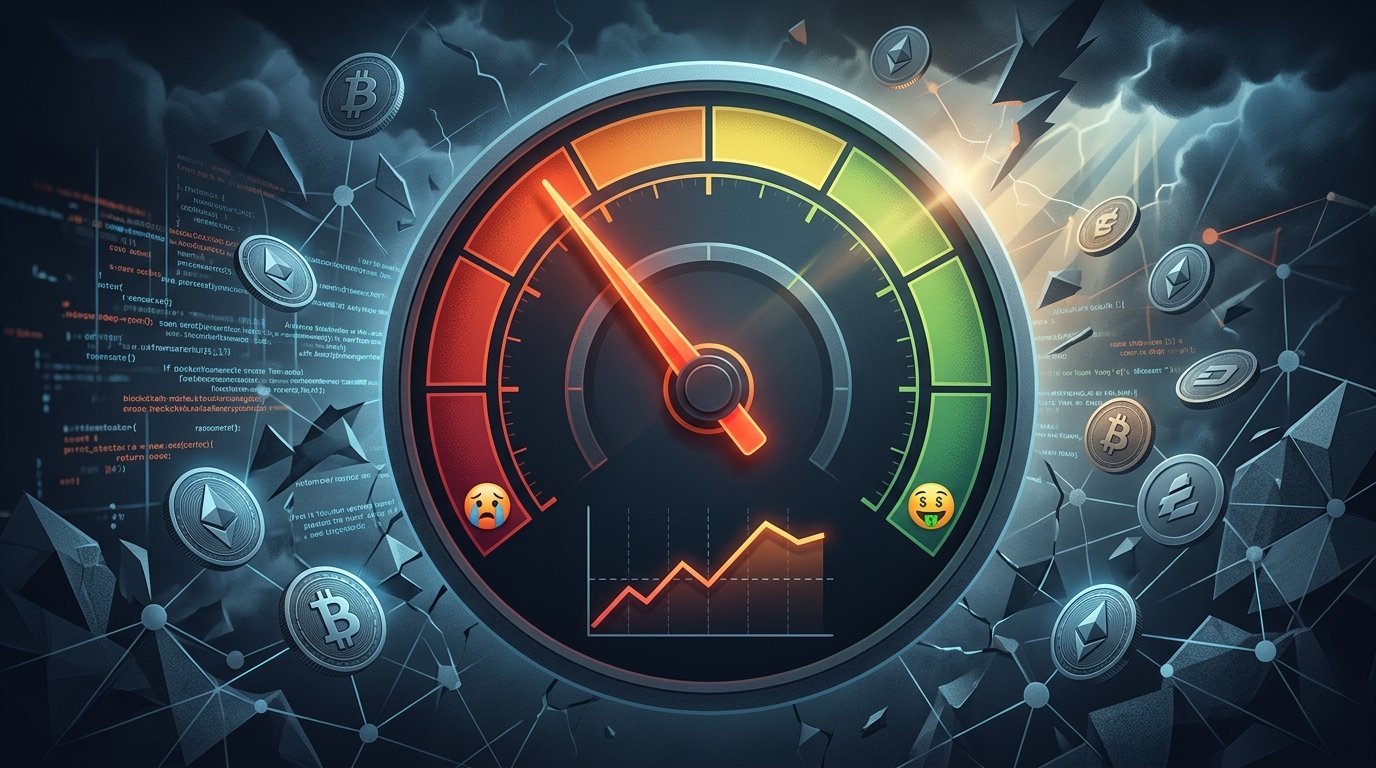
The Crypto Fear and Greed Index has moved higher to 42, signaling a mild improvement in market confidence, yet the broader cryptocurrency market remains trapped in the “fear” zone. While the latest reading suggests investors are becoming slightly more optimistic, sentiment across the digital asset industry is still cautious due to persistent volatility, macroeconomic uncertainty, and mixed price action among leading cryptocurrencies.
In recent months, crypto investors have navigated an environment shaped by fluctuating Bitcoin prices, changing monetary policy expectations, regulatory discussions, and uneven institutional participation. Even though the market has shown signs of recovery, the index remaining below the neutral 50 mark reflects lingering anxiety among traders and long-term holders alike.
The movement of the Fear and Greed Index is often closely watched because it offers insight into emotional market behavior. Sentiment can heavily influence short-term price swings in crypto markets, where retail participation remains significant. A reading of 42 indicates that fear is easing but has not disappeared, suggesting investors are still reluctant to fully embrace risk.
Understanding why the index matters, how it is calculated, and what its latest move means for the future of cryptocurrencies can help traders and investors make more informed decisions during uncertain market conditions.
What Is the Crypto Fear and Greed Index?
The Crypto Fear and Greed Index is a sentiment indicator designed to measure the emotional state of cryptocurrency investors. It operates on a scale from 0 to 100, where lower values indicate extreme fear and higher values signal extreme greed.
When the index falls into the fear range, it typically means investors are worried about declining prices, macroeconomic instability, or broader market uncertainty. Conversely, when greed dominates the market, traders often become more aggressive, which can lead to rapid price rallies and sometimes overheated market conditions.
The index analyzes several market factors to generate its daily score. These include market volatility, trading momentum, social media activity, Bitcoin dominance, and broader market trends. By combining these indicators, the index attempts to provide a snapshot of overall crypto sentiment.
A reading of 42 suggests that while panic selling may be easing, investors are still hesitant to take major risks. Historically, periods of fear have sometimes created opportunities for long-term investors, while excessive greed has often preceded market corrections.
Why the Index Matters to Crypto Investors
The cryptocurrency market is heavily influenced by investor psychology. Unlike traditional financial systems that are backed by decades of institutional structure and valuation models, digital assets are often driven by narratives, momentum, and sentiment.
This is why the Crypto Fear and Greed Index has become a widely followed tool among traders. It helps market participants gauge whether the market may be overreacting emotionally.
When fear dominates, many investors rush to sell their holdings to avoid further losses. This can create downward pressure on prices even if the underlying fundamentals remain relatively stable. On the other hand, when greed takes over, investors may buy aggressively out of fear of missing out, commonly known as FOMO.
The current reading of 42 indicates a market caught between cautious optimism and ongoing uncertainty. Investors appear willing to slowly re-enter positions, but they are not yet convinced that a sustained bullish rally has begun.
This middle-ground sentiment often occurs during transition phases in the market, particularly after periods of heightened volatility or macroeconomic stress.
Bitcoin’s Role in Market Sentiment
Bitcoin continues to play the largest role in shaping overall crypto sentiment. Since Bitcoin remains the dominant cryptocurrency by market capitalization, its price movements strongly influence the broader digital asset ecosystem.
When Bitcoin experiences strong rallies, market confidence usually improves across altcoins and decentralized finance projects. However, sharp Bitcoin corrections often trigger widespread fear throughout the industry.
The latest rise in the Fear and Greed Index comes as Bitcoin has shown signs of stabilizing after recent fluctuations. Traders appear encouraged by Bitcoin’s resilience near key support levels, although uncertainty about future price direction remains.
Institutional demand has also become an important factor. Spot Bitcoin exchange-traded funds, growing corporate adoption, and increasing interest from traditional finance firms have contributed to a more mature market structure compared to previous cycles.
Still, macroeconomic concerns such as inflation trends, interest rate expectations, and geopolitical tensions continue to weigh on investor sentiment. As a result, the market has not fully transitioned into a risk-on environment despite improving confidence levels.
Why Fear Still Dominates the Market
Even though the index has improved to 42, several factors continue to keep the cryptocurrency market in fear territory.
Macroeconomic Uncertainty
Global financial markets remain highly sensitive to central bank policies and economic data. Investors are closely monitoring inflation figures, employment reports, and interest rate decisions from major economies.
Higher interest rates generally reduce appetite for speculative assets, including cryptocurrencies. Many investors remain cautious because tighter monetary policy can limit liquidity and reduce risk-taking behavior.
The uncertainty surrounding future economic conditions has prevented a stronger recovery in crypto sentiment.
Regulatory Concerns
Regulatory developments continue to create uncertainty within the digital asset industry. Governments and financial regulators worldwide are still shaping policies related to stablecoins, crypto exchanges, taxation, and decentralized finance.
While clearer regulation could eventually support broader adoption, short-term uncertainty often discourages investors from making aggressive moves.
The crypto market has experienced multiple periods where regulatory headlines triggered sharp price swings and increased volatility. This ongoing risk contributes to the cautious mood reflected in the Fear and Greed Index.
Volatility Across Altcoins
Although Bitcoin has remained relatively stable compared to previous market cycles, many altcoins continue to experience significant price fluctuations.
Projects with weaker fundamentals or lower liquidity have faced heavy selling pressure during periods of uncertainty. Investors are becoming increasingly selective, focusing on established cryptocurrencies rather than speculative tokens.
This cautious approach limits broad-based enthusiasm across the market and keeps sentiment below neutral levels.
How Market Sentiment Impacts Trading Behavior
Investor sentiment often creates self-reinforcing cycles in financial markets, particularly in crypto trading.
When fear dominates, traders may reduce exposure, leading to declining trading volumes and weaker price momentum. Lower confidence can also discourage new participants from entering the market.
However, periods of fear can sometimes create opportunities for experienced investors. Historically, some of the best long-term buying opportunities in cryptocurrency markets have emerged when sentiment was deeply negative.
Conversely, greed-driven markets often produce rapid price gains fueled by speculation and hype. While this can generate strong short-term returns, it can also increase the risk of sudden corrections.
The current Crypto Fear and Greed Index reading suggests the market remains cautious but is slowly rebuilding confidence. Traders are watching closely for signals that could confirm either a broader recovery or renewed weakness.
The Relationship Between Fear and Bitcoin Price Cycles
The history of cryptocurrency markets shows a strong connection between sentiment and price cycles.
During major bull markets, the Fear and Greed Index often climbs into greed or extreme greed territory as investors become increasingly confident. Media attention intensifies, trading activity rises, and speculative behavior expands across the market.
In contrast, bear markets usually push the index into fear or extreme fear levels. Investor confidence drops sharply, trading volumes decline, and many speculative projects lose momentum.
The current environment appears to reflect a transitional phase rather than a fully developed bullish or bearish trend. The index moving to 42 suggests that panic has eased, but investors are still waiting for stronger confirmation before embracing a risk-on mindset.
Bitcoin’s ability to maintain support above critical levels will likely play a major role in determining whether sentiment continues improving in the coming weeks.
Institutional Investors and Market Confidence
Institutional involvement has significantly changed the structure of the cryptocurrency market over the past several years.
Large asset managers, hedge funds, and publicly traded companies now participate in the digital asset ecosystem more actively than during earlier market cycles. This institutional presence has contributed to greater liquidity and increased legitimacy for cryptocurrencies.
The launch of spot Bitcoin ETFs has also provided traditional investors with easier access to crypto exposure. These developments have helped stabilize sentiment during periods of uncertainty.
However, institutional investors tend to respond strongly to macroeconomic trends and regulatory clarity. If economic conditions deteriorate or new restrictions emerge, institutional flows into crypto assets could slow down.
The current Fear and Greed Index reading reflects this balance between improving institutional acceptance and ongoing market caution.
Retail Investors Remain Cautious
Retail traders continue to play a major role in cryptocurrency price movements. Social media trends, influencer commentary, and online sentiment can rapidly affect market direction.
The recent improvement in the index suggests retail confidence is slowly recovering. However, many traders remain cautious after experiencing sharp corrections and volatility over the past few years.
Unlike previous speculative phases driven by aggressive meme coin rallies and rapid altcoin gains, the current market environment appears more measured. Investors are increasingly focused on projects with stronger utility, clearer adoption pathways, and sustainable ecosystems.
This shift toward selective investing may support healthier long-term growth, even if it slows the pace of short-term speculation.
Could the Market Move Back Into Greed Territory?
A return to the greed zone would likely require several positive catalysts.
Strong Bitcoin Momentum
If Bitcoin breaks above major resistance levels and establishes a sustained upward trend, investor confidence could improve significantly. Historically, strong Bitcoin rallies have boosted sentiment across the broader market.
Favorable Macroeconomic Conditions
Lower inflation, reduced interest rates, and improving economic stability could encourage investors to take on more risk. Such conditions often benefit growth-oriented and speculative assets, including cryptocurrencies.
Regulatory Clarity
Clearer crypto regulations in major economies could reduce uncertainty and encourage greater institutional participation. Positive regulatory developments may strengthen long-term market confidence.
Expanding Adoption
Continued adoption of blockchain technology, stablecoins, decentralized finance, and tokenized assets could support broader optimism within the digital asset industry.
For now, however, the Crypto Fear and Greed Index indicates that investors remain cautious despite improving sentiment.
How Long-Term Investors Interpret Fear
Many experienced investors view periods of fear differently from short-term traders. Instead of seeing fear as purely negative, some consider it a potential opportunity to accumulate assets at lower prices.
This approach is based on the idea that emotional selling can create undervalued conditions in strong projects with solid fundamentals.
Throughout crypto history, major accumulation phases have often occurred when sentiment was weak. Investors who focused on long-term trends rather than short-term panic sometimes benefited during subsequent market recoveries.
That said, fear does not automatically guarantee a market bottom. Investors still need to evaluate market conditions, project fundamentals, and macroeconomic trends carefully.
The current reading of 42 suggests improving confidence, but the market remains vulnerable to external shocks and renewed volatility.
The Importance of Risk Management in Volatile Markets
The cryptocurrency market remains one of the most volatile sectors in global finance. Rapid price swings can create both significant opportunities and substantial risks.
This is why risk management remains essential regardless of market sentiment.
Investors often diversify portfolios, use position sizing strategies, and avoid overexposure to highly speculative assets. Emotional decision-making can become especially dangerous during periods of fear or greed.
The Fear and Greed Index can serve as a useful sentiment gauge, but it should not be used as the sole basis for investment decisions. Successful market participation typically requires a combination of technical analysis, fundamental research, and disciplined risk management.
As the crypto industry continues to mature, sentiment indicators may become even more important in helping investors navigate rapidly changing market conditions.
The Broader Outlook for the Cryptocurrency Market
Despite ongoing uncertainty, the long-term outlook for cryptocurrencies continues to attract significant interest from both retail and institutional participants.
Blockchain technology adoption is expanding across finance, gaming, payments, supply chains, and artificial intelligence applications. Major financial institutions are increasingly exploring tokenization and digital asset integration.
At the same time, the market still faces important challenges, including scalability concerns, cybersecurity risks, regulatory uncertainty, and liquidity fragmentation.
The current Crypto Fear and Greed Index reading highlights a market in transition. Fear remains present, but improving sentiment suggests investors are gradually regaining confidence.
Whether the market moves into a stronger recovery phase or faces additional consolidation will depend on a combination of economic conditions, investor behavior, regulatory developments, and technological progress.
Conclusion
The rise of the Crypto Fear and Greed Index to 42 reflects improving market sentiment, but the cryptocurrency industry remains firmly within the fear zone. Investors are showing cautious optimism as Bitcoin stabilizes and institutional participation continues to grow, yet macroeconomic uncertainty and regulatory concerns still weigh heavily on confidence.
The crypto market remains highly emotional and sensitive to external events, making sentiment indicators an important tool for understanding investor behavior. While fear can create opportunities for long-term investors, it also highlights the risks and uncertainty that continue to define digital asset markets.
As Bitcoin and the broader cryptocurrency ecosystem evolve, traders and investors will continue watching the Fear and Greed Index closely for signals about market direction and investor psychology. The coming months could determine whether improving sentiment develops into a sustained recovery or whether caution remains the dominant market theme.
Leave a Reply