Category: Crypto News

  • Crypto Fear and Greed Index Rises but Fear Remains

    Crypto Fear and Greed Index Rises but Fear Remains

    The Crypto Fear and Greed Index has moved higher to 42, signaling a mild improvement in market confidence, yet the broader cryptocurrency market remains trapped in the “fear” zone. While the latest reading suggests investors are becoming slightly more optimistic, sentiment across the digital asset industry is still cautious due to persistent volatility, macroeconomic uncertainty, and mixed price action among leading cryptocurrencies.

    In recent months, crypto investors have navigated an environment shaped by fluctuating Bitcoin prices, changing monetary policy expectations, regulatory discussions, and uneven institutional participation. Even though the market has shown signs of recovery, the index remaining below the neutral 50 mark reflects lingering anxiety among traders and long-term holders alike.

    The movement of the Fear and Greed Index is often closely watched because it offers insight into emotional market behavior. Sentiment can heavily influence short-term price swings in crypto markets, where retail participation remains significant. A reading of 42 indicates that fear is easing but has not disappeared, suggesting investors are still reluctant to fully embrace risk.

    Understanding why the index matters, how it is calculated, and what its latest move means for the future of cryptocurrencies can help traders and investors make more informed decisions during uncertain market conditions.

    What Is the Crypto Fear and Greed Index?

    The Crypto Fear and Greed Index is a sentiment indicator designed to measure the emotional state of cryptocurrency investors. It operates on a scale from 0 to 100, where lower values indicate extreme fear and higher values signal extreme greed.

    When the index falls into the fear range, it typically means investors are worried about declining prices, macroeconomic instability, or broader market uncertainty. Conversely, when greed dominates the market, traders often become more aggressive, which can lead to rapid price rallies and sometimes overheated market conditions.

    The index analyzes several market factors to generate its daily score. These include market volatility, trading momentum, social media activity, Bitcoin dominance, and broader market trends. By combining these indicators, the index attempts to provide a snapshot of overall crypto sentiment.

    A reading of 42 suggests that while panic selling may be easing, investors are still hesitant to take major risks. Historically, periods of fear have sometimes created opportunities for long-term investors, while excessive greed has often preceded market corrections.

    Why the Index Matters to Crypto Investors

    The cryptocurrency market is heavily influenced by investor psychology. Unlike traditional financial systems that are backed by decades of institutional structure and valuation models, digital assets are often driven by narratives, momentum, and sentiment.

    This is why the Crypto Fear and Greed Index has become a widely followed tool among traders. It helps market participants gauge whether the market may be overreacting emotionally.

    When fear dominates, many investors rush to sell their holdings to avoid further losses. This can create downward pressure on prices even if the underlying fundamentals remain relatively stable. On the other hand, when greed takes over, investors may buy aggressively out of fear of missing out, commonly known as FOMO.

    The current reading of 42 indicates a market caught between cautious optimism and ongoing uncertainty. Investors appear willing to slowly re-enter positions, but they are not yet convinced that a sustained bullish rally has begun.

    This middle-ground sentiment often occurs during transition phases in the market, particularly after periods of heightened volatility or macroeconomic stress.

    Bitcoin’s Role in Market Sentiment

    Bitcoin continues to play the largest role in shaping overall crypto sentiment. Since Bitcoin remains the dominant cryptocurrency by market capitalization, its price movements strongly influence the broader digital asset ecosystem.

    When Bitcoin experiences strong rallies, market confidence usually improves across altcoins and decentralized finance projects. However, sharp Bitcoin corrections often trigger widespread fear throughout the industry.

    The latest rise in the Fear and Greed Index comes as Bitcoin has shown signs of stabilizing after recent fluctuations. Traders appear encouraged by Bitcoin’s resilience near key support levels, although uncertainty about future price direction remains.

    Institutional demand has also become an important factor. Spot Bitcoin exchange-traded funds, growing corporate adoption, and increasing interest from traditional finance firms have contributed to a more mature market structure compared to previous cycles.

    Still, macroeconomic concerns such as inflation trends, interest rate expectations, and geopolitical tensions continue to weigh on investor sentiment. As a result, the market has not fully transitioned into a risk-on environment despite improving confidence levels.

    Why Fear Still Dominates the Market

    Even though the index has improved to 42, several factors continue to keep the cryptocurrency market in fear territory.

    Macroeconomic Uncertainty

    Global financial markets remain highly sensitive to central bank policies and economic data. Investors are closely monitoring inflation figures, employment reports, and interest rate decisions from major economies.

    Higher interest rates generally reduce appetite for speculative assets, including cryptocurrencies. Many investors remain cautious because tighter monetary policy can limit liquidity and reduce risk-taking behavior.

    The uncertainty surrounding future economic conditions has prevented a stronger recovery in crypto sentiment.

    Regulatory Concerns

    Regulatory developments continue to create uncertainty within the digital asset industry. Governments and financial regulators worldwide are still shaping policies related to stablecoins, crypto exchanges, taxation, and decentralized finance.

    While clearer regulation could eventually support broader adoption, short-term uncertainty often discourages investors from making aggressive moves.

    The crypto market has experienced multiple periods where regulatory headlines triggered sharp price swings and increased volatility. This ongoing risk contributes to the cautious mood reflected in the Fear and Greed Index.

    Volatility Across Altcoins

    Although Bitcoin has remained relatively stable compared to previous market cycles, many altcoins continue to experience significant price fluctuations.

    Projects with weaker fundamentals or lower liquidity have faced heavy selling pressure during periods of uncertainty. Investors are becoming increasingly selective, focusing on established cryptocurrencies rather than speculative tokens.

    This cautious approach limits broad-based enthusiasm across the market and keeps sentiment below neutral levels.

    How Market Sentiment Impacts Trading Behavior

    Investor sentiment often creates self-reinforcing cycles in financial markets, particularly in crypto trading.

    When fear dominates, traders may reduce exposure, leading to declining trading volumes and weaker price momentum. Lower confidence can also discourage new participants from entering the market.

    However, periods of fear can sometimes create opportunities for experienced investors. Historically, some of the best long-term buying opportunities in cryptocurrency markets have emerged when sentiment was deeply negative.

    Conversely, greed-driven markets often produce rapid price gains fueled by speculation and hype. While this can generate strong short-term returns, it can also increase the risk of sudden corrections.

    The current Crypto Fear and Greed Index reading suggests the market remains cautious but is slowly rebuilding confidence. Traders are watching closely for signals that could confirm either a broader recovery or renewed weakness.

    The Relationship Between Fear and Bitcoin Price Cycles

    The history of cryptocurrency markets shows a strong connection between sentiment and price cycles.

    During major bull markets, the Fear and Greed Index often climbs into greed or extreme greed territory as investors become increasingly confident. Media attention intensifies, trading activity rises, and speculative behavior expands across the market.

    In contrast, bear markets usually push the index into fear or extreme fear levels. Investor confidence drops sharply, trading volumes decline, and many speculative projects lose momentum.

    The current environment appears to reflect a transitional phase rather than a fully developed bullish or bearish trend. The index moving to 42 suggests that panic has eased, but investors are still waiting for stronger confirmation before embracing a risk-on mindset.

    Bitcoin’s ability to maintain support above critical levels will likely play a major role in determining whether sentiment continues improving in the coming weeks.

    Institutional Investors and Market Confidence

    Institutional involvement has significantly changed the structure of the cryptocurrency market over the past several years.

    Large asset managers, hedge funds, and publicly traded companies now participate in the digital asset ecosystem more actively than during earlier market cycles. This institutional presence has contributed to greater liquidity and increased legitimacy for cryptocurrencies.

    The launch of spot Bitcoin ETFs has also provided traditional investors with easier access to crypto exposure. These developments have helped stabilize sentiment during periods of uncertainty.

    However, institutional investors tend to respond strongly to macroeconomic trends and regulatory clarity. If economic conditions deteriorate or new restrictions emerge, institutional flows into crypto assets could slow down.

    The current Fear and Greed Index reading reflects this balance between improving institutional acceptance and ongoing market caution.

    Retail Investors Remain Cautious

    Retail traders continue to play a major role in cryptocurrency price movements. Social media trends, influencer commentary, and online sentiment can rapidly affect market direction.

    The recent improvement in the index suggests retail confidence is slowly recovering. However, many traders remain cautious after experiencing sharp corrections and volatility over the past few years.

    Unlike previous speculative phases driven by aggressive meme coin rallies and rapid altcoin gains, the current market environment appears more measured. Investors are increasingly focused on projects with stronger utility, clearer adoption pathways, and sustainable ecosystems.

    This shift toward selective investing may support healthier long-term growth, even if it slows the pace of short-term speculation.

    Could the Market Move Back Into Greed Territory?

    Crypto Fear and Greed Index Rises but Fear Remains

    A return to the greed zone would likely require several positive catalysts.

    Strong Bitcoin Momentum

    If Bitcoin breaks above major resistance levels and establishes a sustained upward trend, investor confidence could improve significantly. Historically, strong Bitcoin rallies have boosted sentiment across the broader market.

    Favorable Macroeconomic Conditions

    Lower inflation, reduced interest rates, and improving economic stability could encourage investors to take on more risk. Such conditions often benefit growth-oriented and speculative assets, including cryptocurrencies.

    Regulatory Clarity

    Clearer crypto regulations in major economies could reduce uncertainty and encourage greater institutional participation. Positive regulatory developments may strengthen long-term market confidence.

    Expanding Adoption

    Continued adoption of blockchain technology, stablecoins, decentralized finance, and tokenized assets could support broader optimism within the digital asset industry.

    For now, however, the Crypto Fear and Greed Index indicates that investors remain cautious despite improving sentiment.

    How Long-Term Investors Interpret Fear

    Many experienced investors view periods of fear differently from short-term traders. Instead of seeing fear as purely negative, some consider it a potential opportunity to accumulate assets at lower prices.

    This approach is based on the idea that emotional selling can create undervalued conditions in strong projects with solid fundamentals.

    Throughout crypto history, major accumulation phases have often occurred when sentiment was weak. Investors who focused on long-term trends rather than short-term panic sometimes benefited during subsequent market recoveries.

    That said, fear does not automatically guarantee a market bottom. Investors still need to evaluate market conditions, project fundamentals, and macroeconomic trends carefully.

    The current reading of 42 suggests improving confidence, but the market remains vulnerable to external shocks and renewed volatility.

    The Importance of Risk Management in Volatile Markets

    The cryptocurrency market remains one of the most volatile sectors in global finance. Rapid price swings can create both significant opportunities and substantial risks.

    This is why risk management remains essential regardless of market sentiment.

    Investors often diversify portfolios, use position sizing strategies, and avoid overexposure to highly speculative assets. Emotional decision-making can become especially dangerous during periods of fear or greed.

    The Fear and Greed Index can serve as a useful sentiment gauge, but it should not be used as the sole basis for investment decisions. Successful market participation typically requires a combination of technical analysis, fundamental research, and disciplined risk management.

    As the crypto industry continues to mature, sentiment indicators may become even more important in helping investors navigate rapidly changing market conditions.

    The Broader Outlook for the Cryptocurrency Market

    Despite ongoing uncertainty, the long-term outlook for cryptocurrencies continues to attract significant interest from both retail and institutional participants.

    Blockchain technology adoption is expanding across finance, gaming, payments, supply chains, and artificial intelligence applications. Major financial institutions are increasingly exploring tokenization and digital asset integration.

    At the same time, the market still faces important challenges, including scalability concerns, cybersecurity risks, regulatory uncertainty, and liquidity fragmentation.

    The current Crypto Fear and Greed Index reading highlights a market in transition. Fear remains present, but improving sentiment suggests investors are gradually regaining confidence.

    Whether the market moves into a stronger recovery phase or faces additional consolidation will depend on a combination of economic conditions, investor behavior, regulatory developments, and technological progress.

    Conclusion

    The rise of the Crypto Fear and Greed Index to 42 reflects improving market sentiment, but the cryptocurrency industry remains firmly within the fear zone. Investors are showing cautious optimism as Bitcoin stabilizes and institutional participation continues to grow, yet macroeconomic uncertainty and regulatory concerns still weigh heavily on confidence.

    The crypto market remains highly emotional and sensitive to external events, making sentiment indicators an important tool for understanding investor behavior. While fear can create opportunities for long-term investors, it also highlights the risks and uncertainty that continue to define digital asset markets.

    As Bitcoin and the broader cryptocurrency ecosystem evolve, traders and investors will continue watching the Fear and Greed Index closely for signals about market direction and investor psychology. The coming months could determine whether improving sentiment develops into a sustained recovery or whether caution remains the dominant market theme.

  • Crypto’s X Feed Drives Policy, Halving and AI Panic

    Crypto’s X Feed Drives Policy, Halving and AI Panic

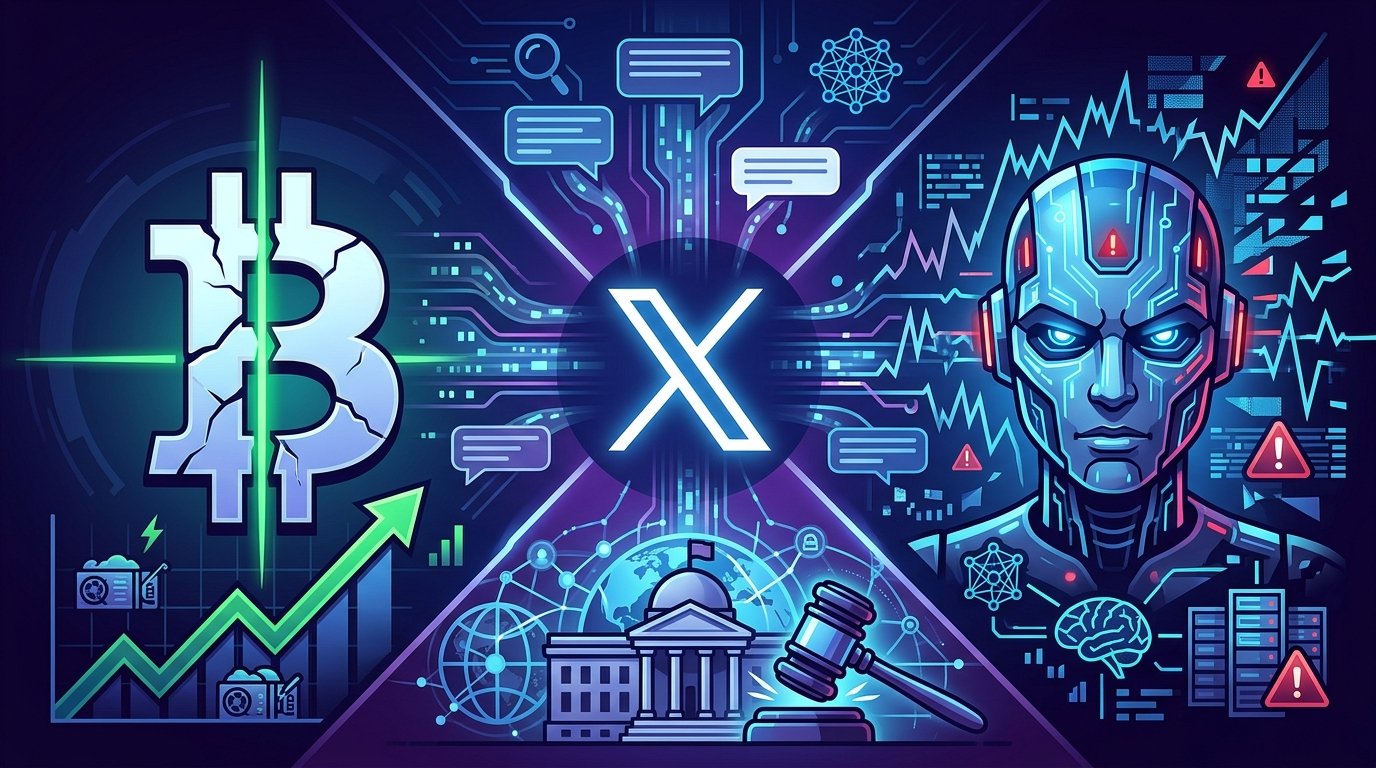
    The Crypto X feed has become the most powerful real-time information engine in digital finance. What was once a simple social media timeline is now a constantly updating market signal where traders, developers, regulators, and investors react instantly to news, speculation, and fear. The Crypto X feed no longer just reflects conversations—it actively shapes market direction, liquidity flows, and investor sentiment across global cryptocurrency markets.

    From sudden policy announcements to Bitcoin halving discussions and rising concerns about artificial intelligence, the Crypto X feed functions like a live trading terminal. Every post has the potential to move sentiment within seconds, creating a fast-moving ecosystem where attention itself has become a financial force.

    The Rise of X as Crypto’s Real-Time Trading Floor

    The transformation of the Crypto X feed into a financial nerve center has redefined how information spreads in crypto markets. Unlike traditional financial news cycles, which rely on structured reporting, the Crypto X feed delivers raw, unfiltered updates in real time.

    This speed has turned the Crypto X feed into a behavioral driver rather than just a communication platform. Traders no longer wait for confirmation from news agencies because the Crypto X feed often sets expectations before official announcements even arrive. As a result, price movements frequently begin with social reactions rather than fundamentals.

    The rise of crypto social sentiment analysis, real-time trading psychology, and digital asset narratives has reinforced the importance of the Crypto X feed in modern investing strategies.

    Policy Shocks and the Crypto X Feed Reaction Loop

    Regulatory News Spreads First on Crypto X Feed

    Government regulation is one of the strongest forces shaping the Crypto X feed. Whether it is taxation changes, exchange compliance updates, or central bank statements, the Crypto X feed reacts instantly.

    Traders interpret every policy signal through posts shared across the Crypto X feed, often before full details are available. This creates a reaction loop where speculation drives volatility even before facts are confirmed.

    As discussions around crypto regulation, blockchain compliance, and digital asset governance intensify, the Crypto X feed has become the first place where market expectations are formed.

    Political Influence Amplified by Crypto X Feed

    Political discussions also gain momentum through the Crypto X feed, where policymakers and candidates directly address crypto communities. These statements often go viral within minutes, shaping expectations about future regulation and institutional adoption.

    Because the Crypto X feed merges political messaging with investor interpretation, it creates a hybrid space where policy and speculation interact continuously.

    Bitcoin Halving Narratives on Crypto X Feed

    Halving Cycles Dominate Crypto X Feed Discussions

    The Bitcoin halving remains one of the most discussed topics on the Crypto X feed. Every cycle brings renewed speculation about price increases, supply shocks, and historical patterns.

    On the Crypto X feed, users frequently share models, charts, and predictions comparing previous cycles with current market conditions. This continuous flow of content builds anticipation long before the actual halving event occurs.

    The Crypto X feed amplifies the psychological impact of scarcity narratives, reinforcing beliefs around Bitcoin price cycles, crypto supply reduction, and long-term bullish expectations.

    Influencers Shape Halving Sentiment on Crypto X Feed

    Influencers play a major role in shaping halving narratives on the Crypto X feed. Their predictions often go viral, influencing retail sentiment and increasing speculative trading activity.

    However, the Crypto X feed also amplifies unrealistic expectations. Bold forecasts spread quickly, creating emotional market cycles of excitement and correction.

    This makes the Crypto X feed both a source of insight and a driver of volatility during halving periods.

    AI Fear Enters the Crypto Conversation

    Artificial Intelligence and Market Anxiety

    Artificial intelligence has emerged as another dominant theme across crypto timelines. While some see AI as a revolutionary technology capable of improving blockchain efficiency and trading strategies, others fear it could destabilize markets, manipulate information, or replace human decision-making entirely.

    The rise of AI-generated content has created concerns about misinformation and market manipulation. Fake announcements, synthetic videos, and automated trading bots can spread confusion rapidly across social platforms. In an industry already vulnerable to speculation, AI adds another layer of uncertainty.

    Crypto traders now debate whether AI will strengthen decentralized systems or centralize power further among large technology companies. These discussions have become especially important as AI-focused crypto projects gain popularity and attract speculative investment.

    Terms like AI crypto trading, blockchain automation, and decentralized AI infrastructure frequently trend across crypto feeds as investors search for the next emerging opportunity.

    AI Tokens and Speculative Hype

    The overlap between AI and crypto has created a surge of interest in AI-related tokens. Projects promising decentralized machine learning, AI-powered analytics, and blockchain-based computing infrastructure often experience rapid price increases fueled largely by social media excitement.

    On X, these projects benefit from constant exposure as influencers promote narratives about the future convergence of blockchain and artificial intelligence. Investors rush into trending sectors hoping to capitalize on the next major technological breakthrough.

    At the same time, skepticism remains strong. Critics argue that many AI crypto projects rely more on marketing than real technological innovation. This divide creates ongoing debates that dominate market discussions and contribute to heightened volatility.

    The tension between innovation and speculation reflects the broader uncertainty surrounding AI’s long-term role within digital finance.

    The Psychology Behind Crypto’s Social Trading Culture
    Crypto’s X Feed Drives Policy, Halving and AI Panic

    Fear, Greed, and Viral Momentum

    Crypto markets are heavily influenced by psychology, and X amplifies emotional reactions more than any previous communication platform. Fear and greed spread rapidly because traders constantly consume emotionally charged content.

    Bullish predictions encourage optimism and risk-taking, while bearish commentary fuels panic selling. Viral posts often create herd behavior where investors follow trends rather than conducting independent analysis.

    This social dynamic explains why crypto markets sometimes react disproportionately to rumors or unconfirmed information. Traders fear missing opportunities, leading to impulsive decisions based on rapidly changing narratives.

    The emergence of social trading behavior, market psychology, and FOMO investing highlights how online discussions now directly influence financial outcomes.

    The Meme Economy and Narrative Investing

    Meme culture has become deeply connected to cryptocurrency investing. Coins and tokens frequently gain value not because of technical fundamentals but because of viral popularity and community engagement.

    X serves as the perfect environment for meme-driven investing because humor, emotional storytelling, and internet culture spread quickly. Communities rally around symbols, slogans, and shared narratives that create strong collective identities.

    This phenomenon demonstrates how crypto increasingly operates as both a financial system and a cultural movement. Investors are not simply buying assets; they are participating in online communities built around shared beliefs and speculative optimism.

    Institutional Investors Are Watching X Closely

    The influence of X is no longer limited to retail traders. Institutional investors, hedge funds, and venture capital firms now monitor social sentiment as part of their research process. Many firms use advanced analytics tools to track trending topics, influential accounts, and sentiment changes across the crypto ecosystem.

    This shift reflects the growing recognition that social narratives can significantly impact short-term market performance. Professional traders understand that sentiment often moves prices before fundamentals catch up.

    As institutional participation increases, the relationship between social media and market behavior becomes even more important. Real-time information flows influence trading algorithms, portfolio adjustments, and risk management strategies.

    The combination of institutional capital and retail-driven social momentum creates a uniquely volatile market structure unlike traditional finance.

    Misinformation and the Dangers of Instant Reactions

    While X provides speed and transparency, it also creates significant risks. False rumors, manipulated screenshots, and misleading interpretations frequently spread through crypto communities. Because markets react instantly, misinformation can trigger major price swings before facts are verified.

    Scammers exploit this environment by creating fake announcements or impersonating influential figures. Investors who react emotionally without verification often suffer substantial losses.

    The challenge for traders is distinguishing credible information from speculation and manipulation. This requires critical thinking, source verification, and awareness of how online narratives influence market behavior.

    As crypto adoption grows, the need for responsible communication and accurate reporting becomes increasingly important for maintaining trust within the ecosystem.

    Risks of Misinformation on Crypto X Feed

    While powerful, the Crypto X feed also spreads misinformation quickly. Fake news, manipulated screenshots, and misleading interpretations can trigger sudden market reactions.

    Because the Crypto X feed operates in real time, traders often act before verifying information, increasing financial risk.

    This makes critical thinking and verification essential when navigating the Crypto X feed environment.

    The Future of Crypto X Feed Ecosystem

    The future of the Crypto X feed will likely be shaped by AI integration, decentralized platforms, and improved content verification systems. However, its core role as a real-time sentiment engine is expected to remain unchanged.

    As cryptocurrency adoption grows, the Crypto X feed will continue to influence how markets react, how narratives form, and how investors make decisions in real time.

    Conclusion

    The Crypto X feed has evolved into a central force in modern cryptocurrency markets. It drives policy reactions, amplifies Bitcoin halving narratives, and fuels debates around artificial intelligence. More importantly, the Crypto X feed has transformed how investors interpret information, shifting decision-making from structured analysis to real-time sentiment tracking.

    In this environment, attention is power, and the Crypto X feed is the marketplace where that attention is constantly traded.

  • Tokenization and MiCA: Wojciech Kaszycki’s Insights

    Tokenization and MiCA: Wojciech Kaszycki’s Insights

    The digital asset industry is entering a transformative phase where innovation and regulation are finally beginning to move in the same direction. For years, blockchain companies, crypto investors, and fintech innovators operated in a fragmented legal landscape, especially in Europe. The absence of a unified regulatory framework created uncertainty around digital assets, token issuance, and cross-border operations. However, the introduction of the Markets in Crypto-Assets regulation, widely known as MiCA, is changing that dynamic dramatically.

    At the center of this evolution lies tokenization, a concept that has rapidly become one of the most important developments in blockchain technology. Tokenization enables physical and digital assets to be represented on-chain, unlocking new opportunities for liquidity, accessibility, transparency, and operational efficiency. From real estate and private equity to commodities and intellectual property, tokenized assets are reshaping how ownership and investment function in the digital economy.

    Industry leaders and blockchain experts increasingly believe that MiCA could become the catalyst that accelerates institutional adoption of tokenized assets across Europe. Among those voices is Wojciech Kaszycki, whose observations on regulation, blockchain infrastructure, and financial innovation offer valuable insight into where the industry is heading. His perspective highlights how regulatory clarity can empower businesses rather than restrict them, especially when innovation requires trust and compliance to scale globally.

    The relationship between MiCA regulation and tokenization is not merely technical. It represents a shift toward a more mature digital asset ecosystem where governments, enterprises, and investors can participate with greater confidence. As regulatory uncertainty decreases, tokenization platforms and blockchain startups gain stronger foundations for growth, partnerships, and mainstream adoption.

    This article explores how tokenization is being aided by MiCA, the significance of Wojciech Kaszycki’s insights, and why Europe could emerge as a global leader in compliant digital finance.

    Understanding Tokenization in the Digital Economy

    Tokenization refers to the process of converting rights to an asset into a blockchain-based digital token. These tokens can represent ownership, access rights, or economic interests tied to real-world or digital assets. Through blockchain technology, tokenization introduces efficiency, transparency, and programmability into traditional financial systems.

    The rise of asset tokenization is closely linked to the broader expansion of decentralized technologies. Traditional financial assets often involve complex intermediaries, lengthy settlement periods, and geographic limitations. Tokenization simplifies these processes by enabling peer-to-peer transferability and near-instant settlement capabilities.

    One of the most compelling advantages of tokenization is fractional ownership. High-value assets such as commercial real estate, fine art, or infrastructure projects can now be divided into smaller digital shares. This dramatically lowers entry barriers for investors and expands participation across global markets.

    Another critical factor driving tokenization is enhanced liquidity. Traditionally illiquid assets can become more tradable when represented as digital tokens on blockchain networks. Investors gain access to secondary markets, while asset owners benefit from broader capital opportunities.

    The integration of smart contracts further enhances the value proposition of tokenized assets. Smart contracts automate transactions, compliance procedures, dividend distributions, and ownership transfers. This reduces operational costs while increasing transparency and trust.

    However, despite these advantages, tokenization faced a major obstacle for years: regulatory uncertainty. Without clear legal frameworks, businesses struggled to launch compliant tokenized products, especially within highly regulated regions like the European Union. This is precisely where MiCA enters the picture.

    What Is MiCA and Why Does It Matter?

    The Markets in Crypto-Assets Regulation (MiCA) is the European Union’s landmark framework designed to regulate crypto-assets and related services across member states. MiCA establishes standardized rules for crypto issuers, service providers, and digital asset operators throughout the EU.

    Unlike fragmented national regulations, MiCA creates a harmonized legal environment that allows companies to operate more efficiently across Europe. This regulatory consistency is particularly important for tokenization projects that rely on scalability, investor trust, and cross-border accessibility.

    MiCA introduces several key areas of oversight, including transparency requirements, consumer protection, operational resilience, governance standards, and anti-market abuse measures. It also provides legal definitions for various categories of crypto-assets, helping businesses determine how their tokenized offerings fit within the regulatory structure.

    For tokenization platforms, MiCA reduces ambiguity surrounding compliance obligations. Clearer licensing pathways encourage innovation while helping legitimate companies distinguish themselves from unregulated or fraudulent actors.

    The importance of MiCA extends beyond Europe. Because the EU remains one of the world’s largest economic regions, its regulatory framework may influence global digital asset standards. Many blockchain companies outside Europe are already adapting their strategies to align with MiCA expectations in anticipation of broader international adoption.

    This regulatory development is particularly significant for institutional investors. Large financial institutions require legal certainty before allocating capital to blockchain-based products. MiCA creates a foundation where institutional participation in tokenized assets becomes far more realistic.

    Wojciech Kaszycki’s Perspective on Tokenization and Regulation

    Wojciech Kaszycki has emphasized the importance of combining innovation with regulatory structure. His perspective reflects a growing industry consensus that sustainable blockchain adoption requires more than technological capability alone. It also requires trust, legal clarity, and standardized compliance mechanisms.

    According to Kaszycki’s observations, tokenization has enormous potential to modernize financial systems, but the industry historically suffered from inconsistent regulation and market uncertainty. In many jurisdictions, companies faced unclear licensing rules, conflicting interpretations, and legal grey areas that slowed development.

    MiCA changes this equation by creating predictable operating conditions for blockchain businesses. Kaszycki’s insights suggest that regulation should not automatically be viewed as an obstacle to innovation. Instead, effective regulation can become a growth enabler that encourages broader participation from institutions, governments, and mainstream investors.

    His viewpoint aligns with the idea that tokenization is moving from speculative experimentation toward practical utility. The next phase of blockchain adoption will likely focus less on hype and more on infrastructure, interoperability, and compliant financial ecosystems.

    Kaszycki also highlights the importance of investor confidence. Tokenization platforms that operate under recognized regulatory frameworks may gain stronger credibility in global markets. This credibility becomes especially important as tokenized securities, stablecoins, and digital investment products attract institutional attention.

    Another important insight involves scalability. Without harmonized rules, blockchain projects face costly compliance fragmentation across different jurisdictions. MiCA streamlines these processes, potentially allowing tokenization platforms to expand more efficiently across European markets.

    How MiCA Supports the Growth of Tokenized Assets

    The relationship between tokenization and MiCA is becoming increasingly interconnected. Regulatory clarity supports innovation by reducing legal risks and creating operational predictability for blockchain businesses.

    One of MiCA’s biggest contributions is the establishment of standardized disclosure requirements. Investors can access clearer information regarding token issuers, project structures, and associated risks. This transparency improves market integrity and reduces information asymmetry.

    For tokenized asset issuers, MiCA creates clearer compliance expectations around governance, security measures, and operational procedures. This helps companies design products with regulatory considerations integrated from the beginning rather than added later as reactive measures.

    The framework also encourages greater participation from traditional financial institutions. Banks, asset managers, and fintech companies are more likely to engage with tokenization when legal standards are well-defined. Institutional involvement could dramatically accelerate the growth of tokenized markets over the next decade.

    MiCA also supports cross-border operations within the European Union. Previously, blockchain companies often faced inconsistent national requirements when expanding into multiple countries. Harmonized regulation simplifies expansion and reduces administrative burdens.

    This environment is particularly beneficial for startups and emerging blockchain firms. Instead of navigating dozens of separate regulatory frameworks, companies can focus more resources on innovation, product development, and market adoption.

    The introduction of MiCA may also encourage greater venture capital investment in compliant blockchain infrastructure. Investors generally prefer ecosystems with legal stability and transparent operational guidelines. As a result, tokenization projects operating under MiCA could attract stronger funding opportunities.

    The Institutionalization of Digital Assets

    One of the most important trends connected to MiCA and tokenization is the institutionalization of digital assets. For years, institutional investors remained cautious about entering the crypto market because of regulatory uncertainty, volatility, and reputational risks.

    MiCA changes the conversation by creating clearer operational standards. This does not eliminate all risks associated with digital assets, but it significantly improves the environment for institutional engagement.

    Tokenization is especially attractive to institutions because it can improve efficiency across financial operations. Settlement times can be reduced, administrative processes automated, and ownership structures digitized more effectively. These efficiencies create cost savings and operational advantages.

    Large-scale financial institutions are increasingly exploring tokenized bonds, tokenized equities, and blockchain-based settlement systems. Europe’s regulatory leadership through MiCA could accelerate these developments considerably.

    Kaszycki’s insights reflect this institutional transition. The blockchain industry is evolving from isolated crypto-native ecosystems toward integrated financial infrastructure that interacts with traditional capital markets.

    This shift also changes how blockchain companies position themselves. Instead of focusing solely on speculative crypto trading, many firms are now emphasizing compliance, enterprise partnerships, and real-world applications.

    Real Estate and Tokenization Under MiCA

    One of the most promising sectors for tokenization is real estate. Traditional real estate investment often involves high entry barriers, complex legal procedures, and limited liquidity. Tokenization offers solutions to many of these challenges.

    Through blockchain-based fractional ownership, investors can gain exposure to property assets without purchasing entire buildings or large equity stakes. This democratizes access to real estate investment opportunities.

    MiCA’s regulatory clarity could strengthen investor confidence in tokenized real estate platforms. Clearer legal standards reduce uncertainty around ownership rights, compliance obligations, and operational governance.

    Tokenized real estate also benefits from improved transparency. Blockchain records can provide immutable transaction histories, ownership verification, and automated contract execution. These capabilities streamline property transactions while reducing administrative inefficiencies.

    As European markets become more receptive to regulated digital assets, tokenized real estate platforms may experience accelerated adoption among both retail and institutional investors.

    Challenges That Still Exist in Tokenization
    Tokenization and MiCA Wojciech Kaszycki’s Insights

    Despite the optimism surrounding MiCA and tokenization, several challenges remain. Regulatory frameworks alone cannot solve every issue facing blockchain adoption.

    One ongoing concern involves interoperability between blockchain networks. Many tokenization ecosystems operate on separate infrastructures that may not communicate efficiently with one another. Achieving seamless interoperability remains a major industry objective.

    Cybersecurity is another critical issue. As tokenized assets gain value and mainstream attention, blockchain platforms become increasingly attractive targets for cyberattacks. Companies must invest heavily in security infrastructure and operational resilience.

    Education also remains an obstacle. Many investors and institutions still lack a deep understanding of tokenization, blockchain mechanics, and digital asset management. Broader adoption will require stronger educational initiatives and simplified user experiences.

    Liquidity fragmentation can also affect tokenized markets. While tokenization aims to improve liquidity, insufficient market participation or fragmented trading ecosystems may limit effectiveness in certain sectors.

    Kaszycki’s broader insights suggest that long-term success depends not only on regulation but also on infrastructure maturity, market trust, and technological evolution.

    Europe’s Potential Leadership in the Tokenized Economy

    Europe is positioning itself as a potential global leader in regulated digital finance. MiCA provides the EU with a strategic opportunity to establish international standards for compliant blockchain innovation.

    Many regions around the world continue to struggle with inconsistent crypto regulation. In contrast, Europe’s harmonized approach may attract blockchain startups, institutional investors, and fintech innovators seeking operational stability.

    The success of MiCA could influence how other jurisdictions approach digital asset regulation in the future. Countries seeking to balance innovation with consumer protection may view the EU model as a blueprint.

    Tokenization could become a core component of Europe’s digital economic strategy. By enabling secure, transparent, and regulated blockchain ecosystems, the EU may accelerate innovation across finance, supply chains, intellectual property, and investment markets.

    Kaszycki’s perspective reinforces the idea that regulation and innovation do not need to exist in opposition. When designed effectively, regulatory frameworks can create the trust necessary for emerging technologies to scale responsibly.

    The Future of Tokenization in a Regulated Market

    The future of tokenization appears increasingly connected to regulatory integration and institutional adoption. The era of operating outside legal frameworks is gradually giving way to a more structured and mature digital asset ecosystem.

    MiCA may serve as a foundation for broader blockchain innovation beyond cryptocurrencies alone. Tokenized securities, decentralized finance integrations, digital identity systems, and blockchain-based financial infrastructure could all benefit from regulatory clarity.

    The tokenization market is expected to expand significantly over the coming years as industries recognize the operational advantages of blockchain-based ownership systems. Real-world asset tokenization could reshape how investments, financing, and asset management function globally.

    Wojciech Kaszycki’s insights highlight a critical reality: technological innovation alone is insufficient for mainstream adoption. Sustainable growth requires trust, governance, compliance, and interoperability.

    As governments and enterprises increasingly collaborate with blockchain innovators, tokenization may transition from an emerging trend into a foundational component of the modern financial system.

    Conclusion

    Tokenization is rapidly evolving from a niche blockchain concept into a transformative force within global finance. The ability to digitize ownership, improve liquidity, and automate financial processes offers enormous opportunities across industries ranging from real estate to institutional investing.

    However, innovation without regulatory clarity often struggles to achieve mainstream adoption. This is why MiCA represents such a pivotal development for the European digital asset ecosystem. By introducing harmonized standards, investor protections, and operational guidance, MiCA creates a stronger foundation for compliant blockchain growth.

    The insights shared by Wojciech Kaszycki reflect a broader industry shift toward responsible innovation. Regulation is no longer viewed solely as a restriction but increasingly as an enabler of trust, scalability, and institutional participation.

    As Europe moves forward with MiCA implementation, tokenization could become one of the defining technologies of the next financial era. Companies that successfully combine blockchain innovation with regulatory compliance may lead the future of digital finance on a global scale.

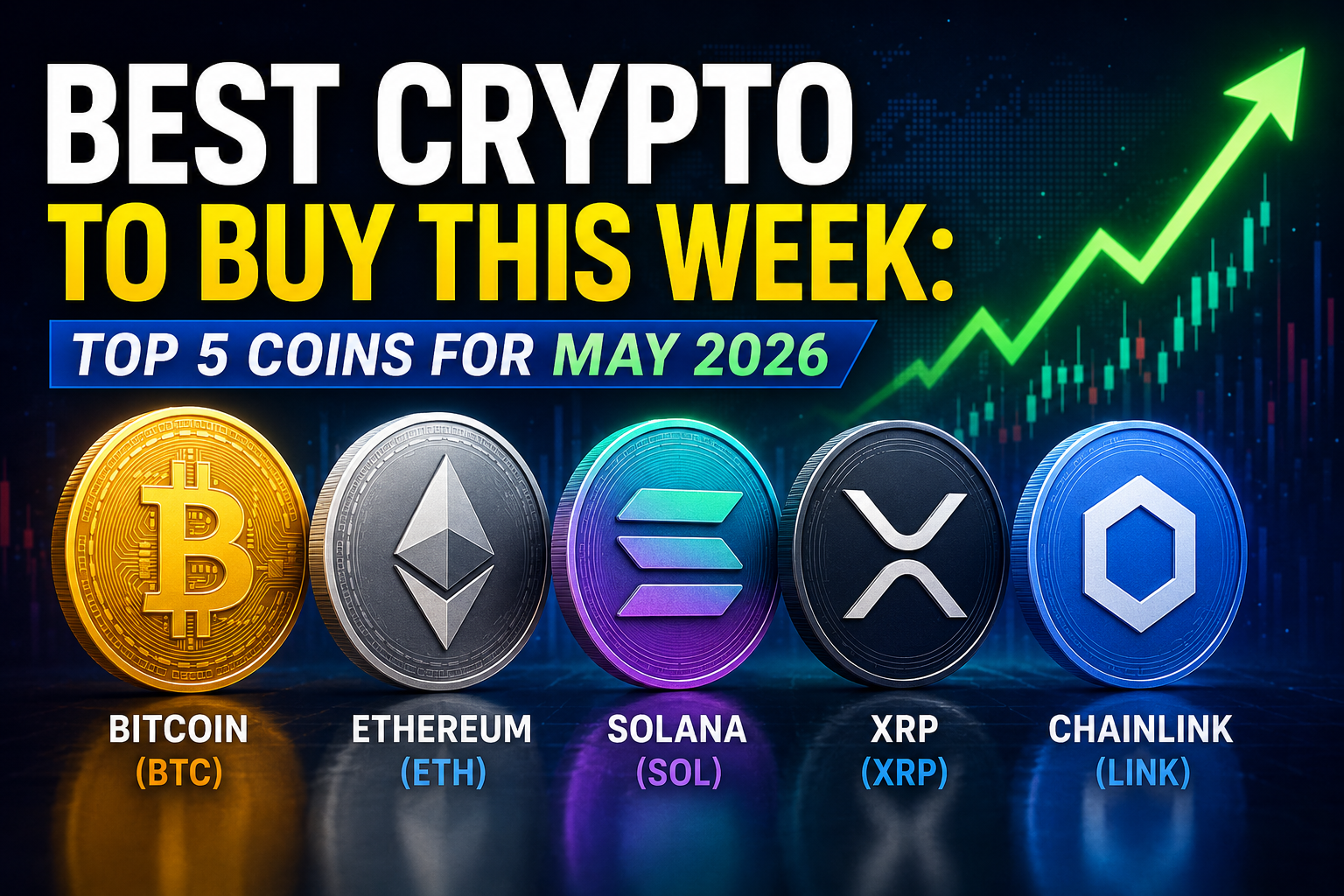
  • Best Crypto to Buy This Week in May 2026

    Best Crypto to Buy This Week in May 2026

    The cryptocurrency market continues to evolve rapidly in 2026 as institutional investment, tokenization, decentralized finance, and AI-driven blockchain applications reshape the digital asset landscape. Investors are once again searching for the best crypto to buy this week as Bitcoin stabilizes above major resistance levels and altcoins begin attracting renewed attention. With new regulations emerging and large financial firms entering the blockchain sector, the crypto industry appears more mature and resilient than ever before.

    Finding the top crypto coins for May 2026 requires more than simply following hype. Smart investors are focusing on projects with strong ecosystems, real-world utility, active developer communities, and long-term growth potential. While meme coins continue to generate headlines, fundamentally strong cryptocurrencies remain the backbone of sustainable portfolios.

    This week, several major cryptocurrencies stand out because of increasing adoption, expanding use cases, and bullish technical momentum. From decentralized finance and smart contracts to cross-border payments and oracle networks, these projects are leading the next phase of blockchain innovation.

    In this guide, we explore the best crypto to buy this week, analyzing the top five coins that could deliver strong upside potential in May 2026 while also discussing why they remain important in the broader crypto market.

    Why Investors Are Searching for the Best Crypto to Buy This Week

    The crypto market in 2026 is significantly different from previous cycles. Institutional adoption has accelerated, governments are developing clearer regulatory frameworks, and blockchain technology is becoming deeply integrated into financial systems worldwide. Investors are no longer looking only for speculative gains; they want digital assets with long-term value.

    Many analysts believe the current market cycle is being driven by tokenized real-world assets, decentralized AI platforms, stablecoin infrastructure, and scalable blockchain ecosystems. As a result, investors are increasingly interested in cryptocurrencies that power these innovations.

    The phrase best crypto to buy this week has become one of the most searched crypto-related keywords because traders are actively seeking opportunities that combine momentum with strong fundamentals. Timing matters in cryptocurrency investing, especially during periods of increased volatility and institutional participation.

    While short-term price swings remain common, fundamentally strong cryptocurrencies continue attracting capital because they provide utility, liquidity, and ecosystem growth that weaker projects cannot sustain.

    Bitcoin Remains the King of Digital Assets
    Best Crypto to Buy This Week in May 2026

    Why Bitcoin Still Leads the Crypto Market

    No discussion about the best crypto to buy this week is complete without Bitcoin. Despite the emergence of thousands of cryptocurrencies, Bitcoin continues to dominate the market as the leading digital store of value.

    In 2026, Bitcoin benefits from multiple bullish catalysts. Spot Bitcoin ETFs continue seeing institutional inflows, sovereign wealth funds are gradually increasing exposure, and corporations are once again adding BTC to their balance sheets. The narrative around Bitcoin has shifted from speculative internet money to digital gold and a hedge against monetary instability.

    Bitcoin’s limited supply of 21 million coins remains one of its strongest features. As global demand rises while supply remains fixed, many analysts believe BTC still has significant upside potential during the current cycle.

    The network itself also continues improving. Layer-2 scaling solutions and Lightning Network adoption are helping Bitcoin expand beyond simple value storage into payment infrastructure and decentralized applications.

    Bitcoin’s Long-Term Potential in 2026

    Investors searching for the top crypto coins for May 2026 often prioritize safety and liquidity alongside growth potential. Bitcoin offers both. While smaller altcoins may deliver larger short-term gains, Bitcoin remains the most trusted cryptocurrency globally.

    Another reason Bitcoin remains one of the best cryptocurrencies to invest in is institutional confidence. Large asset managers, banks, and fintech firms continue building products around Bitcoin, increasing mainstream accessibility.

    As inflation concerns and global debt levels remain elevated, Bitcoin’s role as a scarce digital asset continues strengthening. Many market analysts now consider BTC an essential part of diversified investment portfolios.

    Ethereum Continues Dominating Smart Contracts

    Ethereum’s Expanding Ecosystem

    Ethereum remains one of the strongest contenders for the best crypto to buy this week because it powers the majority of decentralized finance, NFT platforms, tokenized assets, and Web3 applications.

    The Ethereum ecosystem has matured significantly by 2026. Improved scalability, lower transaction costs, and widespread Layer-2 adoption have solved many of the network’s previous limitations. Developers continue choosing Ethereum because of its massive ecosystem, security, and institutional credibility.

    The growth of tokenized real-world assets is also driving Ethereum adoption. Financial institutions increasingly use Ethereum infrastructure to tokenize stocks, bonds, real estate, and commodities.

    This growing institutional participation strengthens Ethereum’s long-term outlook and reinforces its status as one of the top crypto investments available today.

    Ethereum and the Future of Decentralized Finance

    DeFi remains one of crypto’s largest sectors, and Ethereum sits at its center. Lending protocols, decentralized exchanges, staking platforms, and liquidity markets continue generating billions in transaction volume.

    The rise of AI-integrated decentralized applications has also boosted Ethereum activity. Many blockchain AI projects rely on Ethereum smart contracts for transparency, automation, and decentralized governance.

    For investors looking for the best altcoins to buy in 2026, Ethereum offers a balance between stability and growth potential. While it may not deliver extreme speculative returns like smaller-cap tokens, its long-term position in the blockchain economy remains exceptionally strong.

    Solana Is Reclaiming Momentum

    Solana’s Speed and Scalability Drive Growth

    Solana has re-emerged as one of the best crypto to buy this week thanks to improving network reliability, growing developer activity, and rising institutional interest.

    Known for its high transaction throughput and low fees, Solana has become a major competitor to Ethereum in gaming, DeFi, NFTs, and consumer blockchain applications. The network’s scalability allows developers to create fast and efficient decentralized applications without excessive transaction costs.

    In 2026, Solana’s ecosystem has expanded substantially. New DeFi protocols, AI-integrated platforms, and payment solutions are contributing to rising user activity across the network.

    The blockchain’s growing adoption in mobile crypto applications has also strengthened its market position. Several fintech companies are now integrating Solana-based payment infrastructure because of its speed and cost efficiency.

    Why Solana Could Outperform in This Market Cycle

    Many analysts believe Solana may outperform several large-cap cryptocurrencies during bullish periods because of its strong retail appeal and expanding ecosystem.

    Investors searching for the top crypto coins for May 2026 are increasingly attracted to projects with real utility and strong developer growth. Solana continues meeting both criteria.

    Another major advantage is the network’s strong community support. Developer engagement, venture capital interest, and institutional experimentation all continue growing around the Solana ecosystem.

    If the broader crypto market maintains bullish momentum, Solana could remain one of the highest-performing major cryptocurrencies throughout 2026.

    XRP Benefits From Global Payment Expansion

    XRP’s Utility in Cross-Border Transactions

    XRP remains one of the most discussed digital assets in the cryptocurrency market. Its focus on fast and low-cost international payments continues attracting financial institutions and payment providers worldwide.

    As global finance becomes increasingly digitized, XRP’s utility in cross-border settlements strengthens. Ripple’s payment infrastructure allows transactions to settle within seconds while reducing the need for costly intermediaries.

    The regulatory environment around XRP has also improved considerably in recent years, increasing investor confidence. Many institutions that previously avoided the asset are now reconsidering its potential role in global payments infrastructure.

    This renewed optimism is one reason XRP appears frequently in discussions about the best crypto to buy this week.

    Institutional Adoption Could Fuel XRP Growth

    Ripple continues expanding partnerships with banks, payment firms, and fintech companies across multiple regions. As blockchain adoption grows within the traditional financial system, XRP may benefit significantly from increasing transactional demand.

    Another bullish factor is the growing interest in central bank digital currencies and tokenized settlement systems. XRP’s speed and liquidity capabilities position it well within this evolving landscape.

    For investors seeking cryptocurrencies with strong utility rather than purely speculative narratives, XRP remains one of the best cryptocurrencies to watch in 2026.

    Chainlink Powers the Blockchain Data Economy

    Why Chainlink Is Essential for Web3

    Chainlink has become one of the most important infrastructure projects in the blockchain industry. As decentralized applications require reliable external data, Chainlink’s oracle network plays a critical role in connecting blockchains with real-world information.

    The rise of tokenized assets, AI-driven smart contracts, and decentralized finance platforms has significantly increased demand for secure data feeds. Chainlink continues dominating this sector because of its reliability, scalability, and institutional partnerships.

    Many analysts consider LINK one of the best altcoins to buy now because oracle technology is essential for the next generation of blockchain applications.

    Chainlink and Real-World Asset Tokenization

    One of the biggest trends in 2026 is the tokenization of real-world assets. Banks, asset managers, and fintech firms are increasingly experimenting with blockchain-based settlement systems and digital securities.

    Chainlink’s technology helps these systems operate securely by providing accurate off-chain data to smart contracts. This utility gives LINK long-term relevance beyond speculative trading.

    As blockchain adoption expands into traditional finance, infrastructure projects like Chainlink may experience substantial growth. Investors searching for the best crypto to buy this week often prioritize utility-focused projects with sustainable demand drivers, making LINK an attractive option.

    Factors to Consider Before Buying Cryptocurrency

    Market Volatility Remains High

    Even the strongest cryptocurrencies experience significant price volatility. Investors should always consider risk management and avoid investing more than they can afford to lose.

    The crypto market reacts quickly to macroeconomic conditions, regulatory announcements, technological developments, and investor sentiment. While opportunities can be substantial, short-term corrections are common.

    Understanding market cycles and maintaining a long-term perspective can help investors avoid emotional decision-making during periods of volatility.

    Diversification Is Important in Crypto Investing

    Many experienced investors diversify across multiple cryptocurrencies instead of relying on a single asset. Combining established coins like Bitcoin and Ethereum with high-growth altcoins can help balance risk and reward.

    The best crypto portfolio in 2026 often includes a mix of store-of-value assets, smart contract platforms, infrastructure tokens, and utility-focused projects.

    Diversification can also help investors benefit from different market trends, including DeFi growth, AI integration, tokenization, and blockchain payments.

    How Institutional Adoption Is Changing Crypto

    Institutional involvement has become one of the defining themes of the 2026 crypto market. Large investment firms, banks, and technology companies are increasingly integrating blockchain infrastructure into their operations.

    This institutional participation provides liquidity, legitimacy, and long-term growth potential for the crypto industry. It also reduces some of the speculative volatility that dominated earlier market cycles.

    Bitcoin ETFs, tokenized securities, and blockchain-based settlement systems are helping cryptocurrencies become more integrated into mainstream finance. As adoption grows, many analysts believe fundamentally strong projects will continue outperforming weaker speculative tokens.

    This shift explains why investors searching for the best crypto to buy this week are focusing more on utility, scalability, and institutional relevance rather than short-term hype alone.

    Conclusion

    The cryptocurrency market in May 2026 presents exciting opportunities for investors looking to position themselves for long-term growth. While volatility remains a key characteristic of digital assets, several cryptocurrencies continue standing out because of their utility, adoption, and ecosystem strength.

    Bitcoin remains the dominant store of value and institutional favorite, while Ethereum continues leading decentralized finance and smart contract innovation. Solana offers scalability and growing developer momentum, XRP strengthens its role in global payments, and Chainlink powers critical blockchain infrastructure.

    Choosing the best crypto to buy this week ultimately depends on investment goals, risk tolerance, and market outlook. However, these five cryptocurrencies continue demonstrating strong fundamentals that could support future growth as blockchain adoption expands globally.

    Investors should always conduct independent research, monitor market trends carefully, and maintain diversified portfolios when entering the cryptocurrency market. As the digital asset industry evolves, projects with real-world utility and strong ecosystems are likely to remain the biggest long-term winners.

  • Can SOL Reach $200 After Coinbase Lending Boost?

    Can SOL Reach $200 After Coinbase Lending Boost?

    The cryptocurrency market is once again turning its attention toward Solana (SOL) after Coinbase expanded its crypto-backed lending services to include up to $100,000 in SOL collateral lending. The move has reignited bullish sentiment around the Solana ecosystem, with traders and analysts now debating whether SOL can realistically reclaim or even surpass the critical $200 price level in the coming market cycle.

    Over the past year, Solana has evolved from being viewed as a high-speed alternative blockchain into one of the most active ecosystems in decentralized finance, NFT activity, stablecoin transfers, and institutional blockchain experimentation. The addition of larger SOL-backed lending options by Coinbase is being interpreted as another signal that major crypto platforms are becoming increasingly confident in Solana’s long-term utility and liquidity.

    Collateralized lending has become one of the most important sectors in digital finance because it allows investors to unlock liquidity without selling their crypto assets. By enabling users to borrow against SOL holdings, Coinbase is effectively increasing the asset’s financial utility while encouraging long-term holding behavior. This development could strengthen demand dynamics for SOL at a time when the broader altcoin market is already gaining momentum.

    As speculation builds around a possible Solana breakout, investors are closely watching whether growing institutional support, expanding DeFi usage, and improving market structure can push SOL toward the psychologically important $200 milestone.

    Coinbase Expands SOL Utility Through Collateral Lending

    The decision by Coinbase to support up to $100,000 in SOL collateral lending marks an important milestone for the Solana ecosystem. Traditionally, Bitcoin and Ethereum dominated crypto-backed lending services because of their deep liquidity and institutional acceptance. Expanding these capabilities to Solana reflects growing confidence in SOL as a mature digital asset.

    Crypto-backed lending works similarly to traditional secured loans. Users deposit cryptocurrency as collateral and receive fiat or stablecoin liquidity without selling their holdings. This process allows investors to maintain market exposure while accessing capital for trading, investing, or personal financial needs.

    For SOL holders, this new Coinbase feature significantly improves the token’s practical value. Instead of treating SOL solely as a speculative investment, users can now utilize it as a productive financial asset within broader crypto-finance strategies. Increased utility often contributes to stronger long-term demand because investors become less inclined to liquidate holdings during market volatility.

    The expansion also indicates that Coinbase sees sufficient market depth and stability in Solana to support larger collateral positions. Exchanges generally avoid offering substantial lending products for highly unstable or illiquid assets. By introducing $100,000 SOL collateral lending, Coinbase is signaling growing institutional comfort with Solana’s market structure.

    This development has fueled optimism among traders who believe enhanced financial utility could help drive sustained price appreciation for SOL over time.

    Why the $200 Price Level Matters for Solana

    The $200 level carries enormous psychological and technical significance for Solana. During previous bull market rallies, SOL emerged as one of the fastest-growing cryptocurrencies in the industry, reaching record highs driven by NFT adoption, DeFi expansion, and investor excitement around scalable blockchain infrastructure.

    Since then, market corrections and broader crypto downturns pushed SOL far below its peak levels. However, Solana has steadily rebuilt momentum through ecosystem development, network upgrades, and increasing institutional attention.

    Reclaiming the $200 price level would represent more than just a numerical milestone. It would symbolize renewed investor confidence in Solana’s long-term growth narrative and reinforce the blockchain’s status as one of the leading smart contract platforms competing alongside Ethereum.

    Technical analysts also view round-number resistance zones like $200 as major sentiment indicators. If SOL approaches and successfully breaks through this level, momentum traders and institutional investors could interpret it as confirmation of a stronger bullish trend.

    At the same time, reaching $200 would require sustained capital inflows, broader altcoin market strength, and continued ecosystem expansion. While the Coinbase lending announcement contributes positively to sentiment, multiple additional factors will influence whether Solana can maintain enough momentum for such a major rally.

    Institutional Interest in Solana Continues Growing

    One of the biggest reasons analysts remain optimistic about Solana’s future is the steady increase in institutional interest surrounding the network. Over the past year, several major financial firms, venture capital groups, and blockchain developers have shown renewed engagement with Solana-based applications and infrastructure.

    Institutional adoption matters because it often provides deeper liquidity, long-term investment stability, and broader market legitimacy. When large financial platforms integrate SOL into lending, custody, or trading services, it encourages more professional investors to view the asset as part of a diversified digital asset portfolio.

    Coinbase’s lending expansion could therefore serve as a catalyst for additional institutional activity. Financial products tied to SOL create stronger infrastructure around the token, making it easier for investors to manage exposure, hedge positions, and utilize Solana within broader decentralized finance strategies.

    The growing popularity of Solana-based stablecoin transactions has also contributed to institutional optimism. The network’s fast transaction speeds and relatively low fees make it attractive for payment applications, decentralized exchanges, and blockchain settlement systems.

    As more financial services integrate Solana support, the blockchain’s overall economic activity could continue rising, potentially strengthening demand for SOL itself.

    Solana’s Ecosystem Growth Supports Bullish Sentiment

    Another important factor supporting the possibility of SOL reaching $200 is the continued expansion of the Solana ecosystem. Blockchain networks derive long-term value not just from speculation, but from actual usage across decentralized applications, financial services, gaming, NFTs, and developer activity.

    Solana has experienced significant growth in decentralized finance protocols, meme coin trading activity, and on-chain transaction volume. The ecosystem’s ability to process high transaction throughput with relatively low costs remains one of its strongest competitive advantages.

    Developers continue launching applications on Solana because of its scalability and speed. Increased developer activity often leads to stronger user engagement, higher transaction volume, and greater network utility over time.

    The NFT sector has also played a role in keeping Solana relevant. Although the broader NFT market cooled after its peak hype cycle, Solana-based NFT communities remain highly active. This continued engagement helps sustain transaction activity and ecosystem visibility.

    Furthermore, the rise of mobile-focused crypto applications and payment integrations has positioned Solana as an attractive blockchain for consumer-oriented adoption. If ecosystem growth continues accelerating, investor confidence in SOL’s long-term value proposition could strengthen significantly.

    How Crypto Lending Impacts Token Prices

    Crypto-backed lending services can have a surprisingly powerful effect on market dynamics. When investors gain the ability to borrow against their holdings, they are less likely to sell assets during periods of market uncertainty.

    This reduced selling pressure can contribute to stronger price stability and potentially amplify bullish momentum during upward market trends. By allowing users to access liquidity without liquidating SOL, Coinbase’s lending product may encourage more long-term holding behavior.

    Collateral lending also increases the financial sophistication of an asset ecosystem. Tokens that support borrowing, staking, derivatives, and structured financial products often attract more institutional attention because they become integrated into broader financial strategies rather than functioning purely as speculative instruments.

    The introduction of larger SOL-backed loans may additionally improve liquidity conditions for professional traders and high-net-worth crypto investors. These participants often seek efficient ways to deploy capital while maintaining exposure to promising digital assets.

    If demand for SOL-backed loans grows steadily, it could indirectly support higher market valuations by increasing the token’s utility within decentralized and centralized financial systems.

    Risks That Could Prevent SOL From Reaching $200

    Despite growing optimism, several risks could prevent Solana from achieving a sustained rally toward $200. Cryptocurrency markets remain highly volatile, and even strong ecosystem developments do not guarantee immediate price appreciation.

    One major challenge is competition. Solana operates in an extremely crowded smart contract ecosystem alongside Ethereum, BNB, Avalanche, and other blockchain networks. Maintaining developer growth and user adoption requires continuous innovation.

    Regulatory uncertainty also remains a significant concern across the crypto industry. Governments worldwide continue debating how digital assets should be classified and regulated. Unexpected regulatory developments affecting exchanges, lending services, or decentralized finance platforms could negatively impact market sentiment.

    Macroeconomic conditions may also influence SOL’s trajectory. Interest rate policies, global liquidity conditions, and investor risk appetite all affect cryptocurrency markets. If broader financial markets experience instability, speculative assets like SOL could face increased selling pressure.

    Additionally, Solana’s history of network outages continues to generate caution among some investors. Although the blockchain has improved reliability considerably, critics still question whether the network can maintain stability during periods of extremely high activity.

    For SOL to successfully reach and sustain $200, the ecosystem must continue addressing these challenges while maintaining strong adoption momentum.

    Technical Momentum and Market Psychology
    Can SOL Reach $200 After Coinbase Lending Boost

    Market psychology plays a major role in cryptocurrency price movements, especially around highly visible milestones like $200. As bullish sentiment builds, traders often begin positioning themselves ahead of anticipated breakouts, which can accelerate momentum.

    If SOL approaches major resistance zones with strong trading volume and positive market conditions, fear of missing out could attract additional retail and institutional participation. Momentum-driven rallies are common in crypto markets, particularly when supported by positive news developments like expanded lending services.

    Technical analysts closely monitor support levels, moving averages, and liquidity zones to evaluate whether an asset has enough strength to continue climbing. If Solana maintains higher lows and strong buying pressure, bullish traders may increasingly target the $200 region as a realistic medium-term objective.

    However, psychological resistance works both ways. Major price milestones often trigger profit-taking from long-term holders. This can create volatility and temporary pullbacks even during broader uptrends.

    Ultimately, whether SOL reaches $200 will depend on a combination of technical strength, ecosystem growth, institutional adoption, and broader crypto market conditions.

    Could Coinbase’s Move Trigger Wider Exchange Adoption?

    Coinbase’s decision to expand SOL-backed lending may influence other exchanges and financial platforms to introduce similar services. Competition within the crypto industry often accelerates innovation as companies attempt to attract users through expanded financial products.

    If additional exchanges begin supporting larger SOL collateral lending programs, it could significantly increase the token’s financial integration across the digital asset ecosystem. Greater accessibility to lending, borrowing, and yield-generation services tends to improve market liquidity and investor participation.

    Wider adoption of SOL-backed financial products may also strengthen the perception of Solana as a mature institutional-grade blockchain asset. This shift could encourage hedge funds, family offices, and traditional financial firms to explore larger SOL exposure.

    The broader impact extends beyond lending itself. Financial infrastructure development often serves as a foundation for future products such as derivatives, structured investment vehicles, tokenized assets, and institutional trading services.

    As the crypto industry evolves, assets with stronger financial ecosystems are more likely to attract sustained long-term capital inflows.

    Conclusion

    The expansion of SOL collateral lending by Coinbase represents another important milestone for the Solana ecosystem and reinforces growing confidence in the blockchain’s long-term potential. By allowing users to borrow up to $100,000 against SOL holdings, Coinbase is increasing the token’s utility, improving financial accessibility, and encouraging broader investor participation.

    While the move alone may not guarantee a rally to $200, it contributes to a larger bullish narrative surrounding Solana. Institutional interest, ecosystem growth, rising DeFi activity, and expanding financial products are all strengthening SOL’s market position.

    At the same time, significant challenges remain. Competition, regulation, market volatility, and technical risks could all influence Solana’s future trajectory. Achieving the $200 milestone will require sustained adoption, positive market conditions, and continued ecosystem development.

    Still, the combination of growing institutional infrastructure and increasing real-world blockchain usage suggests that Solana remains one of the most closely watched assets in the cryptocurrency market. If momentum continues building, the possibility of SOL revisiting or surpassing $200 may become increasingly realistic in the coming market cycle.

  • Fairshake Midterm Spending Faces Voter Trust Crisis

    Fairshake Midterm Spending Faces Voter Trust Crisis

    The growing influence of crypto money in American politics has become one of the most controversial stories of the 2026 election cycle. At the center of the debate stands Fairshake, a powerful crypto-backed super PAC that continues to pour millions of dollars into congressional races despite rising public skepticism toward digital assets and artificial intelligence. Recent polls reveal that voter trust in crypto remains weak, yet Fairshake and its allies insist their political spending reflects innovation, economic freedom, and the future of finance.

    As the 2026 U.S. midterm elections approach, the clash between crypto lobbying, political influence, and public distrust is becoming impossible to ignore. Fairshake has already spent tens of millions on competitive races while building a massive campaign war chest for future battles. Critics argue that the organization represents unchecked corporate influence in politics. Meanwhile, supporters believe the group protects technological innovation from excessive regulation.

    The debate extends far beyond cryptocurrency. It touches broader concerns about campaign finance, voter transparency, digital assets, and the growing role of billion-dollar industries in shaping legislation. Because of that, Fairshake’s aggressive election strategy has become a symbol of how technology and politics are colliding in modern America.

    Recent reporting shows Fairshake and affiliated crypto PACs have already committed enormous sums toward the 2026 midterms while public trust in crypto continues to decline.

    What Is Fairshake and Why Does It Matter?

    Fairshake emerged as one of the most powerful political action committees tied to the cryptocurrency industry. Backed by major crypto companies and influential venture capital firms, the organization was created to support candidates who favor blockchain innovation and crypto-friendly regulation.

    The PAC gained national attention during the 2024 election cycle when it spent heavily in congressional races across the United States. Its success rate shocked political analysts and demonstrated the growing political power of the crypto industry. Since then, Fairshake has expanded rapidly, accumulating hundreds of millions of dollars intended to shape future elections and legislative battles.

    Supporters of Fairshake argue that digital assets represent a major technological breakthrough similar to the early internet. They claim policymakers need better education about blockchain technology and decentralized finance. Therefore, they see political engagement as necessary for protecting innovation and maintaining America’s competitiveness in financial technology.

    However, critics believe Fairshake represents a dangerous shift in campaign financing. They argue that wealthy crypto executives and corporations are using political donations to secure favorable regulation while avoiding meaningful oversight. Consequently, many voters now question whether elected officials truly represent the public or simply respond to industries with massive financial influence.

    Fairshake Defends Midterm Spending Amid Public Skepticism

    Despite mounting criticism, Fairshake continues defending its aggressive election spending strategy. The organization argues that political participation is essential because lawmakers are actively debating major crypto legislation involving stablecoins, digital asset oversight, and market structure rules.

    Fairshake leaders insist their mission focuses on supporting candidates who encourage innovation and economic growth. According to industry supporters, hostile regulation could drive blockchain companies overseas and weaken American leadership in emerging technology sectors. As a result, they believe political advocacy is necessary to keep crypto development within the United States.

    Yet voter attitudes tell a different story. A recent survey found that many Americans still consider cryptocurrency investments too risky. Additionally, a large portion of voters believe artificial intelligence is developing too quickly and requires stricter oversight. These concerns create a difficult environment for crypto-aligned political groups attempting to shape elections.

    Political analysts warn that crypto-backed spending may eventually create backlash once voters fully understand which industries fund certain campaigns. Even though public awareness of Fairshake remains relatively low, that anonymity may not last long during heated midterm races. Therefore, some strategists fear that crypto PACs could become easy political targets for opponents seeking to energize skeptical voters.

    Why Voter Trust in Crypto Continues to Fall

    Public distrust toward cryptocurrency has developed over several years due to market crashes, fraud scandals, and high-profile exchange failures. Many retail investors lost significant amounts of money during previous crypto collapses, which damaged confidence in the industry.

    At the same time, critics argue that crypto markets still lack sufficient consumer protections. Scams, hacking incidents, and regulatory uncertainty continue dominating headlines. Consequently, average voters often associate cryptocurrency with speculation rather than legitimate innovation.

    The political dimension has intensified those concerns. As crypto companies spend more money influencing elections, voters increasingly worry about corporate influence over government policy. Many Americans already distrust large financial institutions and lobbying groups. Therefore, massive spending by crypto PACs only deepens public suspicion.

    Another important factor involves transparency. Fairshake advertisements often avoid directly mentioning cryptocurrency, even when the PAC’s financial backing comes from crypto interests. Critics claim this strategy hides the organization’s true motivations from voters. Meanwhile, supporters argue the ads focus on broader economic issues rather than niche policy debates.

    Because of these dynamics, the crypto industry faces a major credibility challenge. Winning legislative battles may become increasingly difficult if public trust continues deteriorating during the election cycle.

    The Massive Financial Power Behind Fairshake

    One reason Fairshake receives so much attention involves the sheer size of its political funding. The PAC and its affiliated organizations have accumulated enormous financial resources for the 2026 midterms. Major contributors reportedly include leading crypto firms, venture capital investors, and blockchain entrepreneurs.

    This level of spending has transformed Fairshake into one of the most influential issue-focused political organizations in America. Reports indicate the PAC entered 2026 with hundreds of millions of dollars available for campaign activities. Furthermore, industry insiders expect additional contributions throughout the election season.

    Supporters claim the spending reflects the growing economic importance of digital assets. They argue industries such as banking, energy, healthcare, and technology have long participated in political advocacy. Therefore, they believe crypto companies deserve equal representation in Washington.

    Critics strongly disagree. They argue Fairshake’s spending creates an uneven political system where wealthy industries gain disproportionate influence over public policy. Some watchdog groups also worry that crypto lobbying could weaken financial regulations designed to protect consumers and maintain market stability.

    The growing financial scale of crypto politics has already changed campaign strategies across several states. Candidates increasingly seek endorsements and financial support from crypto-aligned organizations, especially in competitive races where outside spending can dramatically affect advertising and voter outreach.

    How Midterm Elections Became a Crypto Battleground

    The 2026 midterms have become a critical test for the cryptocurrency industry’s political influence. Several congressional races now feature heavy spending from Fairshake and affiliated PACs supporting candidates considered friendly toward blockchain regulation.

    Illinois has emerged as one of the biggest battlegrounds. Reports indicate Fairshake invested millions into Senate primary contests and congressional races there. The spending sparked heated political arguments over outside influence and crypto-backed campaign advertising.

    Meanwhile, other states including Texas, Arkansas, Alabama, and Indiana have also seen increased crypto PAC activity. Fairshake-backed groups continue targeting races involving lawmakers connected to financial oversight committees or digital asset legislation.

    This strategy demonstrates how seriously the crypto industry views congressional regulation. Many companies believe upcoming legislation could determine the future of digital assets in America. Therefore, they see election spending as a long-term investment in favorable policy outcomes.

    Opponents argue that this approach undermines democratic accountability. They claim voters may not fully understand how outside spending influences political messaging and campaign narratives. Furthermore, critics fear lawmakers supported by crypto money may prioritize industry interests over broader consumer protections.

    As the election season intensifies, these tensions will likely become even more visible.

    The Relationship Between Crypto Regulation and Political Spending
    Fairshake Midterm Spending Faces Voter Trust Crisis

    Crypto regulation remains one of the central issues driving Fairshake’s election strategy. Congress continues debating legislation related to stablecoins, securities law, decentralized finance, and digital asset exchanges. Therefore, both supporters and critics recognize that upcoming elections could reshape the regulatory environment for years.

    Fairshake-backed candidates generally support clearer regulatory frameworks that encourage blockchain innovation while reducing uncertainty for crypto businesses. Industry leaders argue that inconsistent rules have already pushed some companies overseas. Consequently, they want Congress to establish predictable standards that allow the sector to grow responsibly.

    However, opponents worry that crypto lobbying seeks weaker oversight rather than balanced regulation. They point to previous industry collapses and argue stronger protections are necessary before expanding digital finance. Additionally, some lawmakers remain skeptical about the broader economic value of cryptocurrency itself.

    This conflict explains why campaign spending has intensified so dramatically. The stakes are enormous for both sides. If pro-crypto candidates gain influence in Congress, major legislation could accelerate industry growth. On the other hand, stronger anti-crypto sentiment could result in tighter restrictions and increased enforcement actions.

    Because of that, Fairshake’s political strategy reflects more than simple election campaigning. It represents a broader fight over the future of financial technology and regulatory authority in the United States.

    Critics Warn About Corporate Influence in Democracy

    One of the loudest criticisms facing Fairshake involves the broader issue of money in politics. Many advocacy groups argue that unlimited spending by super PACs weakens democratic accountability and increases corporate influence over elected officials.

    Critics say crypto-backed political advertising often floods local races with outside money that overwhelms grassroots campaigning. In some districts, voters may encounter massive ad campaigns without fully understanding who funds them or why. Consequently, concerns about transparency continue growing.

    The criticism becomes even stronger when ads avoid direct references to cryptocurrency. Opponents claim this tactic prevents voters from understanding the real interests behind political messaging. Supporters counter that campaigns focus on broader policy themes relevant to everyday Americans.

    Still, the controversy reflects a larger national debate about campaign finance reform. Americans across the political spectrum increasingly distrust powerful lobbying organizations and wealthy donors. Therefore, Fairshake’s visibility may intensify calls for stricter campaign finance laws in the future.

    Political experts also warn that excessive spending can eventually backfire. If voters perceive candidates as controlled by special interests, public resentment may increase rather than decrease. That risk becomes especially dangerous during periods of economic uncertainty and declining institutional trust.

    Can Fairshake Overcome the Trust Problem?

    Fairshake’s biggest challenge may not involve fundraising or political organization. Instead, it involves public perception. Winning elections through advertising becomes more difficult when voters distrust the underlying industry behind the campaign spending.

    The crypto sector faces a complicated reputation problem. While blockchain technology continues attracting investors and developers, many ordinary Americans remain cautious. They associate crypto with volatility, scams, and financial risk rather than innovation.

    Therefore, Fairshake must convince voters that crypto policy affects broader economic opportunities rather than benefiting only wealthy investors and tech companies. Supporters argue blockchain innovation could create jobs, modernize payment systems, and strengthen American competitiveness. However, critics remain unconvinced.

    The organization also faces increasing media scrutiny. Journalists, watchdog groups, and political analysts now closely monitor crypto-backed campaign spending. As awareness grows, Fairshake may encounter stronger public resistance in future races.

    Nevertheless, the PAC still possesses enormous financial power and strategic influence. Its supporters believe long-term political engagement will eventually normalize cryptocurrency within mainstream policymaking. Whether voters accept that argument remains uncertain.

    The Future of Crypto Politics in America

    The rise of Fairshake signals a major transformation in American politics. Technology industries increasingly recognize the importance of political influence in shaping regulation and public policy. Consequently, election spending from emerging sectors like cryptocurrency will likely continue expanding.

    Future campaigns may see even greater involvement from blockchain companies, artificial intelligence firms, and other technology-driven industries. This trend raises important questions about transparency, accountability, and democratic representation.

    At the same time, voters appear increasingly skeptical of corporate influence in politics. Public frustration with wealthy donors and lobbying organizations continues growing across party lines. Therefore, political groups linked to controversial industries may face stronger resistance moving forward.

    For the crypto industry, the stakes remain enormous. Legislative outcomes during the next few years could determine whether digital assets become fully integrated into the financial system or remain heavily restricted. That reality explains why organizations like Fairshake continue investing massive sums into congressional races despite public skepticism.

    Ultimately, the battle surrounding Fairshake reflects a deeper national conversation about technology, regulation, money, and democracy itself.

    Conclusion

    Fairshake has become one of the most influential and controversial political organizations in the 2026 election cycle. While the crypto-backed super PAC continues defending its aggressive midterm spending strategy, voter trust in cryptocurrency remains deeply fragile.

    The organization argues that supporting pro-innovation candidates protects America’s leadership in financial technology. However, critics believe the rise of crypto PACs represents a dangerous expansion of corporate influence over democratic institutions.

    As election spending accelerates, the debate surrounding Fairshake will likely intensify. Public skepticism toward cryptocurrency, combined with growing concerns about campaign finance transparency, creates significant political risks for the industry. Yet the enormous financial resources behind Fairshake ensure that crypto politics will remain a major force throughout the midterm elections.

    Whether voters ultimately embrace or reject crypto-backed political influence could shape the future of digital asset regulation for years to come.

    FAQs

    Q. What is Fairshake?

    Fairshake is a pro-crypto super PAC that supports political candidates who favor cryptocurrency innovation and blockchain-friendly regulation in the United States.

    Q. Why is Fairshake spending heavily in the midterms?

    Fairshake believes upcoming elections will shape future crypto regulation. Therefore, it invests heavily in candidates who support digital asset policies and blockchain innovation.

    Q. Why do many voters distrust cryptocurrency?

    Many Americans remain skeptical because of crypto market crashes, scams, exchange failures, and concerns about weak consumer protections.

    Q. Who funds Fairshake?

    Major contributors reportedly include cryptocurrency companies, blockchain investors, venture capital firms, and prominent crypto executives.

    Q. How could Fairshake influence future crypto regulation?

    By supporting pro-crypto candidates in congressional races, Fairshake may help shape legislation involving stablecoins, blockchain oversight, and digital asset market rules.

  • Gold Surges Past $4700 as Silver Jumps 6%

    Gold Surges Past $4700 as Silver Jumps 6%

    Gold Surges Past $4700 as investors rush toward safe-haven assets during rising economic uncertainty and inflation fears. At the same time, silver rallied more than 6% in a single trading day, creating one of the strongest precious metals rallies of the year. The sudden jump in gold and silver prices has attracted global attention from traders, institutions, and retail investors who now expect continued volatility across financial markets.

    The sudden rise in gold and silver prices reflects a broader shift in investor psychology. Traders now expect higher inflation, weaker fiat currencies, and prolonged economic instability. As a result, many institutional and retail investors increased exposure to bullion, mining stocks, and commodity-backed exchange-traded funds. Furthermore, central banks across several nations continue to accumulate gold reserves, which adds additional momentum to the ongoing rally.

    The latest move also sparked discussions about whether the world is entering a new commodity supercycle. Analysts believe that rising debt levels, weaker economic growth, and monetary policy uncertainty are creating ideal conditions for precious metals to outperform traditional assets. Consequently, gold spikes above $4,700 became one of the most discussed financial developments of the year.

    At the same time, silver outperformed many major commodities during the trading session. The metal gained more than 6% within hours as investors sought both industrial and safe-haven exposure. Since silver has dual demand from manufacturing and investment sectors, its explosive rally indicates strong optimism about future economic activity and inflation protection.

    Why Gold Surges Past $4700 Amid Market Uncertainty

    The primary reason gold spikes above $4,700 is the growing demand for financial safety. Investors usually move toward gold during periods of uncertainty. However, the current market environment combines several powerful catalysts at once. Rising geopolitical tensions, persistent inflation concerns, and fears of economic slowdown have all contributed to the sharp increase in demand.

    Moreover, expectations of interest rate cuts have weakened the US dollar. A weaker dollar generally supports higher gold prices because bullion becomes cheaper for international buyers. Consequently, institutional investors accelerated gold purchases as the currency market showed increased volatility.

    Another major factor involves central bank activity. Many countries have steadily increased gold holdings over recent years to diversify away from the US dollar. This trend strengthened significantly after ongoing trade conflicts and sanctions reshaped global financial relationships. Therefore, gold spikes above $4,700 partly because sovereign buyers continue to support long-term demand.

    In addition, exchange-traded funds linked to gold experienced heavy inflows during the rally. Investors viewed precious metals as protection against stock market corrections and currency depreciation. As liquidity entered the sector rapidly, prices climbed even faster.

    Silver Rally Gains Momentum After Gold Surges Past $4700

    While gold dominated headlines, silver delivered one of the strongest performances in the commodity market. The white metal rallied more than 6% in a single trading session, which surprised many analysts who expected slower movement.

    Silver often follows gold during bullish cycles. However, it tends to move with greater volatility because of its smaller market size. When investor sentiment turns strongly positive, silver usually experiences larger percentage gains. That pattern became clear as silver rallies more than 6% in a day.

    Industrial demand also played a critical role in the price surge. Silver remains essential for solar panels, electric vehicles, semiconductors, and modern electronics. As governments continue pushing green energy projects worldwide, industrial consumption of silver keeps rising steadily.

    Furthermore, mining supply constraints added pressure to the market. Several major silver-producing regions have faced operational disruptions, environmental regulations, and declining ore grades. Consequently, tighter supply conditions amplified the rally.

    Many traders now believe silver could outperform gold during the next phase of the precious metals cycle. Since silver remains historically undervalued compared to gold, investors see strong upside potential if economic uncertainty continues.

    Investor Sentiment Turns Bullish on Precious Metals

    The recent rally dramatically improved investor confidence in the precious metals sector. Hedge funds, institutional asset managers, and retail traders increased bullish positions after gold spikes above $4,700 and silver rallies more than 6% in a day.

    Market sentiment shifted because investors fear instability across multiple asset classes. Stock market volatility has increased sharply in recent months. Meanwhile, bond yields remain unpredictable as central banks struggle to balance inflation control with economic growth.

    As confidence weakens in traditional financial systems, investors often seek tangible stores of value. Gold and silver historically perform well during periods of economic uncertainty. Therefore, portfolio managers are increasing allocations toward bullion and mining equities.

    Additionally, social media discussions and online trading communities fueled momentum buying. Retail investors aggressively entered the market after seeing gold reach record-breaking levels. This wave of participation created stronger buying pressure across futures and spot markets.

    Analysts also noted that many investors missed earlier commodity rallies. Consequently, they rushed into precious metals to avoid missing another major trend. That fear of missing out accelerated the bullish momentum.

    Inflation Fears Push Gold Surges Past $4700 Trend

    Inflation remains one of the strongest drivers behind the current rally. Even though some economies reported slower price growth recently, many investors believe inflation risks remain elevated over the long term.

    Energy prices continue to fluctuate aggressively, while supply chain disruptions still affect global manufacturing. Food prices also remain high in many regions. As living costs rise, investors increasingly seek inflation-resistant assets.

    Gold has historically served as a hedge against inflation. When purchasing power declines, investors often buy precious metals to preserve wealth. Consequently, gold spikes above $4,700 reflects broader fears about currency devaluation and monetary instability.

    Silver also benefits from inflationary conditions. Besides functioning as a safe-haven asset, silver gains support from industrial demand during periods of economic expansion. This combination makes silver particularly attractive during uncertain economic cycles.

    Moreover, concerns about excessive government debt continue to influence investor decisions. Many economies rely heavily on borrowing and stimulus spending. Some analysts worry that future debt monetization could weaken fiat currencies further, which would strengthen demand for gold and silver.

    Central Banks Are Increasing Gold Reserves

    Central bank purchases have become a powerful force in the gold market. Several countries continue increasing reserves to reduce dependence on foreign currencies and strengthen financial security.

    Emerging economies especially accelerated gold buying during recent years. Nations seek protection from currency volatility and geopolitical risks. Therefore, long-term institutional demand remains strong even during temporary market corrections.

    The trend intensified after global financial fragmentation increased. Trade disputes, sanctions, and shifting alliances encouraged many governments to diversify reserve assets. Gold became an attractive option because it carries no counterparty risk and maintains universal value.

    As central banks continue accumulating bullion, available supply tightens further. This structural demand supports long-term bullish momentum and helps explain why gold spikes above $4,700 despite occasional market volatility.

    Analysts expect this trend to continue for years. Many policymakers now view gold as an essential reserve asset in an increasingly uncertain financial environment.

    Mining Stocks and Commodity Markets React Strongly

    The precious metals rally triggered significant gains across mining equities and commodity-related investments. Gold and silver mining companies experienced sharp price increases as investors anticipated stronger profit margins.

    Mining firms benefit directly from higher metal prices because production costs often remain relatively stable. When bullion prices surge rapidly, company revenues can rise substantially. Consequently, traders aggressively purchased mining shares after silver rallies more than 6% in a day.

    Commodity-focused exchange-traded funds also attracted heavy inflows. Investors who wanted exposure to precious metals without holding physical bullion entered the market through ETFs and futures contracts.

    At the same time, broader commodity markets reacted positively. Copper, platinum, and palladium prices also gained momentum as traders speculated about a wider commodity boom. Some analysts now believe precious metals could lead a new inflation-driven commodity cycle.

    However, volatility remains high. Commodity markets can reverse quickly if economic conditions change or monetary policy expectations shift. Therefore, investors continue monitoring inflation data, interest rates, and geopolitical developments closely.

    Geopolitical Risks Support Safe-Haven Demand
    Gold Surges Past $4,700 as Silver Jumps 6%

    Geopolitical instability remains another major reason gold spikes above $4,700. Investors often seek safe-haven assets during periods of international conflict and political uncertainty.

    Tensions between major global powers have intensified recently. Trade disputes, military conflicts, and diplomatic breakdowns increased fears about long-term global stability. Consequently, many investors shifted capital away from riskier assets and into precious metals.

    Energy market disruptions also contributed to uncertainty. Oil price volatility affects inflation expectations and economic growth forecasts. Since gold performs well during unstable market conditions, demand strengthened further.

    Additionally, concerns about banking sector stability influenced investor behavior. Some financial institutions continue facing pressure from rising interest rates and weakening credit conditions. These fears encouraged additional buying in gold and silver markets.

    The combination of geopolitical risks and financial instability created ideal conditions for a strong precious metals rally. Therefore, analysts expect safe-haven demand to remain elevated in the near term.

    Could Gold Surges Past $4700 Lead to Higher Prices?

    After gold spikes above $4,700, many investors wonder whether prices can continue climbing. Some analysts believe the rally still has room to expand, especially if inflation remains persistent and interest rates decline.

    Technical indicators suggest strong bullish momentum across long-term charts. Market sentiment also remains highly optimistic as institutional investors continue increasing exposure to precious metals.

    Furthermore, global economic uncertainty shows few signs of disappearing soon. Debt concerns, currency volatility, and geopolitical tensions could continue supporting higher gold prices throughout the coming years.

    However, analysts also warn about short-term corrections. Precious metals markets often experience rapid pullbacks after aggressive rallies. Profit-taking activity and changes in monetary policy expectations could trigger temporary declines.

    Silver may also continue outperforming during future rallies. Since silver remains cheaper than gold and carries strong industrial demand, some traders believe it offers greater upside potential in percentage terms.

    Long-term investors remain focused on macroeconomic conditions rather than short-term volatility. Many view the current rally as part of a larger structural shift toward hard assets and commodities.

    The Role of the US Dollar in the Precious Metals Rally

    The US dollar plays a critical role in determining gold and silver prices. When the dollar weakens, precious metals often rise because they become more affordable for international buyers.

    Recent expectations of lower interest rates placed pressure on the dollar index. Investors anticipate that central banks may eventually ease monetary policy to support slowing economies. Consequently, currency traders reduced bullish dollar positions.

    As the dollar weakened, gold spikes above $4,700 became more likely. Currency depreciation increases the attractiveness of non-yielding assets like bullion because investors seek protection from declining purchasing power.

    Silver also benefited from this trend. Since the metal trades globally in US dollars, international demand tends to rise when the currency falls.

    Additionally, many countries are exploring alternatives to dollar-based trade systems. This long-term shift could support sustained demand for gold as a reserve asset. Analysts believe that de-dollarization trends may become increasingly important for precious metals markets in the future.

    Retail Investors Return to the Gold Market

    Retail participation increased sharply during the rally. Individual investors purchased physical gold bars, silver coins, and commodity-backed funds after seeing historic price movements.

    Online trading platforms reported significant increases in precious metals activity. Social media discussions about inflation, recession fears, and safe-haven investments also encouraged broader market participation.

    Many younger investors now view gold and silver differently than previous generations. Instead of seeing precious metals as outdated assets, they increasingly consider them essential portfolio diversification tools.

    Digital investment platforms also made access easier. Retail traders can now purchase fractional gold and silver exposure instantly through mobile applications and online brokers.

    This growing accessibility contributed to stronger market momentum. As more investors entered the sector, demand increased rapidly across both physical and paper markets.

    Conclusion

    The historic moment when gold spikes above $4,700 and silver rallies more than 6% in a day marks a major turning point for global financial markets. Investors increasingly seek protection from inflation, economic uncertainty, geopolitical instability, and currency volatility. As a result, precious metals regained prominence as reliable safe-haven assets.

    Gold continues benefiting from strong central bank demand, weaker currency conditions, and rising investor anxiety. Meanwhile, silver attracts attention through both industrial applications and investment demand. Together, these metals are reshaping conversations about portfolio diversification and long-term wealth preservation.

    Although short-term volatility may continue, the broader outlook for precious metals remains strong. Economic uncertainty, inflation concerns, and structural changes in the global financial system could support higher prices over the coming years. Therefore, investors worldwide continue watching the precious metals market closely as this historic rally unfolds.

    FAQs

    Q. Why did gold spike above $4,700?

    Gold spikes above $4,700 mainly because investors are seeking safe-haven assets during economic uncertainty, inflation fears, and geopolitical tensions. A weaker US dollar and strong central bank demand also supported the rally.

    Q. Why did silver rally more than 6% in one day?

    Silver rallied sharply due to increased investor demand, strong industrial usage in green energy sectors, and supply constraints in mining operations. The metal also followed gold’s bullish momentum.

    Q. Is gold a good investment during inflation?

    Yes, gold is widely considered a hedge against inflation. Investors often buy gold to preserve purchasing power when currencies weaken and living costs rise.

    Q. Can silver outperform gold in the future?

    Many analysts believe silver could outperform gold because of its smaller market size and growing industrial demand. Silver often experiences larger percentage gains during bullish commodity cycles.

    Q. What factors could affect future gold prices?

    Future gold prices may depend on inflation trends, interest rates, central bank policies, geopolitical events, currency movements, and overall investor sentiment toward safe-haven assets.

  • Crypto PAC Spends $514K Backing James Baird

    Crypto PAC Spends $514K Backing James Baird

    The relationship between politics and digital finance is evolving quickly. Recently, a major development in Indiana highlighted this shift. A crypto PAC invested $514,000 to support Representative James Baird. This move signals the growing political power of the cryptocurrency industry.

    As cryptocurrencies gain mainstream traction, industry players are becoming more politically active. They are no longer focused only on markets or innovation. Instead, they are now influencing policy and elections. This shift reflects a broader strategy to shape favorable regulations.

    Moreover, the Indiana race shows how targeted funding can impact local elections. It also demonstrates how crypto-backed groups are working to influence national policy through regional campaigns. As a result, this case represents a larger trend in U.S. politics.

    The Rise of Crypto PACs in U.S. Politics

    In recent years, crypto PACs have gained significant influence in American politics. These groups collect funds from individuals and companies within the cryptocurrency space. Then, they use that capital to support candidates who favor blockchain-friendly policies.

    Unlike traditional industries, the crypto sector faces constant regulatory uncertainty. Therefore, it must act proactively. By supporting candidates like James Baird, these PACs aim to promote innovation-friendly laws.

    Additionally, crypto PACs are shifting their strategy. Instead of focusing only on national elections, they now target key local races. This approach allows them to build stronger relationships with lawmakers. Over time, these relationships can influence critical legislative decisions.

    As a result, digital asset advocacy is becoming more structured and strategic. This trend is expected to grow as the industry expands.

    Why Indiana? Strategic Importance of the Race

    Indiana may not be the first state that comes to mind when discussing cryptocurrency innovation, but it holds strategic significance in the current political climate. The decision to invest $514K in support of Rep. James Baird reflects a calculated effort by the crypto PAC to influence a race where the outcome could have broader implications for national policy.

    Representative Baird has been seen as a candidate open to blockchain-friendly policies and supportive of technological innovation. By backing him, the crypto PAC is not just supporting an individual but also promoting a policy agenda that aligns with the interests of the digital asset industry. This includes clearer regulatory frameworks, support for decentralized finance (DeFi), and a balanced approach to oversight.

    The Indiana race also demonstrates how crypto election funding is being used to amplify voices that might otherwise struggle to compete with more traditional political donors. In a political environment where campaign financing plays a crucial role, the injection of $514K can significantly enhance a candidate’s visibility and outreach efforts.

    The Role of Rep. James Baird in Crypto Policy

    Crypto PAC Spends $514K

    Rep. James Baird’s growing prominence in discussions around cryptocurrency regulation has made him an attractive candidate for crypto PAC support. While not exclusively a “crypto candidate,” his openness to innovation and economic growth aligns with the goals of the digital asset sector.

    Baird’s policy positions suggest a willingness to explore how blockchain technology can benefit various industries, from finance to supply chain management. This pragmatic approach resonates with crypto advocates who are seeking policymakers capable of balancing innovation with consumer protection. By supporting Baird, the crypto PAC is effectively endorsing a vision of responsible crypto regulation that encourages growth while addressing potential risks.

    Furthermore, Baird’s influence within congressional committees could prove valuable in shaping future legislation. As debates around cryptocurrency intensify, having allies in key positions will be critical for the industry. The $514K investment can thus be seen as a long-term strategy aimed at building a supportive legislative environment.

    How Crypto PAC Spending Impacts Elections

    The impact of crypto PAC spending on elections extends beyond simple financial support. These contributions often come with strategic campaign efforts, including targeted advertising, voter outreach, and messaging that emphasizes the importance of digital innovation.

    In the case of Indiana, the $514K spend is likely being used to highlight Baird’s alignment with forward-thinking policies. This includes promoting his stance on technology, economic development, and regulatory clarity. Such messaging not only benefits the candidate but also raises awareness among voters about the role of cryptocurrency in the modern economy.

    Moreover, crypto PACs bring a unique perspective to political campaigns. Unlike traditional donors, they are often driven by a specific set of policy goals rather than broad ideological affiliations. This focus allows them to craft highly targeted campaigns that resonate with both tech-savvy voters and those interested in economic growth.

    The increasing presence of crypto PACs also introduces a new dynamic to campaign financing. As more candidates receive support from these organizations, the influence of the digital asset industry is likely to grow, potentially reshaping the priorities of policymakers across the country.

    The Broader Implications for Crypto Regulation

    The $514K investment in Indiana is not an isolated ঘটনা but part of a larger trend that could significantly impact the future of cryptocurrency regulation in the United States. As crypto PACs continue to support pro-innovation candidates, the likelihood of favorable legislation increases.

    One of the key goals of these efforts is to establish a clear and consistent regulatory framework. Currently, the U.S. crypto landscape is characterized by overlapping jurisdictions and uncertain guidelines. By influencing elections, crypto PACs aim to create a more predictable environment that encourages investment and innovation.

    This push for clarity is particularly important as the global competition for blockchain leadership intensifies. Countries around the world are developing their own regulatory approaches, and the United States risks falling behind if it fails to provide a supportive environment for digital assets. The involvement of crypto PACs in elections like Indiana’s reflects a recognition of this urgency.

    At the same time, increased political involvement also raises questions about accountability and transparency. As the influence of the crypto industry grows, there will be greater scrutiny of how these funds are used and what impact they have on policymaking. Balancing innovation with ethical considerations will be essential for maintaining public trust.

    The Future of Political Funding in the Crypto Era

    The Indiana race offers a glimpse into the future of political funding in the age of digital assets. As cryptocurrencies become more integrated into the global economy, their influence on politics is likely to expand.

    One potential development is the increased use of blockchain technology in campaign financing itself. This could include transparent donation tracking, decentralized funding platforms, and new ways of engaging with voters. Such innovations have the potential to transform how campaigns are conducted, making them more accessible and accountable.

    Additionally, the success of crypto PACs in influencing elections could inspire other emerging industries to adopt similar strategies. This could lead to a more diverse and dynamic political landscape, where a wider range of voices and interests are represented.

    However, this evolution also comes with challenges. Ensuring that political funding remains transparent and free from undue influence will be critical. As crypto PACs continue to grow, regulators and policymakers will need to address these concerns while preserving the benefits of increased participation.

    Conclusion

    The $514K spend by a crypto PAC in support of Rep. James Baird represents a significant milestone in the convergence of cryptocurrency and politics. It highlights the growing influence of digital asset advocates and their determination to shape the regulatory landscape in the United States. By targeting key races like Indiana’s, crypto PACs are not only supporting individual candidates but also advancing a broader agenda focused on innovation, clarity, and economic growth.

    As this trend continues, the impact of crypto PACs on elections and policymaking is likely to become even more pronounced. The Indiana race serves as a clear example of how the digital asset industry is stepping into the political arena, signaling a new era where technology and governance are increasingly interconnected.

    FAQs

    Q. What is a crypto PAC?
    A crypto PAC is a political action committee that raises and spends money to support candidates who favor cryptocurrency-friendly policies and blockchain innovation.

    Q. Why did the crypto PAC spend $514K in Indiana?
    The investment was made to support Rep. James Baird, who is seen as aligned with pro-innovation and blockchain-friendly policies.

    Q. How does crypto PAC funding influence elections?
    It boosts campaign visibility, supports targeted messaging, and helps candidates compete more effectively by funding advertising and outreach efforts.

    Q. What does this mean for cryptocurrency regulation?
    It suggests that the crypto industry is actively working to influence legislation, aiming for clearer and more supportive regulatory frameworks.

    Q. Will crypto PACs continue to grow in influence?
    Yes, as the cryptocurrency industry expands, crypto PACs are likely to play an increasingly important role in shaping political and regulatory outcomes.

  • Institutional Demand for Crypto Surges in 2026

    Institutional Demand for Crypto Surges in 2026

    The global financial landscape is undergoing a profound transformation as institutional demand for crypto accelerates at an unprecedented pace. What was once considered a speculative and volatile asset class dominated by retail investors is now evolving into a mature ecosystem supported by robust infrastructure, regulatory clarity, and enterprise-grade solutions. Large financial institutions, asset managers, hedge funds, and even governments are increasingly embracing digital assets as a legitimate component of diversified portfolios.

    This shift is not happening in isolation. It is driven by significant improvements in crypto infrastructure, including secure custody solutions, scalable blockchain networks, compliant trading platforms, and enhanced liquidity mechanisms. As these foundational elements strengthen, they are reducing traditional barriers to entry for institutional players, making the crypto market more accessible, reliable, and attractive.

    In this article, we explore how institutional adoption of cryptocurrency is rising, the role of infrastructure in enabling this growth, and what it means for the future of the digital asset ecosystem.

    The Evolution of Institutional Demand for Crypto

    Institutional demand for crypto has evolved significantly over the past decade. Initially, cryptocurrencies like Bitcoin were viewed with skepticism by traditional finance. Concerns around volatility, regulatory uncertainty, and lack of infrastructure kept institutions on the sidelines.

    However, as the market matured, perceptions began to shift. The emergence of regulated crypto exchanges, improved compliance frameworks, and the introduction of financial instruments such as crypto ETFs and futures contracts played a crucial role in building trust. Institutions started recognizing crypto as a viable alternative asset class, offering diversification benefits and exposure to high-growth technology.

    Today, institutional investment in crypto is no longer experimental. It is strategic. Firms are allocating capital not just for speculative gains but for long-term value, hedging against inflation, and participating in the broader digital economy.

    Strengthening Crypto Infrastructure: A Key Catalyst

    Secure Custody Solutions

    One of the most critical factors driving institutional demand for crypto is the availability of secure custody solutions. Institutions require bank-grade security to safeguard digital assets, and the industry has responded with advanced custody services featuring multi-signature wallets, cold storage, and insurance coverage.

    These solutions reduce risks associated with hacking and asset loss, making it easier for institutions to confidently hold large amounts of cryptocurrency. As custody technology continues to evolve, it is becoming a cornerstone of institutional participation.

    Regulatory Compliance and Clarity

    Regulation has long been a barrier to institutional adoption. However, recent developments in crypto regulation across major economies have provided much-needed clarity. Governments and financial authorities are increasingly establishing frameworks that define how digital assets can be traded, stored, and taxed.

    This regulatory progress is fostering a safer environment for institutional investors. Compliance tools such as Know Your Customer (KYC) and Anti-Money Laundering (AML) protocols are now integrated into most platforms, aligning the crypto industry with traditional financial standards.

    Scalable Blockchain Networks

    Another major driver is the advancement of blockchain scalability. Early blockchain networks struggled with slow transaction speeds and high fees, limiting their usability. Today, next-generation protocols and layer-2 solutions are addressing these issues, enabling faster and more cost-effective transactions.

    Scalable infrastructure supports institutional trading volumes and complex financial operations, making blockchain technology more practical for enterprise use cases.

    The Role of Liquidity in Institutional Adoption

    Liquidity is a fundamental requirement for institutional investors, and the crypto market has made significant strides in this area. Increased participation from market makers, improved exchange mechanisms, and the rise of decentralized finance (DeFi) have all contributed to deeper liquidity pools.

    Enhanced liquidity reduces price slippage and volatility, creating a more stable trading environment. This stability is essential for institutions managing large portfolios, as it allows them to enter and exit positions efficiently.

    Moreover, the growth of crypto derivatives markets has provided institutions with sophisticated tools for risk management. Futures, options, and perpetual contracts enable hedging strategies that were previously unavailable in the crypto space.

    Institutional Players Entering the Crypto Market

    The surge in institutional demand for crypto is evident in the growing number of major players entering the market. Investment banks, asset management firms, and even pension funds are now allocating resources to digital assets.

    These institutions are not only investing directly in cryptocurrencies but also building infrastructure around them. From launching crypto-focused funds to offering blockchain-based financial services, institutional involvement is reshaping the industry.

    This influx of capital is also enhancing market credibility. As more reputable organizations participate, public confidence in crypto increases, further driving adoption.

    Integration with Traditional Financial Systems

    A significant milestone in the rise of institutional demand for crypto is its integration with traditional financial systems. Payment networks, banking institutions, and fintech companies are increasingly incorporating crypto services into their offerings.

    This convergence is blurring the lines between traditional finance and digital assets. Investors can now access crypto through familiar platforms, making it easier for institutions to include digital assets in their portfolios.

    The development of tokenized assets is another important trend. By representing real-world assets on blockchain networks, tokenization is unlocking new opportunities for liquidity and fractional ownership, attracting institutional interest.

    Risk Management and Institutional Confidence

    Risk management is a critical consideration for institutions, and advancements in this area are boosting confidence in crypto investments. Tools for portfolio tracking, analytics, and compliance monitoring are becoming more sophisticated, enabling better decision-making.

    Insurance products for digital assets are also gaining traction, providing an additional layer of security. These developments are addressing key concerns that previously deterred institutional investors.

    Furthermore, the availability of reliable market data and research is helping institutions understand the crypto landscape more effectively. As transparency improves, so does trust.

    The Impact of Institutional Demand on Crypto Markets
    Institutional Demand on Crypto Markets

    The rise in institutional demand for crypto is having a transformative impact on the market. Increased capital inflows are driving price stability and reducing volatility over time. This creates a more predictable environment, which is essential for long-term growth.

    Institutional participation is also encouraging innovation. As demand grows, companies are investing in new technologies and services to meet the needs of sophisticated investors. This is accelerating the development of the entire ecosystem.

    Additionally, the presence of institutions is influencing market dynamics. Trading volumes are increasing, and market structures are becoming more efficient, aligning closer with traditional financial markets.

    Challenges and Barriers to Further Adoption

    Despite the progress, there are still challenges that need to be addressed. Regulatory uncertainty remains in some regions, and inconsistent policies can create obstacles for global institutions.

    Security concerns, while significantly reduced, are not entirely eliminated. Cyber threats continue to evolve, requiring constant innovation in security measures.

    Another challenge is the complexity of the crypto ecosystem. Institutions need skilled professionals and advanced tools to navigate this space effectively. Education and talent development will play a crucial role in overcoming these barriers.

    The Future of Institutional Demand for Crypto

    Looking ahead, the future of institutional demand for crypto appears highly promising. As infrastructure continues to strengthen, more institutions are expected to enter the market, further driving adoption.

    Emerging technologies such as central bank digital currencies (CBDCs) and advanced blockchain applications will likely play a significant role in shaping the next phase of growth. These innovations could bridge the gap between traditional finance and digital assets even further.

    The continued evolution of regulatory frameworks will also be a key factor. Clear and consistent policies will provide the stability needed for sustained institutional involvement.

    Ultimately, the convergence of technology, finance, and regulation is setting the stage for a new era in the crypto industry—one where institutional participation is not just common but foundational.

    Conclusion

    The rise in institutional demand for crypto marks a turning point in the evolution of digital assets. What was once a niche market is now becoming an integral part of the global financial system. Strengthened infrastructure, improved regulation, and enhanced liquidity are all contributing to this transformation.

    As institutions continue to embrace crypto, their involvement is bringing greater stability, credibility, and innovation to the market. While challenges remain, the overall trajectory is clear: institutional adoption is accelerating, and it is reshaping the future of finance.

    For investors, businesses, and policymakers alike, understanding this shift is essential. The era of institutional crypto has arrived, and its impact will be felt for years to come.

    FAQs

    Q. Why is institutional demand for crypto increasing?

    Institutional demand for crypto is rising due to improved infrastructure, regulatory clarity, and the recognition of digital assets as a legitimate investment class offering diversification and growth potential.

    Q. What role does infrastructure play in crypto adoption?

    Strong crypto infrastructure, including secure custody, scalable blockchain networks, and compliant trading platforms, reduces risk and makes it easier for institutions to participate.

    Q. How does institutional investment impact crypto markets?

    Institutional investment increases liquidity, reduces volatility, and enhances market credibility, leading to a more stable and mature ecosystem.

    Q. Are there still risks for institutions investing in crypto?

    Yes, risks such as regulatory uncertainty, cybersecurity threats, and market complexity still exist, but they are being addressed through ongoing innovation and improved frameworks.

    Q. What is the future of institutional crypto adoption?

    The future looks promising, with continued growth expected as infrastructure strengthens, regulations evolve, and new technologies like CBDCs and tokenization gain traction.