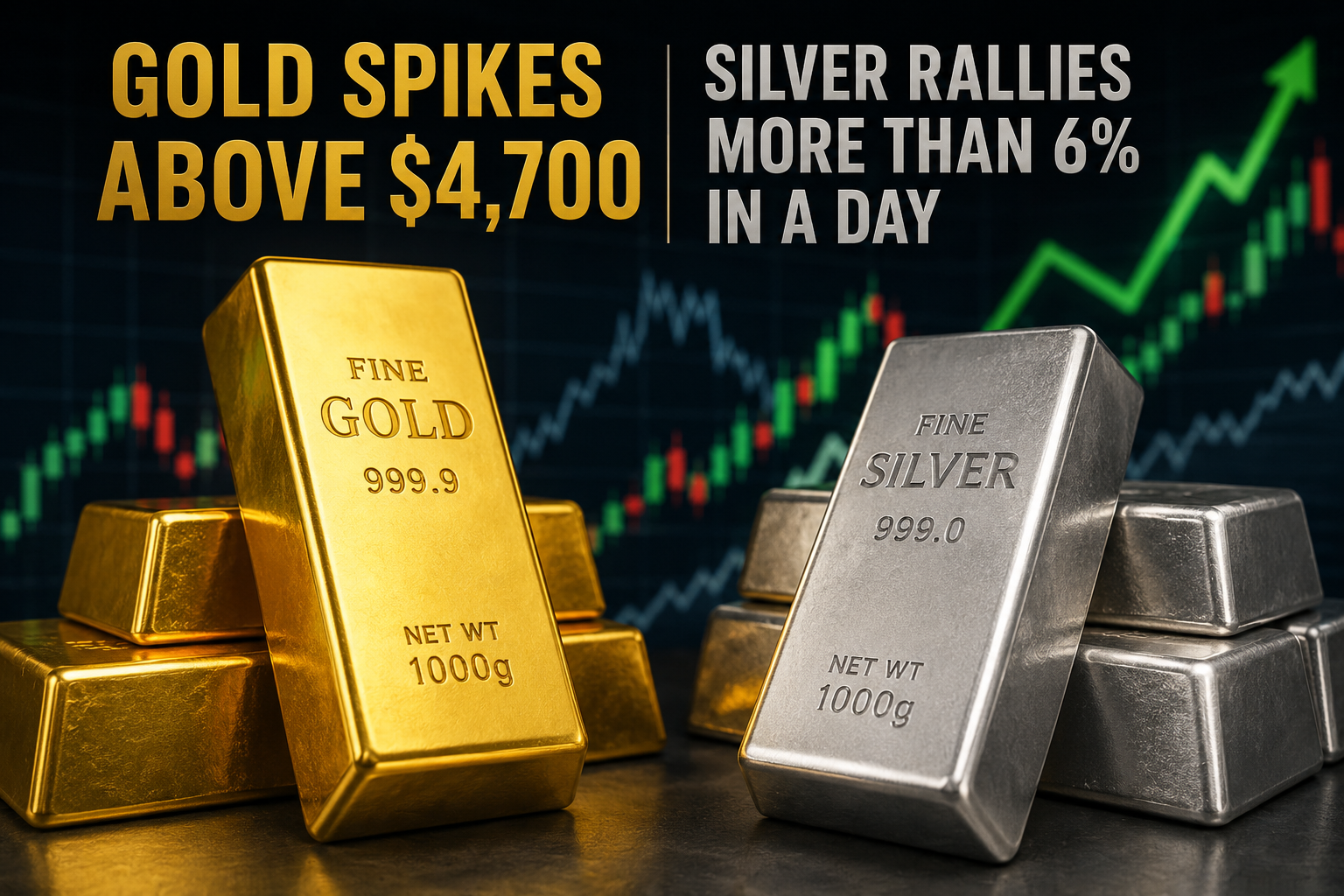
Gold Surges Past $4700 as investors rush toward safe-haven assets during rising economic uncertainty and inflation fears. At the same time, silver rallied more than 6% in a single trading day, creating one of the strongest precious metals rallies of the year. The sudden jump in gold and silver prices has attracted global attention from traders, institutions, and retail investors who now expect continued volatility across financial markets.
The sudden rise in gold and silver prices reflects a broader shift in investor psychology. Traders now expect higher inflation, weaker fiat currencies, and prolonged economic instability. As a result, many institutional and retail investors increased exposure to bullion, mining stocks, and commodity-backed exchange-traded funds. Furthermore, central banks across several nations continue to accumulate gold reserves, which adds additional momentum to the ongoing rally.
The latest move also sparked discussions about whether the world is entering a new commodity supercycle. Analysts believe that rising debt levels, weaker economic growth, and monetary policy uncertainty are creating ideal conditions for precious metals to outperform traditional assets. Consequently, gold spikes above $4,700 became one of the most discussed financial developments of the year.
At the same time, silver outperformed many major commodities during the trading session. The metal gained more than 6% within hours as investors sought both industrial and safe-haven exposure. Since silver has dual demand from manufacturing and investment sectors, its explosive rally indicates strong optimism about future economic activity and inflation protection.
Why Gold Surges Past $4700 Amid Market Uncertainty
The primary reason gold spikes above $4,700 is the growing demand for financial safety. Investors usually move toward gold during periods of uncertainty. However, the current market environment combines several powerful catalysts at once. Rising geopolitical tensions, persistent inflation concerns, and fears of economic slowdown have all contributed to the sharp increase in demand.
Moreover, expectations of interest rate cuts have weakened the US dollar. A weaker dollar generally supports higher gold prices because bullion becomes cheaper for international buyers. Consequently, institutional investors accelerated gold purchases as the currency market showed increased volatility.
Another major factor involves central bank activity. Many countries have steadily increased gold holdings over recent years to diversify away from the US dollar. This trend strengthened significantly after ongoing trade conflicts and sanctions reshaped global financial relationships. Therefore, gold spikes above $4,700 partly because sovereign buyers continue to support long-term demand.
In addition, exchange-traded funds linked to gold experienced heavy inflows during the rally. Investors viewed precious metals as protection against stock market corrections and currency depreciation. As liquidity entered the sector rapidly, prices climbed even faster.
Silver Rally Gains Momentum After Gold Surges Past $4700
While gold dominated headlines, silver delivered one of the strongest performances in the commodity market. The white metal rallied more than 6% in a single trading session, which surprised many analysts who expected slower movement.
Silver often follows gold during bullish cycles. However, it tends to move with greater volatility because of its smaller market size. When investor sentiment turns strongly positive, silver usually experiences larger percentage gains. That pattern became clear as silver rallies more than 6% in a day.
Industrial demand also played a critical role in the price surge. Silver remains essential for solar panels, electric vehicles, semiconductors, and modern electronics. As governments continue pushing green energy projects worldwide, industrial consumption of silver keeps rising steadily.
Furthermore, mining supply constraints added pressure to the market. Several major silver-producing regions have faced operational disruptions, environmental regulations, and declining ore grades. Consequently, tighter supply conditions amplified the rally.
Many traders now believe silver could outperform gold during the next phase of the precious metals cycle. Since silver remains historically undervalued compared to gold, investors see strong upside potential if economic uncertainty continues.
Investor Sentiment Turns Bullish on Precious Metals
The recent rally dramatically improved investor confidence in the precious metals sector. Hedge funds, institutional asset managers, and retail traders increased bullish positions after gold spikes above $4,700 and silver rallies more than 6% in a day.
Market sentiment shifted because investors fear instability across multiple asset classes. Stock market volatility has increased sharply in recent months. Meanwhile, bond yields remain unpredictable as central banks struggle to balance inflation control with economic growth.
As confidence weakens in traditional financial systems, investors often seek tangible stores of value. Gold and silver historically perform well during periods of economic uncertainty. Therefore, portfolio managers are increasing allocations toward bullion and mining equities.
Additionally, social media discussions and online trading communities fueled momentum buying. Retail investors aggressively entered the market after seeing gold reach record-breaking levels. This wave of participation created stronger buying pressure across futures and spot markets.
Analysts also noted that many investors missed earlier commodity rallies. Consequently, they rushed into precious metals to avoid missing another major trend. That fear of missing out accelerated the bullish momentum.
Inflation Fears Push Gold Surges Past $4700 Trend
Inflation remains one of the strongest drivers behind the current rally. Even though some economies reported slower price growth recently, many investors believe inflation risks remain elevated over the long term.
Energy prices continue to fluctuate aggressively, while supply chain disruptions still affect global manufacturing. Food prices also remain high in many regions. As living costs rise, investors increasingly seek inflation-resistant assets.
Gold has historically served as a hedge against inflation. When purchasing power declines, investors often buy precious metals to preserve wealth. Consequently, gold spikes above $4,700 reflects broader fears about currency devaluation and monetary instability.
Silver also benefits from inflationary conditions. Besides functioning as a safe-haven asset, silver gains support from industrial demand during periods of economic expansion. This combination makes silver particularly attractive during uncertain economic cycles.
Moreover, concerns about excessive government debt continue to influence investor decisions. Many economies rely heavily on borrowing and stimulus spending. Some analysts worry that future debt monetization could weaken fiat currencies further, which would strengthen demand for gold and silver.
Central Banks Are Increasing Gold Reserves
Central bank purchases have become a powerful force in the gold market. Several countries continue increasing reserves to reduce dependence on foreign currencies and strengthen financial security.
Emerging economies especially accelerated gold buying during recent years. Nations seek protection from currency volatility and geopolitical risks. Therefore, long-term institutional demand remains strong even during temporary market corrections.
The trend intensified after global financial fragmentation increased. Trade disputes, sanctions, and shifting alliances encouraged many governments to diversify reserve assets. Gold became an attractive option because it carries no counterparty risk and maintains universal value.
As central banks continue accumulating bullion, available supply tightens further. This structural demand supports long-term bullish momentum and helps explain why gold spikes above $4,700 despite occasional market volatility.
Analysts expect this trend to continue for years. Many policymakers now view gold as an essential reserve asset in an increasingly uncertain financial environment.
Mining Stocks and Commodity Markets React Strongly
The precious metals rally triggered significant gains across mining equities and commodity-related investments. Gold and silver mining companies experienced sharp price increases as investors anticipated stronger profit margins.
Mining firms benefit directly from higher metal prices because production costs often remain relatively stable. When bullion prices surge rapidly, company revenues can rise substantially. Consequently, traders aggressively purchased mining shares after silver rallies more than 6% in a day.
Commodity-focused exchange-traded funds also attracted heavy inflows. Investors who wanted exposure to precious metals without holding physical bullion entered the market through ETFs and futures contracts.
At the same time, broader commodity markets reacted positively. Copper, platinum, and palladium prices also gained momentum as traders speculated about a wider commodity boom. Some analysts now believe precious metals could lead a new inflation-driven commodity cycle.
However, volatility remains high. Commodity markets can reverse quickly if economic conditions change or monetary policy expectations shift. Therefore, investors continue monitoring inflation data, interest rates, and geopolitical developments closely.
Geopolitical Risks Support Safe-Haven Demand
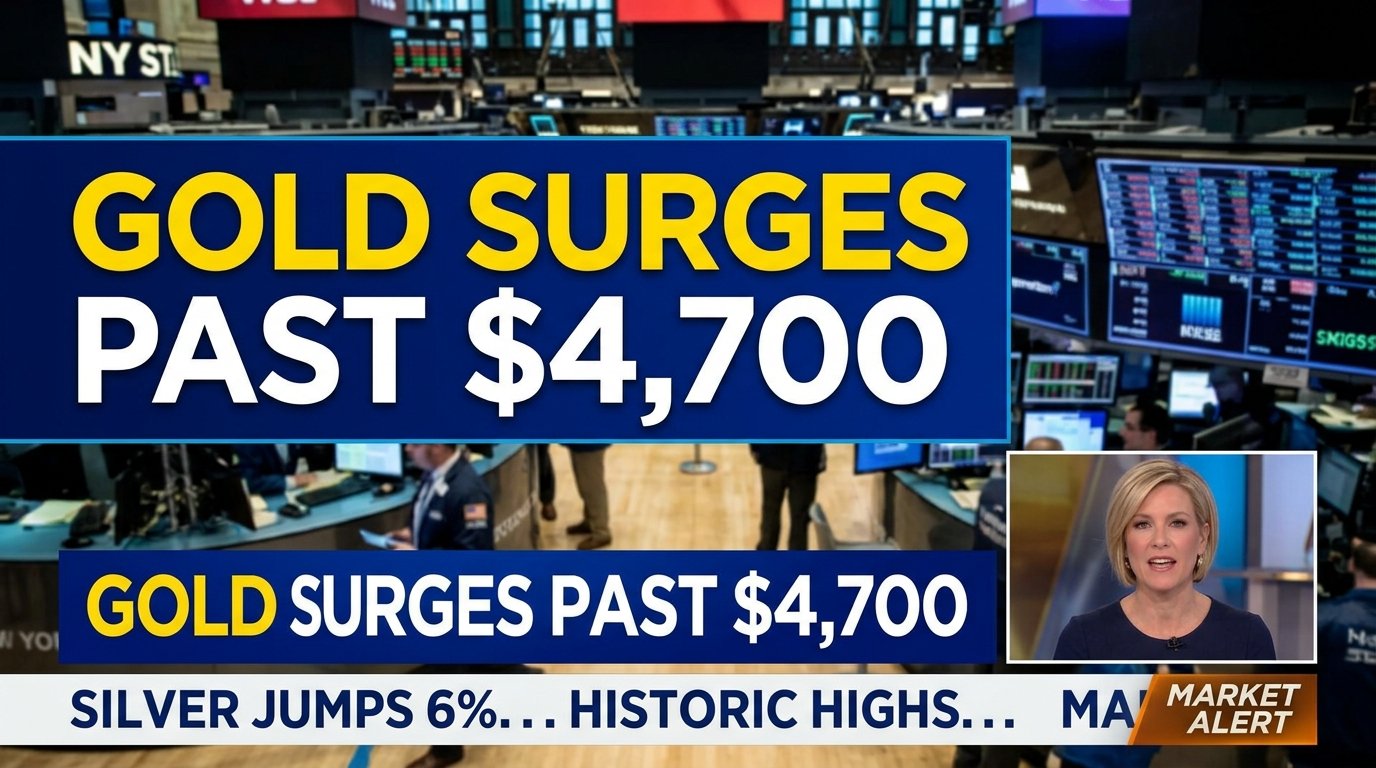
Geopolitical instability remains another major reason gold spikes above $4,700. Investors often seek safe-haven assets during periods of international conflict and political uncertainty.
Tensions between major global powers have intensified recently. Trade disputes, military conflicts, and diplomatic breakdowns increased fears about long-term global stability. Consequently, many investors shifted capital away from riskier assets and into precious metals.
Energy market disruptions also contributed to uncertainty. Oil price volatility affects inflation expectations and economic growth forecasts. Since gold performs well during unstable market conditions, demand strengthened further.
Additionally, concerns about banking sector stability influenced investor behavior. Some financial institutions continue facing pressure from rising interest rates and weakening credit conditions. These fears encouraged additional buying in gold and silver markets.
The combination of geopolitical risks and financial instability created ideal conditions for a strong precious metals rally. Therefore, analysts expect safe-haven demand to remain elevated in the near term.
Could Gold Surges Past $4700 Lead to Higher Prices?
After gold spikes above $4,700, many investors wonder whether prices can continue climbing. Some analysts believe the rally still has room to expand, especially if inflation remains persistent and interest rates decline.
Technical indicators suggest strong bullish momentum across long-term charts. Market sentiment also remains highly optimistic as institutional investors continue increasing exposure to precious metals.
Furthermore, global economic uncertainty shows few signs of disappearing soon. Debt concerns, currency volatility, and geopolitical tensions could continue supporting higher gold prices throughout the coming years.
However, analysts also warn about short-term corrections. Precious metals markets often experience rapid pullbacks after aggressive rallies. Profit-taking activity and changes in monetary policy expectations could trigger temporary declines.
Silver may also continue outperforming during future rallies. Since silver remains cheaper than gold and carries strong industrial demand, some traders believe it offers greater upside potential in percentage terms.
Long-term investors remain focused on macroeconomic conditions rather than short-term volatility. Many view the current rally as part of a larger structural shift toward hard assets and commodities.
The Role of the US Dollar in the Precious Metals Rally
The US dollar plays a critical role in determining gold and silver prices. When the dollar weakens, precious metals often rise because they become more affordable for international buyers.
Recent expectations of lower interest rates placed pressure on the dollar index. Investors anticipate that central banks may eventually ease monetary policy to support slowing economies. Consequently, currency traders reduced bullish dollar positions.
As the dollar weakened, gold spikes above $4,700 became more likely. Currency depreciation increases the attractiveness of non-yielding assets like bullion because investors seek protection from declining purchasing power.
Silver also benefited from this trend. Since the metal trades globally in US dollars, international demand tends to rise when the currency falls.
Additionally, many countries are exploring alternatives to dollar-based trade systems. This long-term shift could support sustained demand for gold as a reserve asset. Analysts believe that de-dollarization trends may become increasingly important for precious metals markets in the future.
Retail Investors Return to the Gold Market
Retail participation increased sharply during the rally. Individual investors purchased physical gold bars, silver coins, and commodity-backed funds after seeing historic price movements.
Online trading platforms reported significant increases in precious metals activity. Social media discussions about inflation, recession fears, and safe-haven investments also encouraged broader market participation.
Many younger investors now view gold and silver differently than previous generations. Instead of seeing precious metals as outdated assets, they increasingly consider them essential portfolio diversification tools.
Digital investment platforms also made access easier. Retail traders can now purchase fractional gold and silver exposure instantly through mobile applications and online brokers.
This growing accessibility contributed to stronger market momentum. As more investors entered the sector, demand increased rapidly across both physical and paper markets.
Conclusion
The historic moment when gold spikes above $4,700 and silver rallies more than 6% in a day marks a major turning point for global financial markets. Investors increasingly seek protection from inflation, economic uncertainty, geopolitical instability, and currency volatility. As a result, precious metals regained prominence as reliable safe-haven assets.
Gold continues benefiting from strong central bank demand, weaker currency conditions, and rising investor anxiety. Meanwhile, silver attracts attention through both industrial applications and investment demand. Together, these metals are reshaping conversations about portfolio diversification and long-term wealth preservation.
Although short-term volatility may continue, the broader outlook for precious metals remains strong. Economic uncertainty, inflation concerns, and structural changes in the global financial system could support higher prices over the coming years. Therefore, investors worldwide continue watching the precious metals market closely as this historic rally unfolds.
FAQs
Q. Why did gold spike above $4,700?
Gold spikes above $4,700 mainly because investors are seeking safe-haven assets during economic uncertainty, inflation fears, and geopolitical tensions. A weaker US dollar and strong central bank demand also supported the rally.
Q. Why did silver rally more than 6% in one day?
Silver rallied sharply due to increased investor demand, strong industrial usage in green energy sectors, and supply constraints in mining operations. The metal also followed gold’s bullish momentum.
Q. Is gold a good investment during inflation?
Yes, gold is widely considered a hedge against inflation. Investors often buy gold to preserve purchasing power when currencies weaken and living costs rise.
Q. Can silver outperform gold in the future?
Many analysts believe silver could outperform gold because of its smaller market size and growing industrial demand. Silver often experiences larger percentage gains during bullish commodity cycles.
Q. What factors could affect future gold prices?
Future gold prices may depend on inflation trends, interest rates, central bank policies, geopolitical events, currency movements, and overall investor sentiment toward safe-haven assets.
Leave a Reply