Blog

  • Ethereum Foundation Researchers Exit Amid Growing Concerns

    Ethereum Foundation Researchers Exit Amid Growing Concerns

    The Ethereum Foundation is once again under the spotlight after reports confirmed that two researchers have departed the organization, fueling ongoing discussions about leadership changes, developer retention, and the future direction of the Ethereum ecosystem. As the nonprofit organization responsible for supporting the development of the Ethereum blockchain, every staffing shift inside the foundation tends to attract significant attention from the broader crypto industry.

    The latest departures come at a time when Ethereum faces intense competition from rival blockchain networks, increasing regulatory pressure, and growing community debates surrounding scalability, decentralization, and governance. While turnover is not uncommon in the technology sector, repeated exits from such a critical institution raise concerns about internal dynamics and the broader evolution of the Ethereum ecosystem.

    For years, Ethereum has remained one of the most influential blockchain platforms in the world. It powers decentralized finance applications, NFT ecosystems, smart contracts, and Web3 innovation. Because of its importance, changes within the Ethereum Foundation often carry implications far beyond staffing news. Investors, developers, and crypto analysts closely watch these developments to understand what they might mean for Ethereum’s roadmap and future growth.

    This article explores why the Ethereum Foundation loses 2 researchers as exits grow, the possible reasons behind the trend, the impact on Ethereum development, community reactions, and what this could mean for the future of blockchain innovation.

    Understanding the Role of the Ethereum Foundation

    The Ethereum Foundation plays a central role in supporting Ethereum’s open-source development. Unlike traditional tech corporations, the foundation does not “own” Ethereum. Instead, it acts as a steward of the network by funding researchers, supporting protocol upgrades, coordinating ecosystem initiatives, and encouraging decentralized innovation.

    Founded shortly after Ethereum’s launch, the organization became instrumental in advancing some of the network’s most significant milestones. These include the transition from proof-of-work to proof-of-stake through “The Merge,” scaling solutions, security research, and developer education.

    Because Ethereum is decentralized, many independent teams contribute to its growth. However, the Ethereum Foundation still holds substantial influence due to its financial resources, technical expertise, and historical importance. When key researchers or developers leave the foundation, the crypto market often interprets it as a signal about internal confidence and strategic direction.

    The recent news that the Ethereum Foundation loses 2 researchers as exits grow has therefore triggered conversations across social media, developer forums, and cryptocurrency news platforms.

    Why the Researcher Exits Matter

    Research teams inside the Ethereum Foundation are responsible for tackling some of blockchain technology’s most complex challenges. These include scalability improvements, cryptographic innovation, security enhancements, and consensus mechanisms.

    Ethereum remains the largest smart contract platform in the world, but it also faces major technical hurdles. High gas fees, transaction bottlenecks, and increasing competition from faster blockchains continue to pressure developers to innovate rapidly.

    When experienced researchers leave, concerns emerge regarding continuity and momentum. Blockchain development is highly specialized, and replacing experienced personnel is not always easy. Institutional knowledge accumulated over years can be difficult to replicate quickly.

    The fact that the Ethereum Foundation loses 2 researchers as exits grow also comes during a critical period in Ethereum’s development cycle. The network is pursuing ambitious scaling strategies involving rollups, data availability upgrades, and modular blockchain architecture. Losing researchers during such a transformative phase naturally raises questions about execution and long-term planning.

    At the same time, some analysts argue that departures are a normal part of decentralized ecosystems. Many former Ethereum researchers go on to launch startups, contribute to independent projects, or pursue academic work that still benefits the Ethereum ecosystem indirectly.

    The Growing Trend of Ethereum Foundation Departures

    The latest exits are not occurring in isolation. Over the past few years, multiple developers, researchers, and contributors associated with Ethereum have moved into independent ventures or other blockchain organizations.

    This broader pattern has led some observers to suggest that the Ethereum Foundation may be experiencing structural growing pains. As Ethereum matures into a global blockchain infrastructure layer, maintaining alignment among researchers, developers, and governance participants becomes increasingly challenging.

    Several possible factors may explain why the Ethereum Foundation loses 2 researchers as exits grow.

    Expanding Opportunities in Web3

    The cryptocurrency industry has evolved dramatically over the past decade. Today, talented blockchain researchers can find lucrative opportunities across Layer-2 networks, decentralized finance platforms, zero-knowledge proof startups, and AI-integrated blockchain companies.

    Many researchers who leave major organizations often do so to pursue entrepreneurial ambitions. The Ethereum ecosystem itself has produced countless spin-offs and independent innovation hubs.

    Pressure and Burnout

    Blockchain development can be exceptionally demanding. Ethereum developers often work under intense scrutiny from investors, regulators, developers, and the global crypto community.

    The pressure to deliver upgrades without compromising security can create stressful working conditions. Since Ethereum secures hundreds of billions of dollars in digital assets, even small mistakes can have enormous consequences.

    Burnout has become a recurring discussion within the crypto industry, especially among core developers working on critical infrastructure.

    Governance Debates

    Ethereum’s decentralized governance model is both a strength and a challenge. While decentralization promotes community participation, it can also create disagreements regarding priorities and technical direction.

    Debates surrounding scalability approaches, protocol changes, and Layer-2 dominance have occasionally generated friction inside the ecosystem. Some researchers may prefer pursuing their visions independently rather than within foundation structures.

    Community Reactions to the Researcher Exits

    The crypto community responded quickly after reports emerged that the Ethereum Foundation loses 2 researchers as exits grow. Reactions ranged from concern and criticism to optimism and reassurance.

    Some investors interpreted the departures negatively, arguing that losing experienced researchers could slow Ethereum’s innovation pace. Critics also questioned whether the foundation is adapting effectively to the rapidly changing blockchain landscape.

    Others dismissed the concerns, emphasizing Ethereum’s decentralized nature. Supporters argued that Ethereum’s strength lies in its massive global developer community rather than any single organization.

    Prominent developers within the ecosystem pointed out that talent mobility is common in open-source environments. Former contributors often remain active participants in the Ethereum community even after leaving official roles.

    Social media discussions also highlighted broader concerns about leadership transparency, funding allocation, and Ethereum’s long-term competitiveness against emerging blockchain networks like Solana, Avalanche, and Sui.

    Ethereum’s Competitive Landscape Is Intensifying

    One reason the news gained so much attention is the increasingly competitive blockchain market. Ethereum still dominates decentralized finance and smart contracts, but competitors continue gaining traction by offering lower fees, faster transaction speeds, and improved user experiences.

    As Ethereum Foundation loses 2 researchers as exits grow, rival ecosystems may attempt to capitalize on perceptions of instability.

    Solana’s Rapid Growth

    Solana has become one of Ethereum’s strongest competitors, particularly in areas like memecoins, NFT trading, and high-speed decentralized applications. Its performance-focused architecture appeals to developers seeking lower latency and reduced costs.

    Layer-2 Networks Reshaping Ethereum

    Ironically, some of Ethereum’s biggest competitive pressures come from projects built within its own ecosystem. Layer-2 solutions such as Arbitrum, Optimism, and Base are increasingly handling user activity that once occurred directly on Ethereum’s main chain.

    While Layer-2 growth strengthens Ethereum overall, it also changes power dynamics within the ecosystem and raises questions about future governance structures.

    Emerging Blockchain Technologies

    New blockchain networks continue experimenting with modular designs, parallel execution, and advanced cryptographic systems. These innovations force Ethereum researchers to move quickly in order to maintain technological leadership.

    This context makes staffing changes at the Ethereum Foundation especially noteworthy.

    How the Exits Could Affect Ethereum Development

    The practical impact of the recent departures remains uncertain. Ethereum development is highly distributed, with numerous independent teams contributing to protocol upgrades and research initiatives.

    However, there are several areas where the exits could potentially influence Ethereum’s progress.

    Research Continuity

    Blockchain research often involves long-term experimentation and collaboration. Losing researchers may temporarily disrupt certain initiatives or slow decision-making processes.

    Market Sentiment

    Crypto markets react strongly to narratives. News that the Ethereum Foundation loses 2 researchers as exits grow may affect investor sentiment, particularly during periods of market volatility.

    Although fundamentals remain important, perception can significantly influence short-term price action.

    Recruitment Challenges

    If departures continue, the Ethereum Foundation may face questions about its ability to attract and retain top talent. Competing blockchain firms frequently offer aggressive compensation packages and greater operational flexibility.

    Decentralization Benefits

    On the positive side, talent dispersal can strengthen the broader Ethereum ecosystem. Former researchers often launch independent projects that contribute new tools, protocols, and infrastructure innovations.

    In decentralized systems, innovation does not necessarily need to remain centralized within one institution.

    The Ethereum Foundation’s Long-Term Vision

    Despite the concerns surrounding recent departures, Ethereum’s long-term roadmap remains ambitious. The network continues prioritizing scalability, decentralization, and security through a multi-year development strategy.

    Ethereum developers are focused on improving transaction throughput, reducing costs, and enhancing user accessibility.

    Key areas of development include:

    Rollup-Centric Scaling

    Ethereum increasingly relies on Layer-2 rollups to process transactions efficiently while maintaining mainnet security.

    Zero-Knowledge Technology

    Zero-knowledge proofs are becoming central to Ethereum’s future scalability and privacy initiatives. Researchers across the ecosystem continue advancing zk-rollup infrastructure and cryptographic applications.

    Decentralized Infrastructure

    Ethereum remains committed to decentralization principles despite ongoing debates regarding validator concentration and governance structures.

    The Ethereum Foundation has consistently emphasized that Ethereum’s evolution depends on collaboration across the entire ecosystem rather than centralized leadership alone.

    Investor Concerns and Market Implications

    Whenever major personnel changes occur within influential crypto organizations, investors naturally evaluate potential risks.

    Some market participants fear that repeated exits could signal deeper organizational issues. Others believe the concerns are overblown and reflect the natural maturation of the blockchain industry.

    Historically, Ethereum has survived multiple crises, including regulatory uncertainty, market crashes, scaling criticisms, and intense competitive challenges. The network’s resilience has become one of its defining characteristics.

    Still, the perception that the Ethereum Foundation loses 2 researchers as exits grow may influence short-term market psychology.

    Institutional investors increasingly analyze governance stability and developer activity when evaluating blockchain ecosystems. Developer retention is often considered a key indicator of ecosystem health.

    At the same time, Ethereum continues maintaining one of the largest and most active developer communities in the crypto industry, which provides a strong foundation for long-term innovation.

    What This Means for the Future of Ethereum

    The latest departures ultimately highlight an important reality about decentralized ecosystems: no single organization controls Ethereum’s destiny.

    While the Ethereum Foundation remains influential, Ethereum’s growth now depends on thousands of independent developers, researchers, companies, validators, and users worldwide.

    The fact that the Ethereum Foundation loses 2 researchers as exits grow may create temporary uncertainty, but it does not necessarily indicate structural weakness. In many open-source ecosystems, contributor movement can lead to broader innovation and diversification.

    However, the foundation will likely face increasing pressure to maintain transparency, communicate strategic priorities clearly, and reassure the community about long-term development continuity.

    Ethereum’s future success will depend on its ability to continue evolving technologically while preserving the decentralization principles that made it revolutionary in the first place.

    Broader Lessons for the Crypto Industry

    The situation surrounding Ethereum also reflects broader trends affecting the cryptocurrency sector.

    As blockchain ecosystems mature, talent competition is intensifying rapidly. Skilled cryptographers, protocol researchers, and blockchain engineers are now among the most sought-after professionals in technology.

    Organizations must balance innovation speed, decentralization ideals, financial sustainability, and developer well-being simultaneously.

    The researcher exits also underscore how closely crypto communities monitor leadership dynamics. In decentralized networks, trust often depends as much on transparency and governance as on technical performance.

    Other blockchain projects may learn important lessons from Ethereum’s experience regarding organizational culture, contributor incentives, and ecosystem communication.

    Conclusion

    The news that the Ethereum Foundation loses 2 researchers as exits grow has sparked widespread debate throughout the cryptocurrency industry. While the departures raise understandable concerns about developer retention, governance, and strategic direction, they also reflect the dynamic and rapidly evolving nature of decentralized technology ecosystems.

    Ethereum remains one of the most important blockchain platforms in the world, supported by a massive global developer community and a robust infrastructure network. Although staffing changes inside the Ethereum Foundation may temporarily affect sentiment, the broader Ethereum ecosystem continues pushing forward with major scalability and innovation initiatives.

    The coming months will likely determine whether these exits represent isolated personnel shifts or part of a larger organizational transformation. Regardless, Ethereum’s long-term future will depend not only on the Ethereum Foundation itself but also on the decentralized community that continues building, researching, and innovating across the network every day.


  • Echo Protocol Pauses Bridge After $76M eBTC Mint

    Echo Protocol Pauses Bridge After $76M eBTC Mint

    The decentralized finance industry continues to evolve at a rapid pace, but alongside innovation comes an increasing number of security risks. One of the latest incidents to shake the crypto market involves Echo Protocol, which recently paused its bridge operations after an attacker allegedly minted approximately $76 million worth of eBTC. The event immediately drew attention across the blockchain ecosystem because it highlighted the vulnerabilities that still exist within cross-chain infrastructure and synthetic asset systems.

    As the news spread through the crypto community, investors, developers, and security researchers began closely monitoring the situation. The phrase “Echo Protocol pauses bridge after attacker mints $76M eBTC” quickly became a major talking point across social media platforms and cryptocurrency forums. Many users questioned how such a large amount of eBTC could be minted without authorization, while others debated whether the exploit reflected weaknesses in bridge architecture or flaws in smart contract security.

    The incident serves as another reminder that decentralized finance platforms remain attractive targets for sophisticated cyberattacks. Cross-chain bridges in particular have become increasingly vulnerable due to their complexity and the massive amounts of liquidity they handle. In recent years, several major exploits have resulted in billions of dollars in losses across the broader DeFi ecosystem.

    In the case of Echo Protocol, the platform moved quickly to halt bridge functionality in an effort to prevent additional damage. The team also initiated an investigation to determine the root cause of the exploit and evaluate the full extent of the losses. While some funds may potentially be recovered, the attack has once again raised concerns regarding trust, transparency, and security standards within decentralized finance.

    This article explores the Echo Protocol exploit in detail, including how the attacker allegedly minted $76 million in eBTC, why the bridge was paused, the broader implications for DeFi security, and what this means for users and investors moving forward.

    Understanding Echo Protocol and eBTC

    To understand why the incident created such a major impact, it is important to first examine what Echo Protocol and eBTC are within the decentralized finance ecosystem.

    Echo Protocol is a blockchain-based platform designed to facilitate decentralized asset transfers and interoperability between different blockchain networks. Like many modern DeFi protocols, it relies on smart contracts and bridge technology to enable users to move digital assets efficiently across multiple ecosystems.

    The protocol’s infrastructure supports the creation and transfer of tokenized assets, including eBTC. The eBTC token is typically designed to represent Bitcoin exposure within another blockchain environment. Such assets allow users to interact with Bitcoin-related liquidity while participating in decentralized finance applications such as lending, staking, liquidity farming, and decentralized exchanges.

    Because Bitcoin itself does not natively support complex smart contracts in the same way as Ethereum-compatible networks, wrapped and synthetic versions of Bitcoin have become increasingly popular. Tokens like eBTC enable users to access DeFi services while maintaining price exposure to BTC.

    However, these synthetic assets depend heavily on secure minting mechanisms. If attackers discover vulnerabilities in the minting process, they may create tokens without proper collateral backing. That appears to be the central issue in the case where Echo Protocol pauses bridge after attacker mints $76M eBTC.

    The exploit raised questions about whether the platform’s smart contracts properly validated collateralization requirements before issuing new eBTC tokens. If safeguards failed, attackers may have exploited loopholes to mint tokens illegitimately.

    How the Alleged $76M eBTC Mint Attack Happened

    The exact technical details surrounding the exploit are still under investigation, but early reports suggest the attacker manipulated vulnerabilities connected to the bridge or minting mechanism.

    In decentralized finance, bridges are among the most technically complex components because they often rely on multiple smart contracts, validators, liquidity pools, and verification systems operating across several blockchains simultaneously. A single coding error or security oversight can potentially create opportunities for attackers.

    Security researchers analyzing the incident believe the attacker may have exploited weaknesses in the validation process responsible for authorizing eBTC issuance. Instead of depositing legitimate collateral, the attacker allegedly generated a massive quantity of eBTC tokens worth approximately $76 million.

    Once the unauthorized tokens were minted, the attacker could potentially move or trade them before the protocol detected abnormal activity. In many DeFi exploits, speed is critical because attackers attempt to swap compromised assets into other cryptocurrencies before security teams intervene.

    The fact that Echo Protocol pauses bridge after attacker mints $76M eBTC demonstrates that the platform identified suspicious activity relatively quickly. Pausing bridge operations likely helped contain the exploit and prevent further unauthorized transactions.

    Bridge pauses are considered emergency measures within decentralized finance protocols. While such actions can temporarily disrupt legitimate user activity, they are often necessary to stop ongoing attacks and preserve remaining liquidity.

    Cybersecurity experts have noted that attackers increasingly target bridge systems because they combine large liquidity pools with highly sophisticated technical infrastructure. Even experienced development teams may overlook vulnerabilities that become exploitable under specific conditions.

    Why Crypto Bridges Remain High-Risk Targets

    The incident involving Echo Protocol is part of a larger trend affecting the decentralized finance industry. Crypto bridges have repeatedly become prime targets for hackers due to the enormous value locked within them.

    A blockchain bridge acts as an interoperability layer connecting different blockchain networks. These systems allow users to transfer assets from one network to another while maintaining equivalent value representations. Although bridges improve blockchain usability, they also introduce additional security challenges.

    One major issue is that bridges often depend on centralized or semi-centralized validation systems. If attackers compromise validators, manipulate signatures, or exploit contract vulnerabilities, they can potentially mint assets fraudulently or drain liquidity pools.

    When Echo Protocol pauses bridge after attacker mints $76M eBTC, it highlights how bridge architecture can become vulnerable under high-pressure attack scenarios. In many cases, even a small coding flaw can create cascading failures.

    Historically, some of the largest crypto thefts have involved bridge exploits. Major blockchain bridge attacks have collectively resulted in billions of dollars in losses over the last several years. These incidents continue to damage investor confidence and slow mainstream adoption of decentralized finance technologies.

    Another challenge lies in cross-chain communication protocols. Because multiple blockchain ecosystems operate differently, bridges must interpret and validate information across varying infrastructures. This complexity significantly expands the potential attack surface.

    Additionally, many DeFi projects prioritize rapid innovation and growth over comprehensive security audits. While development speed can help protocols gain market share, insufficient testing may leave critical vulnerabilities undiscovered until attackers exploit them.

    The Echo Protocol incident may ultimately encourage more DeFi platforms to invest heavily in formal security verification, bug bounty programs, and advanced auditing procedures.

    Echo Protocol’s Response to the Security Incident

    Following the discovery of suspicious activity, Echo Protocol acted quickly by pausing bridge operations and launching an internal investigation.

    The platform’s immediate response likely aimed to minimize additional losses while developers analyzed transaction data and blockchain activity connected to the exploit. In situations involving unauthorized minting, rapid containment is essential because attackers often attempt to distribute or launder stolen assets through decentralized exchanges and privacy tools.

    The decision that Echo Protocol pauses bridge after attacker mints $76M eBTC was viewed by some analysts as a responsible emergency action. However, the event also triggered criticism regarding whether stronger preventive measures should have been implemented earlier.

    Many users began requesting transparency regarding the exploit’s root cause, affected wallets, collateral reserves, and recovery strategies. In the cryptocurrency industry, community trust is closely linked to how openly teams communicate during crisis situations.

    Blockchain security firms also became involved in tracing the attacker’s movements. Because blockchain transactions are publicly visible, investigators can often monitor how stolen or illicitly minted assets move through the ecosystem.

    Echo Protocol reportedly began collaborating with security partners and auditors to assess vulnerabilities and prevent additional breaches. The protocol may also pursue legal or forensic actions if sufficient evidence identifies the attacker or associated wallets.

    Meanwhile, users impacted by the exploit remain concerned about potential financial consequences. Depending on how much unauthorized eBTC entered circulation, the incident could influence token stability, liquidity, and redemption mechanisms.

    The long-term success of Echo Protocol may depend heavily on how effectively the team restores user confidence and strengthens security infrastructure following the attack.

    The Impact on eBTC and Market Confidence

    Whenever a major exploit occurs within decentralized finance, market sentiment often reacts immediately. The news that Echo Protocol pauses bridge after attacker mints $76M eBTC created uncertainty among traders, investors, and liquidity providers.

    Synthetic Bitcoin assets such as eBTC rely on trust in the underlying collateral and minting systems. If users believe tokens may not be fully backed or securely managed, confidence can deteriorate rapidly.

    In many cases, exploit-related panic leads to temporary price instability, liquidity withdrawal, and increased volatility across associated trading pairs. Investors may rush to redeem or sell affected assets while waiting for additional information.

    The broader DeFi sector can also experience reputational damage after high-profile hacks. Retail investors who are new to cryptocurrency may view such incidents as evidence that decentralized finance remains unsafe or immature.

    Institutional participants are particularly sensitive to security concerns. Large investors typically require strong custody protections, transparent auditing processes, and robust risk management frameworks before committing significant capital to DeFi protocols.

    As a result, incidents like this can slow institutional adoption of decentralized finance technologies. Even protocols unrelated to Echo Protocol may face increased scrutiny from regulators, investors, and compliance teams.

    At the same time, experienced crypto users recognize that security incidents are unfortunately common in emerging technological sectors. Some investors may interpret the protocol’s rapid bridge pause as evidence that emergency systems functioned effectively.

    Whether confidence eventually returns depends largely on the investigation findings and the platform’s ability to compensate affected users or recover compromised assets.

    The Growing Importance of Smart Contract Audits

    The Echo Protocol exploit underscores the growing importance of rigorous smart contract auditing in decentralized finance.

    Smart contracts control billions of dollars across blockchain ecosystems. Unlike traditional financial systems, DeFi applications often operate autonomously without centralized oversight. While this creates transparency and efficiency, it also means coding errors can have catastrophic consequences.

    Professional smart contract audits aim to identify vulnerabilities before deployment. Auditors examine contract logic, test edge cases, simulate attack scenarios, and review permission structures.

    However, even audited protocols may still contain undiscovered weaknesses. Attackers continuously develop new methods to exploit complex interactions between contracts, bridges, or liquidity systems.

    When Echo Protocol pauses bridge after attacker mints $76M eBTC, many analysts naturally question whether previous audits fully addressed bridge-related attack vectors. Security experts often recommend multiple independent audits combined with ongoing monitoring systems.

    Modern DeFi security strategies increasingly include real-time anomaly detection, decentralized insurance mechanisms, and automated emergency pause functions. These tools can help reduce losses during active exploits.

    Another growing trend involves formal verification, which uses mathematical methods to prove whether smart contract logic behaves correctly under all possible conditions. Although expensive and time-consuming, formal verification may become increasingly necessary for protocols managing billions in user funds.

    The incident may also encourage regulators and institutional investors to push for standardized security requirements across decentralized finance platforms.

    Regulatory Concerns Following Major DeFi Exploits
    Echo Protocol Pauses Bridge After $76M eBTC Mint

    Security incidents within decentralized finance often attract regulatory attention, particularly when losses involve large sums of money.

    Governments worldwide continue debating how cryptocurrencies and DeFi platforms should be regulated. Exploits like the one involving Echo Protocol may strengthen arguments from policymakers who believe stricter oversight is necessary.

    When Echo Protocol pauses bridge after attacker mints $76M eBTC, regulators may view the incident as evidence that decentralized financial infrastructure still lacks adequate consumer protections.

    Some jurisdictions have already introduced rules requiring crypto companies to implement stronger compliance, cybersecurity, and reporting standards. Additional regulations could eventually target cross-chain bridges specifically due to their repeated involvement in large-scale hacks.

    Critics of heavy regulation argue that excessive oversight may stifle innovation and undermine the decentralized nature of blockchain technology. Supporters of regulation counter that minimum security standards are essential for protecting users and attracting institutional adoption.

    The balance between innovation and regulation remains one of the most important debates shaping the future of cryptocurrency markets.

    Meanwhile, law enforcement agencies increasingly collaborate with blockchain analytics firms to trace illicit transactions. Because blockchain records remain public, investigators can sometimes identify patterns connecting attackers to exchanges or wallets.

    In some past cases, stolen funds were partially recovered through cooperation between exchanges, security researchers, and government agencies. Whether a similar recovery occurs in the Echo Protocol case remains uncertain.

    Lessons the DeFi Industry Can Learn From the Attack

    The broader decentralized finance ecosystem can learn several important lessons from the Echo Protocol exploit.

    First, bridge infrastructure requires significantly stronger security frameworks. Cross-chain systems combine technical complexity with enormous financial incentives for attackers. Protocols must continuously test their defenses against evolving threats.

    Second, emergency response systems are critical. The fact that Echo Protocol pauses bridge after attacker mints $76M eBTC may have helped limit additional losses. Rapid response mechanisms can make the difference between contained incidents and catastrophic collapses.

    Third, transparency matters deeply within decentralized communities. Users expect timely updates, detailed investigations, and clear explanations regarding security breaches.

    Fourth, protocols should diversify security strategies rather than relying solely on traditional audits. Bug bounty programs, real-time monitoring, formal verification, and white-hat testing all play essential roles in modern blockchain security.

    Fifth, user education remains extremely important. Many retail investors participate in DeFi without fully understanding bridge risks, smart contract vulnerabilities, or collateral mechanics.

    As decentralized finance continues growing, platforms that prioritize transparency and security may ultimately gain stronger long-term trust from investors.

    Could the Echo Protocol Exploit Affect the Future of Cross-Chain Finance?

    Cross-chain finance represents one of the most important developments in the blockchain industry. Users increasingly demand interoperability between different blockchain ecosystems, and bridges are essential for enabling that connectivity.

    However, repeated bridge exploits continue raising concerns regarding whether current infrastructure models are sustainable at scale.

    The incident where Echo Protocol pauses bridge after attacker mints $76M eBTC may accelerate research into safer interoperability solutions. Developers are already exploring alternatives such as zero-knowledge proofs, decentralized validator networks, and trust-minimized bridge architectures.

    Some blockchain ecosystems are also investing in native interoperability layers designed to reduce reliance on external bridges. These systems aim to simplify asset transfers while minimizing attack surfaces.

    Despite security challenges, cross-chain finance is unlikely to disappear because interoperability remains crucial for the broader adoption of blockchain technology.

    Instead, the industry may enter a phase focused more heavily on resilience, auditing, and infrastructure hardening. Investors are becoming increasingly selective regarding which protocols they trust with capital.

    Projects that demonstrate strong governance, transparent communication, and proactive security investments may emerge stronger after the current wave of DeFi exploits.

    How Investors Should Respond to DeFi Security Risks

    The Echo Protocol incident also offers valuable insights for cryptocurrency investors.

    While decentralized finance can provide attractive yields and innovative financial tools, it also carries substantial risks. Smart contract vulnerabilities, bridge exploits, liquidity failures, and governance attacks remain ongoing concerns.

    Investors should carefully research protocols before depositing funds. Important factors include audit history, team transparency, collateral mechanisms, liquidity depth, and emergency response procedures.

    Diversification is another critical risk management strategy. Concentrating large amounts of capital within a single protocol can expose investors to severe losses if security breaches occur.

    When Echo Protocol pauses bridge after attacker mints $76M eBTC, it demonstrates how quickly conditions can change within decentralized markets. Even well-known projects may experience unexpected vulnerabilities.

    Users should also monitor protocol announcements and security updates regularly. Staying informed can help investors react quickly during emergencies.

    Hardware wallets, multi-signature custody, and cautious interaction with unverified applications can further reduce exposure to potential exploits.

    Ultimately, decentralized finance remains a rapidly evolving sector with both enormous potential and significant risks.

    Conclusion

    The news that Echo Protocol pauses bridge after attacker mints $76M eBTC has become another major chapter in the ongoing story of decentralized finance security challenges. The exploit highlights the vulnerabilities associated with cross-chain infrastructure, synthetic asset minting systems, and complex smart contract environments.

    Although Echo Protocol acted quickly by suspending bridge operations and launching an investigation, the incident has renewed broader concerns regarding trust, transparency, and risk management within DeFi.

    Cross-chain bridges remain essential for blockchain interoperability, yet they continue attracting attackers due to the vast liquidity they control. As the decentralized finance ecosystem grows, protocols will likely face increasing pressure to adopt stronger security frameworks, more rigorous auditing standards, and advanced monitoring systems.

    For investors and users, the exploit serves as an important reminder that high rewards in DeFi often come with significant risks. Careful research, diversification, and awareness of platform security practices are more important than ever.

    The long-term impact of the Echo Protocol exploit will depend on how effectively the platform addresses vulnerabilities, communicates with users, and rebuilds confidence. At the same time, the broader crypto industry may use this event as an opportunity to strengthen infrastructure and improve resilience against future attacks.

  • Crypto Fear and Greed Index Rises but Fear Remains

    Crypto Fear and Greed Index Rises but Fear Remains

    The Crypto Fear and Greed Index has moved higher to 42, signaling a mild improvement in market confidence, yet the broader cryptocurrency market remains trapped in the “fear” zone. While the latest reading suggests investors are becoming slightly more optimistic, sentiment across the digital asset industry is still cautious due to persistent volatility, macroeconomic uncertainty, and mixed price action among leading cryptocurrencies.

    In recent months, crypto investors have navigated an environment shaped by fluctuating Bitcoin prices, changing monetary policy expectations, regulatory discussions, and uneven institutional participation. Even though the market has shown signs of recovery, the index remaining below the neutral 50 mark reflects lingering anxiety among traders and long-term holders alike.

    The movement of the Fear and Greed Index is often closely watched because it offers insight into emotional market behavior. Sentiment can heavily influence short-term price swings in crypto markets, where retail participation remains significant. A reading of 42 indicates that fear is easing but has not disappeared, suggesting investors are still reluctant to fully embrace risk.

    Understanding why the index matters, how it is calculated, and what its latest move means for the future of cryptocurrencies can help traders and investors make more informed decisions during uncertain market conditions.

    What Is the Crypto Fear and Greed Index?

    The Crypto Fear and Greed Index is a sentiment indicator designed to measure the emotional state of cryptocurrency investors. It operates on a scale from 0 to 100, where lower values indicate extreme fear and higher values signal extreme greed.

    When the index falls into the fear range, it typically means investors are worried about declining prices, macroeconomic instability, or broader market uncertainty. Conversely, when greed dominates the market, traders often become more aggressive, which can lead to rapid price rallies and sometimes overheated market conditions.

    The index analyzes several market factors to generate its daily score. These include market volatility, trading momentum, social media activity, Bitcoin dominance, and broader market trends. By combining these indicators, the index attempts to provide a snapshot of overall crypto sentiment.

    A reading of 42 suggests that while panic selling may be easing, investors are still hesitant to take major risks. Historically, periods of fear have sometimes created opportunities for long-term investors, while excessive greed has often preceded market corrections.

    Why the Index Matters to Crypto Investors

    The cryptocurrency market is heavily influenced by investor psychology. Unlike traditional financial systems that are backed by decades of institutional structure and valuation models, digital assets are often driven by narratives, momentum, and sentiment.

    This is why the Crypto Fear and Greed Index has become a widely followed tool among traders. It helps market participants gauge whether the market may be overreacting emotionally.

    When fear dominates, many investors rush to sell their holdings to avoid further losses. This can create downward pressure on prices even if the underlying fundamentals remain relatively stable. On the other hand, when greed takes over, investors may buy aggressively out of fear of missing out, commonly known as FOMO.

    The current reading of 42 indicates a market caught between cautious optimism and ongoing uncertainty. Investors appear willing to slowly re-enter positions, but they are not yet convinced that a sustained bullish rally has begun.

    This middle-ground sentiment often occurs during transition phases in the market, particularly after periods of heightened volatility or macroeconomic stress.

    Bitcoin’s Role in Market Sentiment

    Bitcoin continues to play the largest role in shaping overall crypto sentiment. Since Bitcoin remains the dominant cryptocurrency by market capitalization, its price movements strongly influence the broader digital asset ecosystem.

    When Bitcoin experiences strong rallies, market confidence usually improves across altcoins and decentralized finance projects. However, sharp Bitcoin corrections often trigger widespread fear throughout the industry.

    The latest rise in the Fear and Greed Index comes as Bitcoin has shown signs of stabilizing after recent fluctuations. Traders appear encouraged by Bitcoin’s resilience near key support levels, although uncertainty about future price direction remains.

    Institutional demand has also become an important factor. Spot Bitcoin exchange-traded funds, growing corporate adoption, and increasing interest from traditional finance firms have contributed to a more mature market structure compared to previous cycles.

    Still, macroeconomic concerns such as inflation trends, interest rate expectations, and geopolitical tensions continue to weigh on investor sentiment. As a result, the market has not fully transitioned into a risk-on environment despite improving confidence levels.

    Why Fear Still Dominates the Market

    Even though the index has improved to 42, several factors continue to keep the cryptocurrency market in fear territory.

    Macroeconomic Uncertainty

    Global financial markets remain highly sensitive to central bank policies and economic data. Investors are closely monitoring inflation figures, employment reports, and interest rate decisions from major economies.

    Higher interest rates generally reduce appetite for speculative assets, including cryptocurrencies. Many investors remain cautious because tighter monetary policy can limit liquidity and reduce risk-taking behavior.

    The uncertainty surrounding future economic conditions has prevented a stronger recovery in crypto sentiment.

    Regulatory Concerns

    Regulatory developments continue to create uncertainty within the digital asset industry. Governments and financial regulators worldwide are still shaping policies related to stablecoins, crypto exchanges, taxation, and decentralized finance.

    While clearer regulation could eventually support broader adoption, short-term uncertainty often discourages investors from making aggressive moves.

    The crypto market has experienced multiple periods where regulatory headlines triggered sharp price swings and increased volatility. This ongoing risk contributes to the cautious mood reflected in the Fear and Greed Index.

    Volatility Across Altcoins

    Although Bitcoin has remained relatively stable compared to previous market cycles, many altcoins continue to experience significant price fluctuations.

    Projects with weaker fundamentals or lower liquidity have faced heavy selling pressure during periods of uncertainty. Investors are becoming increasingly selective, focusing on established cryptocurrencies rather than speculative tokens.

    This cautious approach limits broad-based enthusiasm across the market and keeps sentiment below neutral levels.

    How Market Sentiment Impacts Trading Behavior

    Investor sentiment often creates self-reinforcing cycles in financial markets, particularly in crypto trading.

    When fear dominates, traders may reduce exposure, leading to declining trading volumes and weaker price momentum. Lower confidence can also discourage new participants from entering the market.

    However, periods of fear can sometimes create opportunities for experienced investors. Historically, some of the best long-term buying opportunities in cryptocurrency markets have emerged when sentiment was deeply negative.

    Conversely, greed-driven markets often produce rapid price gains fueled by speculation and hype. While this can generate strong short-term returns, it can also increase the risk of sudden corrections.

    The current Crypto Fear and Greed Index reading suggests the market remains cautious but is slowly rebuilding confidence. Traders are watching closely for signals that could confirm either a broader recovery or renewed weakness.

    The Relationship Between Fear and Bitcoin Price Cycles

    The history of cryptocurrency markets shows a strong connection between sentiment and price cycles.

    During major bull markets, the Fear and Greed Index often climbs into greed or extreme greed territory as investors become increasingly confident. Media attention intensifies, trading activity rises, and speculative behavior expands across the market.

    In contrast, bear markets usually push the index into fear or extreme fear levels. Investor confidence drops sharply, trading volumes decline, and many speculative projects lose momentum.

    The current environment appears to reflect a transitional phase rather than a fully developed bullish or bearish trend. The index moving to 42 suggests that panic has eased, but investors are still waiting for stronger confirmation before embracing a risk-on mindset.

    Bitcoin’s ability to maintain support above critical levels will likely play a major role in determining whether sentiment continues improving in the coming weeks.

    Institutional Investors and Market Confidence

    Institutional involvement has significantly changed the structure of the cryptocurrency market over the past several years.

    Large asset managers, hedge funds, and publicly traded companies now participate in the digital asset ecosystem more actively than during earlier market cycles. This institutional presence has contributed to greater liquidity and increased legitimacy for cryptocurrencies.

    The launch of spot Bitcoin ETFs has also provided traditional investors with easier access to crypto exposure. These developments have helped stabilize sentiment during periods of uncertainty.

    However, institutional investors tend to respond strongly to macroeconomic trends and regulatory clarity. If economic conditions deteriorate or new restrictions emerge, institutional flows into crypto assets could slow down.

    The current Fear and Greed Index reading reflects this balance between improving institutional acceptance and ongoing market caution.

    Retail Investors Remain Cautious

    Retail traders continue to play a major role in cryptocurrency price movements. Social media trends, influencer commentary, and online sentiment can rapidly affect market direction.

    The recent improvement in the index suggests retail confidence is slowly recovering. However, many traders remain cautious after experiencing sharp corrections and volatility over the past few years.

    Unlike previous speculative phases driven by aggressive meme coin rallies and rapid altcoin gains, the current market environment appears more measured. Investors are increasingly focused on projects with stronger utility, clearer adoption pathways, and sustainable ecosystems.

    This shift toward selective investing may support healthier long-term growth, even if it slows the pace of short-term speculation.

    Could the Market Move Back Into Greed Territory?
    Crypto Fear and Greed Index Rises but Fear Remains

    A return to the greed zone would likely require several positive catalysts.

    Strong Bitcoin Momentum

    If Bitcoin breaks above major resistance levels and establishes a sustained upward trend, investor confidence could improve significantly. Historically, strong Bitcoin rallies have boosted sentiment across the broader market.

    Favorable Macroeconomic Conditions

    Lower inflation, reduced interest rates, and improving economic stability could encourage investors to take on more risk. Such conditions often benefit growth-oriented and speculative assets, including cryptocurrencies.

    Regulatory Clarity

    Clearer crypto regulations in major economies could reduce uncertainty and encourage greater institutional participation. Positive regulatory developments may strengthen long-term market confidence.

    Expanding Adoption

    Continued adoption of blockchain technology, stablecoins, decentralized finance, and tokenized assets could support broader optimism within the digital asset industry.

    For now, however, the Crypto Fear and Greed Index indicates that investors remain cautious despite improving sentiment.

    How Long-Term Investors Interpret Fear

    Many experienced investors view periods of fear differently from short-term traders. Instead of seeing fear as purely negative, some consider it a potential opportunity to accumulate assets at lower prices.

    This approach is based on the idea that emotional selling can create undervalued conditions in strong projects with solid fundamentals.

    Throughout crypto history, major accumulation phases have often occurred when sentiment was weak. Investors who focused on long-term trends rather than short-term panic sometimes benefited during subsequent market recoveries.

    That said, fear does not automatically guarantee a market bottom. Investors still need to evaluate market conditions, project fundamentals, and macroeconomic trends carefully.

    The current reading of 42 suggests improving confidence, but the market remains vulnerable to external shocks and renewed volatility.

    The Importance of Risk Management in Volatile Markets

    The cryptocurrency market remains one of the most volatile sectors in global finance. Rapid price swings can create both significant opportunities and substantial risks.

    This is why risk management remains essential regardless of market sentiment.

    Investors often diversify portfolios, use position sizing strategies, and avoid overexposure to highly speculative assets. Emotional decision-making can become especially dangerous during periods of fear or greed.

    The Fear and Greed Index can serve as a useful sentiment gauge, but it should not be used as the sole basis for investment decisions. Successful market participation typically requires a combination of technical analysis, fundamental research, and disciplined risk management.

    As the crypto industry continues to mature, sentiment indicators may become even more important in helping investors navigate rapidly changing market conditions.

    The Broader Outlook for the Cryptocurrency Market

    Despite ongoing uncertainty, the long-term outlook for cryptocurrencies continues to attract significant interest from both retail and institutional participants.

    Blockchain technology adoption is expanding across finance, gaming, payments, supply chains, and artificial intelligence applications. Major financial institutions are increasingly exploring tokenization and digital asset integration.

    At the same time, the market still faces important challenges, including scalability concerns, cybersecurity risks, regulatory uncertainty, and liquidity fragmentation.

    The current Crypto Fear and Greed Index reading highlights a market in transition. Fear remains present, but improving sentiment suggests investors are gradually regaining confidence.

    Whether the market moves into a stronger recovery phase or faces additional consolidation will depend on a combination of economic conditions, investor behavior, regulatory developments, and technological progress.

    Conclusion

    The rise of the Crypto Fear and Greed Index to 42 reflects improving market sentiment, but the cryptocurrency industry remains firmly within the fear zone. Investors are showing cautious optimism as Bitcoin stabilizes and institutional participation continues to grow, yet macroeconomic uncertainty and regulatory concerns still weigh heavily on confidence.

    The crypto market remains highly emotional and sensitive to external events, making sentiment indicators an important tool for understanding investor behavior. While fear can create opportunities for long-term investors, it also highlights the risks and uncertainty that continue to define digital asset markets.

    As Bitcoin and the broader cryptocurrency ecosystem evolve, traders and investors will continue watching the Fear and Greed Index closely for signals about market direction and investor psychology. The coming months could determine whether improving sentiment develops into a sustained recovery or whether caution remains the dominant market theme.

  • XRP Price Eyes $2 as Bullish Patterns Strengthen

    XRP Price Eyes $2 as Bullish Patterns Strengthen

    The XRP price is once again attracting major attention from traders and investors as several bullish technical patterns begin forming across higher and lower time frames. After months of sideways consolidation and volatility driven by broader crypto market sentiment, XRP appears to be entering a potentially explosive phase that could determine its next long-term direction. Analysts are now closely monitoring whether the digital asset can reclaim the psychologically important $2 level, a price point many investors view as a key milestone for renewed bullish momentum.

    Over the past few weeks, XRP has demonstrated resilience despite macroeconomic uncertainty, regulatory concerns, and fluctuating Bitcoin dominance. The cryptocurrency has steadily built support zones while maintaining strong trading volume. This behavior has fueled speculation that XRP may be preparing for a breakout similar to previous market cycles.

    Technical indicators, including ascending triangles, falling wedge reversals, and bullish continuation formations, are contributing to growing optimism. At the same time, increasing institutional interest in blockchain payment solutions and renewed confidence in Ripple’s ecosystem continue supporting long-term bullish sentiment.

    The question now dominating crypto discussions is whether XRP can successfully sustain enough buying pressure to reclaim and maintain the $2 threshold. Such a move could trigger renewed investor confidence and potentially ignite a broader rally across the altcoin market.

    XRP Price Momentum Begins Strengthening

    The recent recovery in the XRP price has not occurred randomly. Market data suggests the asset has gradually transitioned from a prolonged consolidation phase into a more constructive bullish structure. After defending major support levels multiple times, XRP has started forming higher lows, which often signals increasing buyer strength.

    This gradual upward movement is particularly important because it reflects sustained accumulation rather than short-term speculative pumps. When cryptocurrencies establish higher lows over extended periods, it typically indicates that investors are willing to enter positions at increasingly higher prices. That behavior often precedes larger bullish breakouts.

    In addition, the broader crypto market has shown signs of stabilization. Bitcoin’s reduced volatility has allowed several altcoins, including XRP, to regain momentum. Historically, XRP performs strongly when market sentiment improves and capital begins rotating into large-cap altcoins.

    The current technical setup also suggests that bearish pressure is weakening. Sellers have repeatedly failed to push XRP below critical support zones, which strengthens the case for a continuation toward higher resistance levels.

    Multiple Bullish Patterns Are Forming on XRP Charts

    Ascending Triangle Signals Potential Breakout

    One of the most closely watched formations on the XRP chart is the ascending triangle pattern. This technical structure develops when the asset forms higher lows while repeatedly testing a horizontal resistance area. Traders often interpret this pattern as a bullish continuation signal.

    In XRP’s case, the resistance zone near key psychological levels has been tested multiple times without major rejection. Meanwhile, buyers continue stepping in earlier during pullbacks. This compresses price action into a tightening range that frequently leads to strong breakout moves.

    If XRP breaks above the upper resistance trendline with strong volume confirmation, analysts believe momentum could accelerate quickly. Historically, ascending triangle breakouts tend to trigger rapid buying activity because traders interpret them as confirmation of bullish strength.

    The growing optimism surrounding XRP is partly tied to this specific technical setup. Many traders view it as evidence that accumulation may already be underway behind the scenes.

    Falling Wedge Reversal Adds Bullish Confidence

    Another pattern strengthening the bullish outlook is the falling wedge formation. This setup generally appears during downtrends and often signals an upcoming reversal once price escapes the narrowing downward structure.

    XRP recently showed signs of breaking out from such a wedge pattern after weeks of declining momentum. Technical analysts consider this particularly important because falling wedges historically precede substantial upward price movements.

    The breakout above the wedge resistance line suggests buyers are regaining control of market direction. Combined with increasing trading volume, this development further supports the argument that XRP may be preparing for a stronger rally.

    The convergence of multiple bullish indicators at the same time significantly increases trader confidence. When several technical signals align simultaneously, market participants often anticipate a larger directional move.

    Why the $2 Level Matters So Much

    The $2 resistance level carries both technical and psychological significance for XRP holders. Psychologically, round-number price levels tend to attract increased trader attention because they represent major milestones in market sentiment.

    From a technical perspective, $2 previously acted as a strong resistance area during earlier market cycles. Breaking above this level would likely confirm a major bullish continuation and could potentially open the door toward higher long-term targets.

    Many investors also associate the $2 mark with broader market confidence in Ripple’s ecosystem and XRP’s utility. A sustained move above this level could attract institutional interest, increase retail participation, and strengthen positive sentiment across crypto markets.

    Moreover, reclaiming $2 would place XRP significantly above several long-term moving averages. This would improve the overall chart structure and potentially encourage momentum traders to enter the market.

    If XRP fails to reclaim this level, however, the asset could remain trapped in a prolonged consolidation phase. That is why the coming weeks may prove critical for determining XRP’s medium-term trajectory.

    Ripple Ecosystem Growth Continues Supporting XRP

    Beyond technical analysis, the expanding Ripple ecosystem continues providing fundamental support for XRP. Ripple’s focus on cross-border payments and blockchain-based financial infrastructure has kept the company relevant despite ongoing regulatory challenges.

    Financial institutions continue exploring faster and more cost-efficient payment systems, and Ripple’s technology remains positioned within that conversation. This ongoing adoption narrative contributes to long-term optimism surrounding XRP.

    The cryptocurrency market increasingly values projects that demonstrate real-world utility rather than pure speculation. XRP’s role in facilitating international transactions gives it a unique position among digital assets.

    As blockchain adoption expands globally, Ripple’s partnerships and payment solutions may strengthen investor confidence further. This fundamental narrative often complements bullish technical formations and helps sustain upward price momentum during rallies.

    Growing utility-driven demand could become a major catalyst if broader crypto market conditions remain favorable throughout the year.

    Broader Crypto Market Sentiment Could Influence XRP
    XRP Price Eyes $2 as Bullish Patterns Strengthen

    The direction of the XRP price is also heavily connected to overall cryptocurrency market conditions. Even the strongest technical patterns can struggle if macroeconomic sentiment deteriorates sharply.

    Bitcoin remains the dominant force influencing altcoin momentum. If Bitcoin sustains bullish momentum and continues attracting institutional capital, XRP could benefit from increased investor appetite for large-cap cryptocurrencies.

    Ethereum’s performance also plays a role because capital rotation between major digital assets frequently impacts XRP trading activity. During strong altcoin cycles, XRP historically experiences significant volatility and rapid price appreciation.

    At the same time, global interest rate policies, inflation expectations, and risk appetite across traditional financial markets continue influencing crypto sentiment. Investors increasingly view cryptocurrencies as risk-sensitive assets tied to broader liquidity conditions.

    If macroeconomic conditions remain stable and crypto market confidence improves, XRP may have a stronger chance of successfully reclaiming the $2 resistance level.

    Whale Activity and Institutional Interest Are Rising

    Recent on-chain activity has revealed increasing movement from large XRP holders, commonly referred to as crypto whales. Whale accumulation often attracts trader attention because large investors can significantly influence market direction.

    Several analysts believe growing whale activity indicates confidence in XRP’s long-term prospects. Large wallet holders typically accumulate during consolidation phases before anticipated price expansions.

    Institutional interest in digital assets has also evolved considerably over recent years. Although Bitcoin and Ethereum dominate institutional portfolios, XRP continues attracting attention due to its payment-focused use case.

    The possibility of greater regulatory clarity within the crypto industry may further support institutional participation in XRP markets. Investors often prefer assets with clearer legal frameworks and established infrastructure.

    As institutional exposure increases, XRP could experience stronger liquidity, reduced volatility, and more consistent upward momentum over time.

    Regulatory Developments Remain a Key Factor

    No discussion about XRP can ignore the importance of regulation. Ripple’s long-running legal battle with regulators has heavily influenced XRP price action over the years.

    Positive legal developments have historically triggered sharp rallies, while uncertainty has frequently pressured sentiment. Investors continue monitoring regulatory headlines closely because legal clarity could dramatically affect XRP’s future valuation.

    Many market participants believe improved regulatory conditions would remove a significant barrier preventing broader institutional adoption. Regulatory certainty often encourages exchanges, payment providers, and financial firms to engage more confidently with digital assets.

    If the regulatory environment becomes more favorable, XRP could benefit from renewed exchange activity, stronger liquidity, and improved investor confidence.

    Conversely, negative regulatory surprises could temporarily delay bullish momentum despite strong technical setups. This dynamic makes XRP particularly sensitive to legal developments compared to many other cryptocurrencies.

    Technical Indicators Supporting Bullish Momentum

    Several popular technical indicators currently support the bullish XRP narrative. The Relative Strength Index (RSI) has shown improving momentum without entering severely overbought territory, suggesting there may still be room for further upside.

    Moving averages are also beginning to align more positively. Shorter-term averages crossing above longer-term averages often indicate strengthening bullish momentum. Traders frequently interpret these crossover signals as confirmation that market direction is changing.

    Volume analysis adds another layer of optimism. Breakouts supported by increasing trading volume are generally considered more reliable because they demonstrate broader market participation.

    Momentum oscillators additionally suggest that selling pressure has weakened considerably compared to previous months. This environment creates conditions where bullish catalysts can generate larger upward reactions.

    The combination of improving technical indicators and bullish chart patterns has significantly increased speculation surrounding a possible XRP breakout toward $2.

    Can XRP Sustain a Long-Term Rally?

    While short-term technical patterns appear encouraging, sustaining a long-term rally requires more than temporary momentum. XRP must continue attracting new buyers while maintaining strong support zones during pullbacks.

    Long-term sustainability depends on several interconnected factors, including regulatory clarity, market liquidity, institutional participation, and Ripple ecosystem growth. If these variables align positively, XRP could potentially establish a stronger multi-year uptrend.

    Investor psychology will also play a major role. Crypto markets are heavily sentiment-driven, and confidence can shift rapidly based on news events or macroeconomic changes.

    If XRP successfully breaks above major resistance levels and maintains those gains, market perception could shift dramatically. Traders often become more aggressive during confirmed breakout phases, leading to accelerated price appreciation.

    However, volatility remains an inherent characteristic of cryptocurrency markets. Investors should expect sharp corrections and rapid sentiment changes even during bullish trends.

    XRP Compared to Other Major Altcoins

    Compared to many alternative cryptocurrencies, XRP occupies a unique position due to its payment-focused utility and long-standing market presence. Unlike purely speculative meme coins, XRP benefits from a clearer real-world use case tied to financial infrastructure.

    This distinction may help XRP remain relevant even during periods of market uncertainty. Investors often rotate toward established assets with stronger fundamentals when risk appetite weakens.

    At the same time, XRP faces intense competition from emerging blockchain payment networks and decentralized finance ecosystems. Maintaining relevance will require continued innovation and adoption growth.

    Nevertheless, XRP’s brand recognition and large global community remain powerful advantages. Community-driven momentum has historically played a significant role in driving XRP rallies during bullish market cycles.

    If the altcoin market enters another strong expansion phase, XRP could once again emerge as one of the sector’s most closely watched assets.

    Market Risks Traders Should Consider

    Despite growing optimism, investors should remain aware of potential risks surrounding XRP. Cryptocurrency markets remain highly volatile, and technical patterns do not guarantee future outcomes.

    Unexpected macroeconomic events, regulatory setbacks, exchange-related issues, or broader crypto market corrections could negatively impact XRP price action. Even bullish structures sometimes fail under adverse conditions.

    Overleveraged trading positions also increase the likelihood of sharp liquidations during volatile market periods. Sudden corrections can occur rapidly, especially when speculative sentiment becomes excessive.

    Risk management therefore remains essential for both short-term traders and long-term investors. Diversification, position sizing, and careful market analysis are important strategies for navigating crypto volatility.

    Understanding these risks helps investors approach XRP opportunities with balanced expectations rather than emotional decision-making.

    Conclusion

    The XRP price is currently displaying several encouraging signs that have reignited bullish sentiment across the cryptocurrency market. Multiple technical formations, including ascending triangles and falling wedge reversals, suggest momentum may be shifting in favor of buyers. Combined with strengthening ecosystem fundamentals, rising whale activity, and improving market sentiment, XRP appears increasingly positioned for a potential breakout.

    The key challenge now revolves around reclaiming and sustaining the crucial $2 resistance level. Achieving this milestone could significantly strengthen investor confidence and potentially trigger broader upward momentum across the altcoin sector.

    However, XRP’s future trajectory will continue depending on a combination of technical strength, regulatory clarity, institutional participation, and broader crypto market conditions. While risks remain present, the growing alignment of bullish indicators has made XRP one of the most closely watched cryptocurrencies in the current market environment.

    If momentum continues building and market sentiment remains supportive, XRP could be preparing for one of its most important breakout attempts in recent years.

  • Crypto’s X Feed Drives Policy, Halving and AI Panic

    Crypto’s X Feed Drives Policy, Halving and AI Panic

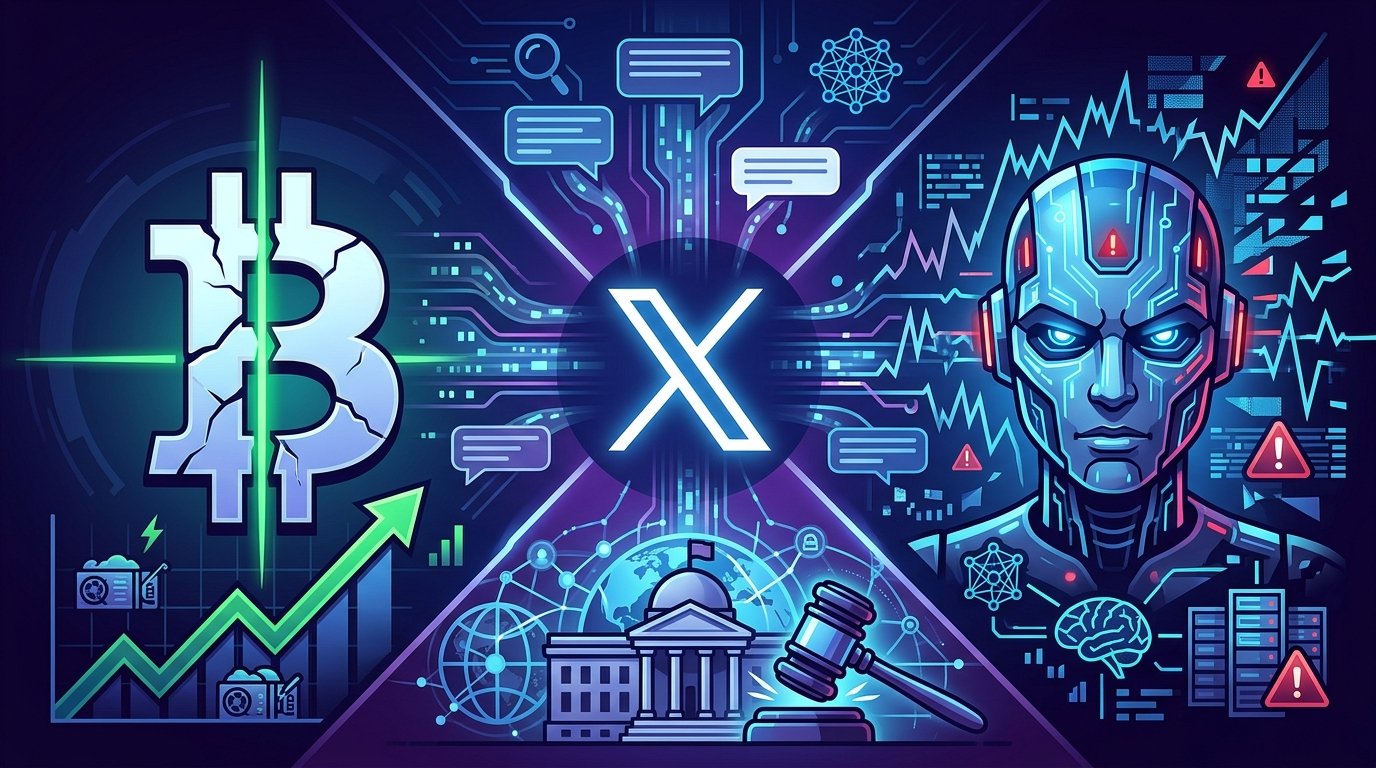
    The Crypto X feed has become the most powerful real-time information engine in digital finance. What was once a simple social media timeline is now a constantly updating market signal where traders, developers, regulators, and investors react instantly to news, speculation, and fear. The Crypto X feed no longer just reflects conversations—it actively shapes market direction, liquidity flows, and investor sentiment across global cryptocurrency markets.

    From sudden policy announcements to Bitcoin halving discussions and rising concerns about artificial intelligence, the Crypto X feed functions like a live trading terminal. Every post has the potential to move sentiment within seconds, creating a fast-moving ecosystem where attention itself has become a financial force.

    The Rise of X as Crypto’s Real-Time Trading Floor

    The transformation of the Crypto X feed into a financial nerve center has redefined how information spreads in crypto markets. Unlike traditional financial news cycles, which rely on structured reporting, the Crypto X feed delivers raw, unfiltered updates in real time.

    This speed has turned the Crypto X feed into a behavioral driver rather than just a communication platform. Traders no longer wait for confirmation from news agencies because the Crypto X feed often sets expectations before official announcements even arrive. As a result, price movements frequently begin with social reactions rather than fundamentals.

    The rise of crypto social sentiment analysis, real-time trading psychology, and digital asset narratives has reinforced the importance of the Crypto X feed in modern investing strategies.

    Policy Shocks and the Crypto X Feed Reaction Loop

    Regulatory News Spreads First on Crypto X Feed

    Government regulation is one of the strongest forces shaping the Crypto X feed. Whether it is taxation changes, exchange compliance updates, or central bank statements, the Crypto X feed reacts instantly.

    Traders interpret every policy signal through posts shared across the Crypto X feed, often before full details are available. This creates a reaction loop where speculation drives volatility even before facts are confirmed.

    As discussions around crypto regulation, blockchain compliance, and digital asset governance intensify, the Crypto X feed has become the first place where market expectations are formed.

    Political Influence Amplified by Crypto X Feed

    Political discussions also gain momentum through the Crypto X feed, where policymakers and candidates directly address crypto communities. These statements often go viral within minutes, shaping expectations about future regulation and institutional adoption.

    Because the Crypto X feed merges political messaging with investor interpretation, it creates a hybrid space where policy and speculation interact continuously.

    Bitcoin Halving Narratives on Crypto X Feed

    Halving Cycles Dominate Crypto X Feed Discussions

    The Bitcoin halving remains one of the most discussed topics on the Crypto X feed. Every cycle brings renewed speculation about price increases, supply shocks, and historical patterns.

    On the Crypto X feed, users frequently share models, charts, and predictions comparing previous cycles with current market conditions. This continuous flow of content builds anticipation long before the actual halving event occurs.

    The Crypto X feed amplifies the psychological impact of scarcity narratives, reinforcing beliefs around Bitcoin price cycles, crypto supply reduction, and long-term bullish expectations.

    Influencers Shape Halving Sentiment on Crypto X Feed

    Influencers play a major role in shaping halving narratives on the Crypto X feed. Their predictions often go viral, influencing retail sentiment and increasing speculative trading activity.

    However, the Crypto X feed also amplifies unrealistic expectations. Bold forecasts spread quickly, creating emotional market cycles of excitement and correction.

    This makes the Crypto X feed both a source of insight and a driver of volatility during halving periods.

    AI Fear Enters the Crypto Conversation

    Artificial Intelligence and Market Anxiety

    Artificial intelligence has emerged as another dominant theme across crypto timelines. While some see AI as a revolutionary technology capable of improving blockchain efficiency and trading strategies, others fear it could destabilize markets, manipulate information, or replace human decision-making entirely.

    The rise of AI-generated content has created concerns about misinformation and market manipulation. Fake announcements, synthetic videos, and automated trading bots can spread confusion rapidly across social platforms. In an industry already vulnerable to speculation, AI adds another layer of uncertainty.

    Crypto traders now debate whether AI will strengthen decentralized systems or centralize power further among large technology companies. These discussions have become especially important as AI-focused crypto projects gain popularity and attract speculative investment.

    Terms like AI crypto trading, blockchain automation, and decentralized AI infrastructure frequently trend across crypto feeds as investors search for the next emerging opportunity.

    AI Tokens and Speculative Hype

    The overlap between AI and crypto has created a surge of interest in AI-related tokens. Projects promising decentralized machine learning, AI-powered analytics, and blockchain-based computing infrastructure often experience rapid price increases fueled largely by social media excitement.

    On X, these projects benefit from constant exposure as influencers promote narratives about the future convergence of blockchain and artificial intelligence. Investors rush into trending sectors hoping to capitalize on the next major technological breakthrough.

    At the same time, skepticism remains strong. Critics argue that many AI crypto projects rely more on marketing than real technological innovation. This divide creates ongoing debates that dominate market discussions and contribute to heightened volatility.

    The tension between innovation and speculation reflects the broader uncertainty surrounding AI’s long-term role within digital finance.

    The Psychology Behind Crypto’s Social Trading Culture
    Crypto’s X Feed Drives Policy, Halving and AI Panic

    Fear, Greed, and Viral Momentum

    Crypto markets are heavily influenced by psychology, and X amplifies emotional reactions more than any previous communication platform. Fear and greed spread rapidly because traders constantly consume emotionally charged content.

    Bullish predictions encourage optimism and risk-taking, while bearish commentary fuels panic selling. Viral posts often create herd behavior where investors follow trends rather than conducting independent analysis.

    This social dynamic explains why crypto markets sometimes react disproportionately to rumors or unconfirmed information. Traders fear missing opportunities, leading to impulsive decisions based on rapidly changing narratives.

    The emergence of social trading behavior, market psychology, and FOMO investing highlights how online discussions now directly influence financial outcomes.

    The Meme Economy and Narrative Investing

    Meme culture has become deeply connected to cryptocurrency investing. Coins and tokens frequently gain value not because of technical fundamentals but because of viral popularity and community engagement.

    X serves as the perfect environment for meme-driven investing because humor, emotional storytelling, and internet culture spread quickly. Communities rally around symbols, slogans, and shared narratives that create strong collective identities.

    This phenomenon demonstrates how crypto increasingly operates as both a financial system and a cultural movement. Investors are not simply buying assets; they are participating in online communities built around shared beliefs and speculative optimism.

    Institutional Investors Are Watching X Closely

    The influence of X is no longer limited to retail traders. Institutional investors, hedge funds, and venture capital firms now monitor social sentiment as part of their research process. Many firms use advanced analytics tools to track trending topics, influential accounts, and sentiment changes across the crypto ecosystem.

    This shift reflects the growing recognition that social narratives can significantly impact short-term market performance. Professional traders understand that sentiment often moves prices before fundamentals catch up.

    As institutional participation increases, the relationship between social media and market behavior becomes even more important. Real-time information flows influence trading algorithms, portfolio adjustments, and risk management strategies.

    The combination of institutional capital and retail-driven social momentum creates a uniquely volatile market structure unlike traditional finance.

    Misinformation and the Dangers of Instant Reactions

    While X provides speed and transparency, it also creates significant risks. False rumors, manipulated screenshots, and misleading interpretations frequently spread through crypto communities. Because markets react instantly, misinformation can trigger major price swings before facts are verified.

    Scammers exploit this environment by creating fake announcements or impersonating influential figures. Investors who react emotionally without verification often suffer substantial losses.

    The challenge for traders is distinguishing credible information from speculation and manipulation. This requires critical thinking, source verification, and awareness of how online narratives influence market behavior.

    As crypto adoption grows, the need for responsible communication and accurate reporting becomes increasingly important for maintaining trust within the ecosystem.

    Risks of Misinformation on Crypto X Feed

    While powerful, the Crypto X feed also spreads misinformation quickly. Fake news, manipulated screenshots, and misleading interpretations can trigger sudden market reactions.

    Because the Crypto X feed operates in real time, traders often act before verifying information, increasing financial risk.

    This makes critical thinking and verification essential when navigating the Crypto X feed environment.

    The Future of Crypto X Feed Ecosystem

    The future of the Crypto X feed will likely be shaped by AI integration, decentralized platforms, and improved content verification systems. However, its core role as a real-time sentiment engine is expected to remain unchanged.

    As cryptocurrency adoption grows, the Crypto X feed will continue to influence how markets react, how narratives form, and how investors make decisions in real time.

    Conclusion

    The Crypto X feed has evolved into a central force in modern cryptocurrency markets. It drives policy reactions, amplifies Bitcoin halving narratives, and fuels debates around artificial intelligence. More importantly, the Crypto X feed has transformed how investors interpret information, shifting decision-making from structured analysis to real-time sentiment tracking.

    In this environment, attention is power, and the Crypto X feed is the marketplace where that attention is constantly traded.

  • Tokenization and MiCA: Wojciech Kaszycki’s Insights

    Tokenization and MiCA: Wojciech Kaszycki’s Insights

    The digital asset industry is entering a transformative phase where innovation and regulation are finally beginning to move in the same direction. For years, blockchain companies, crypto investors, and fintech innovators operated in a fragmented legal landscape, especially in Europe. The absence of a unified regulatory framework created uncertainty around digital assets, token issuance, and cross-border operations. However, the introduction of the Markets in Crypto-Assets regulation, widely known as MiCA, is changing that dynamic dramatically.

    At the center of this evolution lies tokenization, a concept that has rapidly become one of the most important developments in blockchain technology. Tokenization enables physical and digital assets to be represented on-chain, unlocking new opportunities for liquidity, accessibility, transparency, and operational efficiency. From real estate and private equity to commodities and intellectual property, tokenized assets are reshaping how ownership and investment function in the digital economy.

    Industry leaders and blockchain experts increasingly believe that MiCA could become the catalyst that accelerates institutional adoption of tokenized assets across Europe. Among those voices is Wojciech Kaszycki, whose observations on regulation, blockchain infrastructure, and financial innovation offer valuable insight into where the industry is heading. His perspective highlights how regulatory clarity can empower businesses rather than restrict them, especially when innovation requires trust and compliance to scale globally.

    The relationship between MiCA regulation and tokenization is not merely technical. It represents a shift toward a more mature digital asset ecosystem where governments, enterprises, and investors can participate with greater confidence. As regulatory uncertainty decreases, tokenization platforms and blockchain startups gain stronger foundations for growth, partnerships, and mainstream adoption.

    This article explores how tokenization is being aided by MiCA, the significance of Wojciech Kaszycki’s insights, and why Europe could emerge as a global leader in compliant digital finance.

    Understanding Tokenization in the Digital Economy

    Tokenization refers to the process of converting rights to an asset into a blockchain-based digital token. These tokens can represent ownership, access rights, or economic interests tied to real-world or digital assets. Through blockchain technology, tokenization introduces efficiency, transparency, and programmability into traditional financial systems.

    The rise of asset tokenization is closely linked to the broader expansion of decentralized technologies. Traditional financial assets often involve complex intermediaries, lengthy settlement periods, and geographic limitations. Tokenization simplifies these processes by enabling peer-to-peer transferability and near-instant settlement capabilities.

    One of the most compelling advantages of tokenization is fractional ownership. High-value assets such as commercial real estate, fine art, or infrastructure projects can now be divided into smaller digital shares. This dramatically lowers entry barriers for investors and expands participation across global markets.

    Another critical factor driving tokenization is enhanced liquidity. Traditionally illiquid assets can become more tradable when represented as digital tokens on blockchain networks. Investors gain access to secondary markets, while asset owners benefit from broader capital opportunities.

    The integration of smart contracts further enhances the value proposition of tokenized assets. Smart contracts automate transactions, compliance procedures, dividend distributions, and ownership transfers. This reduces operational costs while increasing transparency and trust.

    However, despite these advantages, tokenization faced a major obstacle for years: regulatory uncertainty. Without clear legal frameworks, businesses struggled to launch compliant tokenized products, especially within highly regulated regions like the European Union. This is precisely where MiCA enters the picture.

    What Is MiCA and Why Does It Matter?

    The Markets in Crypto-Assets Regulation (MiCA) is the European Union’s landmark framework designed to regulate crypto-assets and related services across member states. MiCA establishes standardized rules for crypto issuers, service providers, and digital asset operators throughout the EU.

    Unlike fragmented national regulations, MiCA creates a harmonized legal environment that allows companies to operate more efficiently across Europe. This regulatory consistency is particularly important for tokenization projects that rely on scalability, investor trust, and cross-border accessibility.

    MiCA introduces several key areas of oversight, including transparency requirements, consumer protection, operational resilience, governance standards, and anti-market abuse measures. It also provides legal definitions for various categories of crypto-assets, helping businesses determine how their tokenized offerings fit within the regulatory structure.

    For tokenization platforms, MiCA reduces ambiguity surrounding compliance obligations. Clearer licensing pathways encourage innovation while helping legitimate companies distinguish themselves from unregulated or fraudulent actors.

    The importance of MiCA extends beyond Europe. Because the EU remains one of the world’s largest economic regions, its regulatory framework may influence global digital asset standards. Many blockchain companies outside Europe are already adapting their strategies to align with MiCA expectations in anticipation of broader international adoption.

    This regulatory development is particularly significant for institutional investors. Large financial institutions require legal certainty before allocating capital to blockchain-based products. MiCA creates a foundation where institutional participation in tokenized assets becomes far more realistic.

    Wojciech Kaszycki’s Perspective on Tokenization and Regulation

    Wojciech Kaszycki has emphasized the importance of combining innovation with regulatory structure. His perspective reflects a growing industry consensus that sustainable blockchain adoption requires more than technological capability alone. It also requires trust, legal clarity, and standardized compliance mechanisms.

    According to Kaszycki’s observations, tokenization has enormous potential to modernize financial systems, but the industry historically suffered from inconsistent regulation and market uncertainty. In many jurisdictions, companies faced unclear licensing rules, conflicting interpretations, and legal grey areas that slowed development.

    MiCA changes this equation by creating predictable operating conditions for blockchain businesses. Kaszycki’s insights suggest that regulation should not automatically be viewed as an obstacle to innovation. Instead, effective regulation can become a growth enabler that encourages broader participation from institutions, governments, and mainstream investors.

    His viewpoint aligns with the idea that tokenization is moving from speculative experimentation toward practical utility. The next phase of blockchain adoption will likely focus less on hype and more on infrastructure, interoperability, and compliant financial ecosystems.

    Kaszycki also highlights the importance of investor confidence. Tokenization platforms that operate under recognized regulatory frameworks may gain stronger credibility in global markets. This credibility becomes especially important as tokenized securities, stablecoins, and digital investment products attract institutional attention.

    Another important insight involves scalability. Without harmonized rules, blockchain projects face costly compliance fragmentation across different jurisdictions. MiCA streamlines these processes, potentially allowing tokenization platforms to expand more efficiently across European markets.

    How MiCA Supports the Growth of Tokenized Assets

    The relationship between tokenization and MiCA is becoming increasingly interconnected. Regulatory clarity supports innovation by reducing legal risks and creating operational predictability for blockchain businesses.

    One of MiCA’s biggest contributions is the establishment of standardized disclosure requirements. Investors can access clearer information regarding token issuers, project structures, and associated risks. This transparency improves market integrity and reduces information asymmetry.

    For tokenized asset issuers, MiCA creates clearer compliance expectations around governance, security measures, and operational procedures. This helps companies design products with regulatory considerations integrated from the beginning rather than added later as reactive measures.

    The framework also encourages greater participation from traditional financial institutions. Banks, asset managers, and fintech companies are more likely to engage with tokenization when legal standards are well-defined. Institutional involvement could dramatically accelerate the growth of tokenized markets over the next decade.

    MiCA also supports cross-border operations within the European Union. Previously, blockchain companies often faced inconsistent national requirements when expanding into multiple countries. Harmonized regulation simplifies expansion and reduces administrative burdens.

    This environment is particularly beneficial for startups and emerging blockchain firms. Instead of navigating dozens of separate regulatory frameworks, companies can focus more resources on innovation, product development, and market adoption.

    The introduction of MiCA may also encourage greater venture capital investment in compliant blockchain infrastructure. Investors generally prefer ecosystems with legal stability and transparent operational guidelines. As a result, tokenization projects operating under MiCA could attract stronger funding opportunities.

    The Institutionalization of Digital Assets

    One of the most important trends connected to MiCA and tokenization is the institutionalization of digital assets. For years, institutional investors remained cautious about entering the crypto market because of regulatory uncertainty, volatility, and reputational risks.

    MiCA changes the conversation by creating clearer operational standards. This does not eliminate all risks associated with digital assets, but it significantly improves the environment for institutional engagement.

    Tokenization is especially attractive to institutions because it can improve efficiency across financial operations. Settlement times can be reduced, administrative processes automated, and ownership structures digitized more effectively. These efficiencies create cost savings and operational advantages.

    Large-scale financial institutions are increasingly exploring tokenized bonds, tokenized equities, and blockchain-based settlement systems. Europe’s regulatory leadership through MiCA could accelerate these developments considerably.

    Kaszycki’s insights reflect this institutional transition. The blockchain industry is evolving from isolated crypto-native ecosystems toward integrated financial infrastructure that interacts with traditional capital markets.

    This shift also changes how blockchain companies position themselves. Instead of focusing solely on speculative crypto trading, many firms are now emphasizing compliance, enterprise partnerships, and real-world applications.

    Real Estate and Tokenization Under MiCA

    One of the most promising sectors for tokenization is real estate. Traditional real estate investment often involves high entry barriers, complex legal procedures, and limited liquidity. Tokenization offers solutions to many of these challenges.

    Through blockchain-based fractional ownership, investors can gain exposure to property assets without purchasing entire buildings or large equity stakes. This democratizes access to real estate investment opportunities.

    MiCA’s regulatory clarity could strengthen investor confidence in tokenized real estate platforms. Clearer legal standards reduce uncertainty around ownership rights, compliance obligations, and operational governance.

    Tokenized real estate also benefits from improved transparency. Blockchain records can provide immutable transaction histories, ownership verification, and automated contract execution. These capabilities streamline property transactions while reducing administrative inefficiencies.

    As European markets become more receptive to regulated digital assets, tokenized real estate platforms may experience accelerated adoption among both retail and institutional investors.

    Challenges That Still Exist in Tokenization
    Tokenization and MiCA Wojciech Kaszycki’s Insights

    Despite the optimism surrounding MiCA and tokenization, several challenges remain. Regulatory frameworks alone cannot solve every issue facing blockchain adoption.

    One ongoing concern involves interoperability between blockchain networks. Many tokenization ecosystems operate on separate infrastructures that may not communicate efficiently with one another. Achieving seamless interoperability remains a major industry objective.

    Cybersecurity is another critical issue. As tokenized assets gain value and mainstream attention, blockchain platforms become increasingly attractive targets for cyberattacks. Companies must invest heavily in security infrastructure and operational resilience.

    Education also remains an obstacle. Many investors and institutions still lack a deep understanding of tokenization, blockchain mechanics, and digital asset management. Broader adoption will require stronger educational initiatives and simplified user experiences.

    Liquidity fragmentation can also affect tokenized markets. While tokenization aims to improve liquidity, insufficient market participation or fragmented trading ecosystems may limit effectiveness in certain sectors.

    Kaszycki’s broader insights suggest that long-term success depends not only on regulation but also on infrastructure maturity, market trust, and technological evolution.

    Europe’s Potential Leadership in the Tokenized Economy

    Europe is positioning itself as a potential global leader in regulated digital finance. MiCA provides the EU with a strategic opportunity to establish international standards for compliant blockchain innovation.

    Many regions around the world continue to struggle with inconsistent crypto regulation. In contrast, Europe’s harmonized approach may attract blockchain startups, institutional investors, and fintech innovators seeking operational stability.

    The success of MiCA could influence how other jurisdictions approach digital asset regulation in the future. Countries seeking to balance innovation with consumer protection may view the EU model as a blueprint.

    Tokenization could become a core component of Europe’s digital economic strategy. By enabling secure, transparent, and regulated blockchain ecosystems, the EU may accelerate innovation across finance, supply chains, intellectual property, and investment markets.

    Kaszycki’s perspective reinforces the idea that regulation and innovation do not need to exist in opposition. When designed effectively, regulatory frameworks can create the trust necessary for emerging technologies to scale responsibly.

    The Future of Tokenization in a Regulated Market

    The future of tokenization appears increasingly connected to regulatory integration and institutional adoption. The era of operating outside legal frameworks is gradually giving way to a more structured and mature digital asset ecosystem.

    MiCA may serve as a foundation for broader blockchain innovation beyond cryptocurrencies alone. Tokenized securities, decentralized finance integrations, digital identity systems, and blockchain-based financial infrastructure could all benefit from regulatory clarity.

    The tokenization market is expected to expand significantly over the coming years as industries recognize the operational advantages of blockchain-based ownership systems. Real-world asset tokenization could reshape how investments, financing, and asset management function globally.

    Wojciech Kaszycki’s insights highlight a critical reality: technological innovation alone is insufficient for mainstream adoption. Sustainable growth requires trust, governance, compliance, and interoperability.

    As governments and enterprises increasingly collaborate with blockchain innovators, tokenization may transition from an emerging trend into a foundational component of the modern financial system.

    Conclusion

    Tokenization is rapidly evolving from a niche blockchain concept into a transformative force within global finance. The ability to digitize ownership, improve liquidity, and automate financial processes offers enormous opportunities across industries ranging from real estate to institutional investing.

    However, innovation without regulatory clarity often struggles to achieve mainstream adoption. This is why MiCA represents such a pivotal development for the European digital asset ecosystem. By introducing harmonized standards, investor protections, and operational guidance, MiCA creates a stronger foundation for compliant blockchain growth.

    The insights shared by Wojciech Kaszycki reflect a broader industry shift toward responsible innovation. Regulation is no longer viewed solely as a restriction but increasingly as an enabler of trust, scalability, and institutional participation.

    As Europe moves forward with MiCA implementation, tokenization could become one of the defining technologies of the next financial era. Companies that successfully combine blockchain innovation with regulatory compliance may lead the future of digital finance on a global scale.

  • USD/JPY Volatility Shakes Global Markets

    USD/JPY Volatility Shakes Global Markets

    The USD/JPY swings sharply as yen volatility adds pressure to global risk assets has become one of the most important narratives in global financial markets today. The USD/JPY swings sharply as yen volatility adds pressure to global risk assets because sudden movements in the Japanese yen are reshaping investor sentiment across forex, equities, bonds, and even cryptocurrencies. As the USD/JPY swings sharply as yen volatility adds pressure to global risk assets, traders are witnessing heightened uncertainty driven by shifting interest rate expectations and global liquidity concerns.

    In recent sessions, the USD/JPY swings sharply as yen volatility adds pressure to global risk assets, reflecting growing tension between US Federal Reserve policy and the Bank of Japan’s evolving stance. The USD/JPY swings sharply as yen volatility adds pressure to global risk assets not only signals forex instability but also acts as a warning indicator for broader financial stress. When the USD/JPY swings sharply as yen volatility adds pressure to global risk assets, investors tend to reassess exposure to high-risk positions and leveraged trades.

    This environment where the USD/JPY swings sharply as yen volatility adds pressure to global risk assets is particularly significant because the yen has long functioned as a funding currency for global carry trades. Now that the USD/JPY swings sharply as yen volatility adds pressure to global risk assets, those strategies are being tested, leading to volatility spillovers across international markets.

    Why the USD/JPY Pair Holds Global Importance

    The reason the USD/JPY swings sharply as yen volatility adds pressure to global risk assets lies in its deep connection to global liquidity and interest rate differentials. When the USD/JPY swings sharply as yen volatility adds pressure to global risk assets, it often reflects rapid changes in investor expectations about monetary policy in both Japan and the United States.

    The USD/JPY swings sharply as yen volatility adds pressure to global risk assets because Japan has historically maintained ultra-low interest rates, making the yen a preferred funding currency. However, when the USD/JPY swings sharply as yen volatility adds pressure to global risk assets, it signals that this long-standing stability may be weakening. Investors interpret the USD/JPY swings sharply as yen volatility adds pressure to global risk assets as a sign that global leverage conditions are becoming unstable.

    As the USD/JPY swings sharply as yen volatility adds pressure to global risk assets, capital flows shift quickly between safe-haven and risk assets. This behavior reinforces the idea that the USD/JPY swings sharply as yen volatility adds pressure to global risk assets is not just a forex story but a global financial signal.

    The Role of the Bank of Japan in Yen Volatility

    The Bank of Japan (BOJ) plays a critical role in why the USD/JPY swings sharply as yen volatility adds pressure to global risk assets. For years, the BOJ has maintained loose monetary policy, including yield curve control, which kept Japanese bond yields extremely low. This environment contributed to the situation where the USD/JPY swings sharply as yen volatility adds pressure to global risk assets due to widening interest rate gaps.

    Now, as speculation grows about potential policy tightening, the USD/JPY swings sharply as yen volatility adds pressure to global risk assets even more dramatically. Traders react instantly to any hint that the BOJ may adjust its stance. This is why the USD/JPY swings sharply as yen volatility adds pressure to global risk assets whenever central bank commentary changes.

    Market participants closely watch official BOJ communication via trusted sources such as
    Bank of Japan Official Site
    because any policy shift can amplify the effect of how the USD/JPY swings sharply as yen volatility adds pressure to global risk assets in global markets.

    Federal Reserve influence and USD/JPY swings sharply as yen volatility adds pressure to global risk assets

    Another major driver of why the USD/JPY swings sharply as yen volatility adds pressure to global risk assets is US monetary policy. The Federal Reserve’s interest rate decisions directly impact the dollar side of the equation. When US yields rise, the USD/JPY swings sharply as yen volatility adds pressure to global risk assets due to widening yield differentials.

    However, when expectations shift toward rate cuts, the USD/JPY swings sharply as yen volatility adds pressure to global risk assets in the opposite direction. This push-and-pull dynamic creates constant uncertainty. Investors analyzing Fed decisions through official updates at
    Federal Reserve System
    often adjust portfolios quickly, reinforcing how the USD/JPY swings sharply as yen volatility adds pressure to global risk assets across global markets.

    As long as Fed policy remains uncertain, the USD/JPY swings sharply as yen volatility adds pressure to global risk assets will remain a dominant macroeconomic theme influencing global capital flows.

    US Federal Reserve Policy and Dollar Strength

    The actions of the Federal Reserve remain one of the primary drivers behind USD/JPY fluctuations. Higher US interest rates generally strengthen the dollar because investors seek better returns in US assets. Over the past few years, aggressive Fed tightening helped push the USD/JPY pair to multi-decade highs.

    However, markets are now entering a more uncertain phase. Investors are debating whether the Federal Reserve will continue maintaining elevated interest rates or eventually begin cutting rates as economic growth slows. These shifting expectations are creating additional volatility in currency markets.

    When US Treasury yields rise sharply, the dollar often strengthens against the yen because yield differentials widen further. On the other hand, any signs of economic weakness in the United States can trigger sudden reversals as traders reduce bullish dollar positions.

    The combination of uncertain Federal Reserve policy and potential Bank of Japan adjustments creates a highly unstable environment for forex traders. This instability contributes directly to increased pressure on global risk assets because investors struggle to price future monetary conditions accurately.

    Safe-Haven Demand and Investor Psychology

    The Japanese yen has historically been viewed as a safe-haven currency during periods of financial stress. When global uncertainty rises, investors often buy yen as a defensive move. This behavior amplifies volatility because large institutional flows can rapidly shift market direction.

    Investor psychology plays a major role in current market conditions. Many traders remain highly leveraged after years of easy monetary policy and abundant liquidity. As volatility increases, fear spreads quickly across financial markets, causing rapid position unwinding.

    Sharp movements in USD/JPY often trigger algorithmic trading systems and stop-loss orders, accelerating market swings. In today’s highly interconnected financial system, even moderate changes in currency values can lead to substantial moves in equities, bonds, and commodities.

    Safe-haven demand has also been influenced by geopolitical risks, including tensions in Asia, energy market instability, and concerns about global economic growth. These factors increase demand for defensive assets and contribute to yen appreciation during turbulent periods.

    Impact on equities and USD/JPY swings sharply as yen volatility adds pressure to global risk assets

    Global stock markets are highly sensitive to the fact that the USD/JPY swings sharply as yen volatility adds pressure to global risk assets. When volatility increases, equity investors tend to reduce exposure to high-growth sectors, especially technology stocks. This is because the USD/JPY swings sharply as yen volatility adds pressure to global risk assets often signals tighter financial conditions.

    Japanese exporters are also affected when the USD/JPY swings sharply as yen volatility adds pressure to global risk assets, since currency fluctuations impact overseas earnings. As a result, Asian markets react quickly whenever the USD/JPY swings sharply as yen volatility adds pressure to global risk assets becomes more pronounced.

    USD/JPY movements can quickly influence trade balances, export competitiveness, and investor confidence throughout the region.

    Carry Trade Risks Return to the Spotlight
    USDJPY Volatility Shakes Global Markets

    The recent surge in yen volatility has brought renewed attention to the risks associated with the carry trade strategy. For years, investors borrowed yen at extremely low interest rates and invested in higher-yielding assets such as US stocks, bonds, and emerging market securities.

    This strategy generated substantial profits during periods of stable currency conditions. However, it also created hidden vulnerabilities because many positions relied on continued yen weakness. When the yen strengthens suddenly, leveraged investors face mounting losses.

    The unwinding of carry trades can become extremely disruptive because it forces investors to liquidate positions rapidly. This process contributes to sharp declines in equities and speculative assets while increasing overall market volatility.

    Analysts now warn that further policy normalization from the Bank of Japan could trigger additional carry trade unwinding. If Japanese interest rates rise meaningfully, the entire structure supporting low-cost global financing may begin to weaken.

    Such a shift would have profound implications for global liquidity conditions and investor behavior. Markets that benefited from years of cheap money could face sustained pressure as financing costs rise and leverage declines.

    Bond markets and USD/JPY swings sharply as yen volatility adds pressure to global risk assets

    Bond markets also react strongly when the USD/JPY swings sharply as yen volatility adds pressure to global risk assets. US Treasury yields often fluctuate alongside forex movements, especially when investors adjust expectations about inflation and interest rates.

    As the USD/JPY swings sharply as yen volatility adds pressure to global risk assets, bond investors reassess duration risk and safe-haven allocations. This interconnected behavior shows why the USD/JPY swings sharply as yen volatility adds pressure to global risk assets has become a key macro indicator for fixed income markets.

    Cryptocurrency markets and USD/JPY swings sharply as yen volatility adds pressure to global risk assets

    Institutional investors are increasingly preparing for a prolonged period of elevated market volatility. Portfolio managers are adjusting strategies to account for the possibility of sharp currency swings and tighter financial conditions.

    Many funds are reducing leverage and increasing exposure to defensive assets such as gold, government bonds, and cash equivalents. Others are using hedging strategies to protect against sudden moves in the forex market.

    The current environment highlights the importance of risk management in global investing. Currency volatility can quickly spill over into other asset classes, creating broad-based market stress.

    Some analysts believe the era of ultra-low volatility and abundant liquidity may be ending. If central banks continue normalizing policy and global growth slows further, financial markets could experience more frequent periods of instability.

    What Traders Should Watch Next

    Several key developments will determine the future direction of USD/JPY and global risk assets. Central bank policy decisions remain the most important factor. Any indication that the Bank of Japan will tighten policy more aggressively could strengthen the yen sharply.

    At the same time, US economic data will influence expectations surrounding Federal Reserve interest rates. Inflation reports, employment numbers, and GDP growth figures all have the potential to move currency markets significantly.

    Geopolitical developments also remain important. Escalating tensions in major global regions could increase safe-haven demand for the yen and intensify market volatility.

    Traders are additionally watching bond markets closely. Rising yields and deteriorating liquidity conditions could amplify pressure on risk assets and contribute to broader financial instability.

    The coming months may prove critical for determining whether current market turbulence represents a temporary adjustment or the beginning of a more prolonged structural shift in global finance.

    Conclusion

    The ongoing reality that the USD/JPY swings sharply as yen volatility adds pressure to global risk assets demonstrates how interconnected modern financial markets have become. From central bank policy divergence to carry trade dynamics and safe-haven flows, the USD/JPY swings sharply as yen volatility adds pressure to global risk assets is now a central driver of global investor behavior.

    As long as monetary policy remains uncertain and volatility persists, the USD/JPY swings sharply as yen volatility adds pressure to global risk assets will continue shaping trends across equities, bonds, and cryptocurrencies. Investors must closely monitor these developments because the USD/JPY swings sharply as yen volatility adds pressure to global risk assets is likely to remain a defining macro theme in global finance.

  • Best Crypto to Buy This Week in May 2026

    Best Crypto to Buy This Week in May 2026

    The cryptocurrency market continues to evolve rapidly in 2026 as institutional investment, tokenization, decentralized finance, and AI-driven blockchain applications reshape the digital asset landscape. Investors are once again searching for the best crypto to buy this week as Bitcoin stabilizes above major resistance levels and altcoins begin attracting renewed attention. With new regulations emerging and large financial firms entering the blockchain sector, the crypto industry appears more mature and resilient than ever before.

    Finding the top crypto coins for May 2026 requires more than simply following hype. Smart investors are focusing on projects with strong ecosystems, real-world utility, active developer communities, and long-term growth potential. While meme coins continue to generate headlines, fundamentally strong cryptocurrencies remain the backbone of sustainable portfolios.

    This week, several major cryptocurrencies stand out because of increasing adoption, expanding use cases, and bullish technical momentum. From decentralized finance and smart contracts to cross-border payments and oracle networks, these projects are leading the next phase of blockchain innovation.

    In this guide, we explore the best crypto to buy this week, analyzing the top five coins that could deliver strong upside potential in May 2026 while also discussing why they remain important in the broader crypto market.

    Why Investors Are Searching for the Best Crypto to Buy This Week

    The crypto market in 2026 is significantly different from previous cycles. Institutional adoption has accelerated, governments are developing clearer regulatory frameworks, and blockchain technology is becoming deeply integrated into financial systems worldwide. Investors are no longer looking only for speculative gains; they want digital assets with long-term value.

    Many analysts believe the current market cycle is being driven by tokenized real-world assets, decentralized AI platforms, stablecoin infrastructure, and scalable blockchain ecosystems. As a result, investors are increasingly interested in cryptocurrencies that power these innovations.

    The phrase best crypto to buy this week has become one of the most searched crypto-related keywords because traders are actively seeking opportunities that combine momentum with strong fundamentals. Timing matters in cryptocurrency investing, especially during periods of increased volatility and institutional participation.

    While short-term price swings remain common, fundamentally strong cryptocurrencies continue attracting capital because they provide utility, liquidity, and ecosystem growth that weaker projects cannot sustain.

    Bitcoin Remains the King of Digital Assets
    Best Crypto to Buy This Week in May 2026

    Why Bitcoin Still Leads the Crypto Market

    No discussion about the best crypto to buy this week is complete without Bitcoin. Despite the emergence of thousands of cryptocurrencies, Bitcoin continues to dominate the market as the leading digital store of value.

    In 2026, Bitcoin benefits from multiple bullish catalysts. Spot Bitcoin ETFs continue seeing institutional inflows, sovereign wealth funds are gradually increasing exposure, and corporations are once again adding BTC to their balance sheets. The narrative around Bitcoin has shifted from speculative internet money to digital gold and a hedge against monetary instability.

    Bitcoin’s limited supply of 21 million coins remains one of its strongest features. As global demand rises while supply remains fixed, many analysts believe BTC still has significant upside potential during the current cycle.

    The network itself also continues improving. Layer-2 scaling solutions and Lightning Network adoption are helping Bitcoin expand beyond simple value storage into payment infrastructure and decentralized applications.

    Bitcoin’s Long-Term Potential in 2026

    Investors searching for the top crypto coins for May 2026 often prioritize safety and liquidity alongside growth potential. Bitcoin offers both. While smaller altcoins may deliver larger short-term gains, Bitcoin remains the most trusted cryptocurrency globally.

    Another reason Bitcoin remains one of the best cryptocurrencies to invest in is institutional confidence. Large asset managers, banks, and fintech firms continue building products around Bitcoin, increasing mainstream accessibility.

    As inflation concerns and global debt levels remain elevated, Bitcoin’s role as a scarce digital asset continues strengthening. Many market analysts now consider BTC an essential part of diversified investment portfolios.

    Ethereum Continues Dominating Smart Contracts

    Ethereum’s Expanding Ecosystem

    Ethereum remains one of the strongest contenders for the best crypto to buy this week because it powers the majority of decentralized finance, NFT platforms, tokenized assets, and Web3 applications.

    The Ethereum ecosystem has matured significantly by 2026. Improved scalability, lower transaction costs, and widespread Layer-2 adoption have solved many of the network’s previous limitations. Developers continue choosing Ethereum because of its massive ecosystem, security, and institutional credibility.

    The growth of tokenized real-world assets is also driving Ethereum adoption. Financial institutions increasingly use Ethereum infrastructure to tokenize stocks, bonds, real estate, and commodities.

    This growing institutional participation strengthens Ethereum’s long-term outlook and reinforces its status as one of the top crypto investments available today.

    Ethereum and the Future of Decentralized Finance

    DeFi remains one of crypto’s largest sectors, and Ethereum sits at its center. Lending protocols, decentralized exchanges, staking platforms, and liquidity markets continue generating billions in transaction volume.

    The rise of AI-integrated decentralized applications has also boosted Ethereum activity. Many blockchain AI projects rely on Ethereum smart contracts for transparency, automation, and decentralized governance.

    For investors looking for the best altcoins to buy in 2026, Ethereum offers a balance between stability and growth potential. While it may not deliver extreme speculative returns like smaller-cap tokens, its long-term position in the blockchain economy remains exceptionally strong.

    Solana Is Reclaiming Momentum

    Solana’s Speed and Scalability Drive Growth

    Solana has re-emerged as one of the best crypto to buy this week thanks to improving network reliability, growing developer activity, and rising institutional interest.

    Known for its high transaction throughput and low fees, Solana has become a major competitor to Ethereum in gaming, DeFi, NFTs, and consumer blockchain applications. The network’s scalability allows developers to create fast and efficient decentralized applications without excessive transaction costs.

    In 2026, Solana’s ecosystem has expanded substantially. New DeFi protocols, AI-integrated platforms, and payment solutions are contributing to rising user activity across the network.

    The blockchain’s growing adoption in mobile crypto applications has also strengthened its market position. Several fintech companies are now integrating Solana-based payment infrastructure because of its speed and cost efficiency.

    Why Solana Could Outperform in This Market Cycle

    Many analysts believe Solana may outperform several large-cap cryptocurrencies during bullish periods because of its strong retail appeal and expanding ecosystem.

    Investors searching for the top crypto coins for May 2026 are increasingly attracted to projects with real utility and strong developer growth. Solana continues meeting both criteria.

    Another major advantage is the network’s strong community support. Developer engagement, venture capital interest, and institutional experimentation all continue growing around the Solana ecosystem.

    If the broader crypto market maintains bullish momentum, Solana could remain one of the highest-performing major cryptocurrencies throughout 2026.

    XRP Benefits From Global Payment Expansion

    XRP’s Utility in Cross-Border Transactions

    XRP remains one of the most discussed digital assets in the cryptocurrency market. Its focus on fast and low-cost international payments continues attracting financial institutions and payment providers worldwide.

    As global finance becomes increasingly digitized, XRP’s utility in cross-border settlements strengthens. Ripple’s payment infrastructure allows transactions to settle within seconds while reducing the need for costly intermediaries.

    The regulatory environment around XRP has also improved considerably in recent years, increasing investor confidence. Many institutions that previously avoided the asset are now reconsidering its potential role in global payments infrastructure.

    This renewed optimism is one reason XRP appears frequently in discussions about the best crypto to buy this week.

    Institutional Adoption Could Fuel XRP Growth

    Ripple continues expanding partnerships with banks, payment firms, and fintech companies across multiple regions. As blockchain adoption grows within the traditional financial system, XRP may benefit significantly from increasing transactional demand.

    Another bullish factor is the growing interest in central bank digital currencies and tokenized settlement systems. XRP’s speed and liquidity capabilities position it well within this evolving landscape.

    For investors seeking cryptocurrencies with strong utility rather than purely speculative narratives, XRP remains one of the best cryptocurrencies to watch in 2026.

    Chainlink Powers the Blockchain Data Economy

    Why Chainlink Is Essential for Web3

    Chainlink has become one of the most important infrastructure projects in the blockchain industry. As decentralized applications require reliable external data, Chainlink’s oracle network plays a critical role in connecting blockchains with real-world information.

    The rise of tokenized assets, AI-driven smart contracts, and decentralized finance platforms has significantly increased demand for secure data feeds. Chainlink continues dominating this sector because of its reliability, scalability, and institutional partnerships.

    Many analysts consider LINK one of the best altcoins to buy now because oracle technology is essential for the next generation of blockchain applications.

    Chainlink and Real-World Asset Tokenization

    One of the biggest trends in 2026 is the tokenization of real-world assets. Banks, asset managers, and fintech firms are increasingly experimenting with blockchain-based settlement systems and digital securities.

    Chainlink’s technology helps these systems operate securely by providing accurate off-chain data to smart contracts. This utility gives LINK long-term relevance beyond speculative trading.

    As blockchain adoption expands into traditional finance, infrastructure projects like Chainlink may experience substantial growth. Investors searching for the best crypto to buy this week often prioritize utility-focused projects with sustainable demand drivers, making LINK an attractive option.

    Factors to Consider Before Buying Cryptocurrency

    Market Volatility Remains High

    Even the strongest cryptocurrencies experience significant price volatility. Investors should always consider risk management and avoid investing more than they can afford to lose.

    The crypto market reacts quickly to macroeconomic conditions, regulatory announcements, technological developments, and investor sentiment. While opportunities can be substantial, short-term corrections are common.

    Understanding market cycles and maintaining a long-term perspective can help investors avoid emotional decision-making during periods of volatility.

    Diversification Is Important in Crypto Investing

    Many experienced investors diversify across multiple cryptocurrencies instead of relying on a single asset. Combining established coins like Bitcoin and Ethereum with high-growth altcoins can help balance risk and reward.

    The best crypto portfolio in 2026 often includes a mix of store-of-value assets, smart contract platforms, infrastructure tokens, and utility-focused projects.

    Diversification can also help investors benefit from different market trends, including DeFi growth, AI integration, tokenization, and blockchain payments.

    How Institutional Adoption Is Changing Crypto

    Institutional involvement has become one of the defining themes of the 2026 crypto market. Large investment firms, banks, and technology companies are increasingly integrating blockchain infrastructure into their operations.

    This institutional participation provides liquidity, legitimacy, and long-term growth potential for the crypto industry. It also reduces some of the speculative volatility that dominated earlier market cycles.

    Bitcoin ETFs, tokenized securities, and blockchain-based settlement systems are helping cryptocurrencies become more integrated into mainstream finance. As adoption grows, many analysts believe fundamentally strong projects will continue outperforming weaker speculative tokens.

    This shift explains why investors searching for the best crypto to buy this week are focusing more on utility, scalability, and institutional relevance rather than short-term hype alone.

    Conclusion

    The cryptocurrency market in May 2026 presents exciting opportunities for investors looking to position themselves for long-term growth. While volatility remains a key characteristic of digital assets, several cryptocurrencies continue standing out because of their utility, adoption, and ecosystem strength.

    Bitcoin remains the dominant store of value and institutional favorite, while Ethereum continues leading decentralized finance and smart contract innovation. Solana offers scalability and growing developer momentum, XRP strengthens its role in global payments, and Chainlink powers critical blockchain infrastructure.

    Choosing the best crypto to buy this week ultimately depends on investment goals, risk tolerance, and market outlook. However, these five cryptocurrencies continue demonstrating strong fundamentals that could support future growth as blockchain adoption expands globally.

    Investors should always conduct independent research, monitor market trends carefully, and maintain diversified portfolios when entering the cryptocurrency market. As the digital asset industry evolves, projects with real-world utility and strong ecosystems are likely to remain the biggest long-term winners.

  • Can SOL Reach $200 After Coinbase Lending Boost?

    Can SOL Reach $200 After Coinbase Lending Boost?

    The cryptocurrency market is once again turning its attention toward Solana (SOL) after Coinbase expanded its crypto-backed lending services to include up to $100,000 in SOL collateral lending. The move has reignited bullish sentiment around the Solana ecosystem, with traders and analysts now debating whether SOL can realistically reclaim or even surpass the critical $200 price level in the coming market cycle.

    Over the past year, Solana has evolved from being viewed as a high-speed alternative blockchain into one of the most active ecosystems in decentralized finance, NFT activity, stablecoin transfers, and institutional blockchain experimentation. The addition of larger SOL-backed lending options by Coinbase is being interpreted as another signal that major crypto platforms are becoming increasingly confident in Solana’s long-term utility and liquidity.

    Collateralized lending has become one of the most important sectors in digital finance because it allows investors to unlock liquidity without selling their crypto assets. By enabling users to borrow against SOL holdings, Coinbase is effectively increasing the asset’s financial utility while encouraging long-term holding behavior. This development could strengthen demand dynamics for SOL at a time when the broader altcoin market is already gaining momentum.

    As speculation builds around a possible Solana breakout, investors are closely watching whether growing institutional support, expanding DeFi usage, and improving market structure can push SOL toward the psychologically important $200 milestone.

    Coinbase Expands SOL Utility Through Collateral Lending

    The decision by Coinbase to support up to $100,000 in SOL collateral lending marks an important milestone for the Solana ecosystem. Traditionally, Bitcoin and Ethereum dominated crypto-backed lending services because of their deep liquidity and institutional acceptance. Expanding these capabilities to Solana reflects growing confidence in SOL as a mature digital asset.

    Crypto-backed lending works similarly to traditional secured loans. Users deposit cryptocurrency as collateral and receive fiat or stablecoin liquidity without selling their holdings. This process allows investors to maintain market exposure while accessing capital for trading, investing, or personal financial needs.

    For SOL holders, this new Coinbase feature significantly improves the token’s practical value. Instead of treating SOL solely as a speculative investment, users can now utilize it as a productive financial asset within broader crypto-finance strategies. Increased utility often contributes to stronger long-term demand because investors become less inclined to liquidate holdings during market volatility.

    The expansion also indicates that Coinbase sees sufficient market depth and stability in Solana to support larger collateral positions. Exchanges generally avoid offering substantial lending products for highly unstable or illiquid assets. By introducing $100,000 SOL collateral lending, Coinbase is signaling growing institutional comfort with Solana’s market structure.

    This development has fueled optimism among traders who believe enhanced financial utility could help drive sustained price appreciation for SOL over time.

    Why the $200 Price Level Matters for Solana

    The $200 level carries enormous psychological and technical significance for Solana. During previous bull market rallies, SOL emerged as one of the fastest-growing cryptocurrencies in the industry, reaching record highs driven by NFT adoption, DeFi expansion, and investor excitement around scalable blockchain infrastructure.

    Since then, market corrections and broader crypto downturns pushed SOL far below its peak levels. However, Solana has steadily rebuilt momentum through ecosystem development, network upgrades, and increasing institutional attention.

    Reclaiming the $200 price level would represent more than just a numerical milestone. It would symbolize renewed investor confidence in Solana’s long-term growth narrative and reinforce the blockchain’s status as one of the leading smart contract platforms competing alongside Ethereum.

    Technical analysts also view round-number resistance zones like $200 as major sentiment indicators. If SOL approaches and successfully breaks through this level, momentum traders and institutional investors could interpret it as confirmation of a stronger bullish trend.

    At the same time, reaching $200 would require sustained capital inflows, broader altcoin market strength, and continued ecosystem expansion. While the Coinbase lending announcement contributes positively to sentiment, multiple additional factors will influence whether Solana can maintain enough momentum for such a major rally.

    Institutional Interest in Solana Continues Growing

    One of the biggest reasons analysts remain optimistic about Solana’s future is the steady increase in institutional interest surrounding the network. Over the past year, several major financial firms, venture capital groups, and blockchain developers have shown renewed engagement with Solana-based applications and infrastructure.

    Institutional adoption matters because it often provides deeper liquidity, long-term investment stability, and broader market legitimacy. When large financial platforms integrate SOL into lending, custody, or trading services, it encourages more professional investors to view the asset as part of a diversified digital asset portfolio.

    Coinbase’s lending expansion could therefore serve as a catalyst for additional institutional activity. Financial products tied to SOL create stronger infrastructure around the token, making it easier for investors to manage exposure, hedge positions, and utilize Solana within broader decentralized finance strategies.

    The growing popularity of Solana-based stablecoin transactions has also contributed to institutional optimism. The network’s fast transaction speeds and relatively low fees make it attractive for payment applications, decentralized exchanges, and blockchain settlement systems.

    As more financial services integrate Solana support, the blockchain’s overall economic activity could continue rising, potentially strengthening demand for SOL itself.

    Solana’s Ecosystem Growth Supports Bullish Sentiment

    Another important factor supporting the possibility of SOL reaching $200 is the continued expansion of the Solana ecosystem. Blockchain networks derive long-term value not just from speculation, but from actual usage across decentralized applications, financial services, gaming, NFTs, and developer activity.

    Solana has experienced significant growth in decentralized finance protocols, meme coin trading activity, and on-chain transaction volume. The ecosystem’s ability to process high transaction throughput with relatively low costs remains one of its strongest competitive advantages.

    Developers continue launching applications on Solana because of its scalability and speed. Increased developer activity often leads to stronger user engagement, higher transaction volume, and greater network utility over time.

    The NFT sector has also played a role in keeping Solana relevant. Although the broader NFT market cooled after its peak hype cycle, Solana-based NFT communities remain highly active. This continued engagement helps sustain transaction activity and ecosystem visibility.

    Furthermore, the rise of mobile-focused crypto applications and payment integrations has positioned Solana as an attractive blockchain for consumer-oriented adoption. If ecosystem growth continues accelerating, investor confidence in SOL’s long-term value proposition could strengthen significantly.

    How Crypto Lending Impacts Token Prices

    Crypto-backed lending services can have a surprisingly powerful effect on market dynamics. When investors gain the ability to borrow against their holdings, they are less likely to sell assets during periods of market uncertainty.

    This reduced selling pressure can contribute to stronger price stability and potentially amplify bullish momentum during upward market trends. By allowing users to access liquidity without liquidating SOL, Coinbase’s lending product may encourage more long-term holding behavior.

    Collateral lending also increases the financial sophistication of an asset ecosystem. Tokens that support borrowing, staking, derivatives, and structured financial products often attract more institutional attention because they become integrated into broader financial strategies rather than functioning purely as speculative instruments.

    The introduction of larger SOL-backed loans may additionally improve liquidity conditions for professional traders and high-net-worth crypto investors. These participants often seek efficient ways to deploy capital while maintaining exposure to promising digital assets.

    If demand for SOL-backed loans grows steadily, it could indirectly support higher market valuations by increasing the token’s utility within decentralized and centralized financial systems.

    Risks That Could Prevent SOL From Reaching $200

    Despite growing optimism, several risks could prevent Solana from achieving a sustained rally toward $200. Cryptocurrency markets remain highly volatile, and even strong ecosystem developments do not guarantee immediate price appreciation.

    One major challenge is competition. Solana operates in an extremely crowded smart contract ecosystem alongside Ethereum, BNB, Avalanche, and other blockchain networks. Maintaining developer growth and user adoption requires continuous innovation.

    Regulatory uncertainty also remains a significant concern across the crypto industry. Governments worldwide continue debating how digital assets should be classified and regulated. Unexpected regulatory developments affecting exchanges, lending services, or decentralized finance platforms could negatively impact market sentiment.

    Macroeconomic conditions may also influence SOL’s trajectory. Interest rate policies, global liquidity conditions, and investor risk appetite all affect cryptocurrency markets. If broader financial markets experience instability, speculative assets like SOL could face increased selling pressure.

    Additionally, Solana’s history of network outages continues to generate caution among some investors. Although the blockchain has improved reliability considerably, critics still question whether the network can maintain stability during periods of extremely high activity.

    For SOL to successfully reach and sustain $200, the ecosystem must continue addressing these challenges while maintaining strong adoption momentum.

    Technical Momentum and Market Psychology
    Can SOL Reach $200 After Coinbase Lending Boost

    Market psychology plays a major role in cryptocurrency price movements, especially around highly visible milestones like $200. As bullish sentiment builds, traders often begin positioning themselves ahead of anticipated breakouts, which can accelerate momentum.

    If SOL approaches major resistance zones with strong trading volume and positive market conditions, fear of missing out could attract additional retail and institutional participation. Momentum-driven rallies are common in crypto markets, particularly when supported by positive news developments like expanded lending services.

    Technical analysts closely monitor support levels, moving averages, and liquidity zones to evaluate whether an asset has enough strength to continue climbing. If Solana maintains higher lows and strong buying pressure, bullish traders may increasingly target the $200 region as a realistic medium-term objective.

    However, psychological resistance works both ways. Major price milestones often trigger profit-taking from long-term holders. This can create volatility and temporary pullbacks even during broader uptrends.

    Ultimately, whether SOL reaches $200 will depend on a combination of technical strength, ecosystem growth, institutional adoption, and broader crypto market conditions.

    Could Coinbase’s Move Trigger Wider Exchange Adoption?

    Coinbase’s decision to expand SOL-backed lending may influence other exchanges and financial platforms to introduce similar services. Competition within the crypto industry often accelerates innovation as companies attempt to attract users through expanded financial products.

    If additional exchanges begin supporting larger SOL collateral lending programs, it could significantly increase the token’s financial integration across the digital asset ecosystem. Greater accessibility to lending, borrowing, and yield-generation services tends to improve market liquidity and investor participation.

    Wider adoption of SOL-backed financial products may also strengthen the perception of Solana as a mature institutional-grade blockchain asset. This shift could encourage hedge funds, family offices, and traditional financial firms to explore larger SOL exposure.

    The broader impact extends beyond lending itself. Financial infrastructure development often serves as a foundation for future products such as derivatives, structured investment vehicles, tokenized assets, and institutional trading services.

    As the crypto industry evolves, assets with stronger financial ecosystems are more likely to attract sustained long-term capital inflows.

    Conclusion

    The expansion of SOL collateral lending by Coinbase represents another important milestone for the Solana ecosystem and reinforces growing confidence in the blockchain’s long-term potential. By allowing users to borrow up to $100,000 against SOL holdings, Coinbase is increasing the token’s utility, improving financial accessibility, and encouraging broader investor participation.

    While the move alone may not guarantee a rally to $200, it contributes to a larger bullish narrative surrounding Solana. Institutional interest, ecosystem growth, rising DeFi activity, and expanding financial products are all strengthening SOL’s market position.

    At the same time, significant challenges remain. Competition, regulation, market volatility, and technical risks could all influence Solana’s future trajectory. Achieving the $200 milestone will require sustained adoption, positive market conditions, and continued ecosystem development.

    Still, the combination of growing institutional infrastructure and increasing real-world blockchain usage suggests that Solana remains one of the most closely watched assets in the cryptocurrency market. If momentum continues building, the possibility of SOL revisiting or surpassing $200 may become increasingly realistic in the coming market cycle.

  • MARA Holdings Shifts Bitcoin Strategy Toward AI

    MARA Holdings Shifts Bitcoin Strategy Toward AI

    The cryptocurrency mining industry is undergoing a major transformation, and one of the biggest developments comes from MARA Holdings. Known for being one of the largest publicly traded Bitcoin mining firms, the company has reportedly started redirecting capital away from Bitcoin accumulation and toward artificial intelligence infrastructure. This strategic shift signals a broader evolution happening across the digital asset and technology sectors, where AI computing demand is rapidly becoming as valuable as crypto mining operations.

    For years, Bitcoin miners focused almost entirely on expanding hash rate capacity, securing low-cost energy agreements, and building massive mining farms. However, changing market conditions, increasing competition, volatile cryptocurrency prices, and the explosive growth of artificial intelligence have forced many companies to reconsider their long-term strategies. MARA Holdings dumping bitcoin for AI infrastructure represents more than just a portfolio adjustment; it reflects a larger movement within the tech and blockchain ecosystem.

    The growing need for high-performance computing, AI data centers, machine learning infrastructure, and cloud computing resources has created new opportunities for companies that already possess large-scale energy-intensive facilities. Bitcoin miners are uniquely positioned to capitalize on this transition because they already operate advanced hardware environments, maintain energy partnerships, and understand how to manage large computing operations efficiently.

    As AI adoption accelerates worldwide, investors are closely watching whether crypto-focused firms can successfully diversify into artificial intelligence infrastructure. MARA Holdings appears determined to become one of the early leaders in this evolving market, and the decision could reshape both its financial future and the broader crypto mining industry.

    Why MARA Holdings Is Moving Beyond Bitcoin

    The decision by MARA Holdings to reduce its Bitcoin exposure and invest in AI infrastructure did not emerge overnight. Several economic and technological factors have been pushing mining companies toward diversification for years. Bitcoin mining remains profitable during bullish market cycles, but the industry is also highly vulnerable to price crashes, regulatory pressure, and rising energy costs.

    Mining companies experienced significant pressure following Bitcoin halving events, which reduced mining rewards and squeezed profit margins across the sector. At the same time, operational expenses continued rising due to higher electricity costs, equipment upgrades, and increased global mining competition. These challenges encouraged firms like MARA Holdings to search for more stable and scalable revenue sources.

    Artificial intelligence infrastructure offers an attractive alternative because demand for AI computing continues to grow at an extraordinary pace. Businesses worldwide are investing billions into machine learning models, AI cloud services, data processing systems, and advanced GPU-powered computing facilities. Unlike Bitcoin mining, which largely depends on cryptocurrency prices, AI infrastructure can generate recurring enterprise revenue through long-term service agreements and computing contracts.

    Another important factor behind MARA Holdings dumping bitcoin for AI infrastructure is investor sentiment. Financial markets have increasingly rewarded companies tied to artificial intelligence. AI-related firms have attracted enormous institutional interest, while traditional crypto mining companies have sometimes struggled to maintain investor confidence during bearish cycles. By entering the AI infrastructure market, MARA Holdings may be seeking stronger long-term valuation growth and reduced dependence on Bitcoin volatility.

    The Growing Connection Between Bitcoin Mining and AI Computing

    The relationship between crypto mining and AI infrastructure is becoming increasingly interconnected. Both industries rely heavily on high-powered computing systems, cooling technology, electricity management, and data center operations. Because of these similarities, many mining firms are discovering they can adapt existing facilities for AI-related workloads.

    Bitcoin mining primarily depends on ASIC hardware designed specifically for cryptographic calculations. AI computing, however, often requires GPUs and specialized processors capable of handling machine learning tasks, neural network training, and complex data analysis. Despite these hardware differences, the underlying infrastructure requirements remain similar.

    MARA Holdings already possesses extensive operational expertise in managing large-scale energy-intensive facilities. This gives the company a competitive advantage when transitioning toward AI infrastructure development. Instead of building entirely new systems from scratch, the company can potentially repurpose portions of its existing facilities to support high-performance computing services.

    The rise of generative AI has further accelerated this opportunity. Companies developing advanced language models, automation tools, robotics systems, and AI analytics platforms require enormous computing capacity. Data centers capable of handling these workloads are in extremely high demand, creating a profitable market for infrastructure providers.

    This shift also demonstrates how digital asset firms are evolving into broader technology infrastructure companies. The era when crypto miners focused solely on producing Bitcoin may gradually give way to hybrid business models combining blockchain operations with AI services, cloud hosting, and enterprise computing solutions.

    How AI Infrastructure Could Reshape MARA Holdings

    MARA Holdings dumping bitcoin for AI infrastructure could fundamentally change the company’s long-term business model. Traditionally, the company’s financial performance was closely tied to Bitcoin price movements. During bullish periods, mining revenues surged dramatically, but during downturns, profitability often weakened.

    AI infrastructure offers a different economic structure. Instead of depending entirely on cryptocurrency market conditions, MARA Holdings could generate more predictable cash flow through enterprise computing services. Companies seeking AI processing power often sign long-term agreements, which may provide greater revenue stability than Bitcoin mining alone.

    Another major advantage is scalability. Artificial intelligence demand is projected to grow for many years as industries integrate automation, machine learning, predictive analytics, and AI-powered applications into daily operations. This creates opportunities for infrastructure providers to expand continuously alongside the AI economy.

    The move may also improve the company’s reputation among institutional investors. Some traditional investors remain cautious about pure-play crypto businesses due to regulatory uncertainty and market volatility. However, AI infrastructure is viewed as a strategic growth industry with substantial long-term potential. By aligning itself with artificial intelligence, MARA Holdings could attract broader investment interest from technology-focused funds and institutional capital providers.

    The transition also highlights how technology sectors are converging. Blockchain, cloud computing, artificial intelligence, and data center infrastructure are no longer isolated industries. Companies capable of integrating expertise across multiple technological domains may gain a stronger competitive position in the coming decade.

    The Financial Risks Behind the Strategy

    Although the pivot toward AI infrastructure appears promising, MARA Holdings still faces considerable financial and operational risks. Building AI computing infrastructure requires enormous capital investment. Advanced GPUs, cooling systems, networking equipment, and modern data centers are extremely expensive to develop and maintain.

    Competition within the AI sector is also intense. Large technology companies already dominate much of the AI infrastructure market. Firms such as NVIDIA, Microsoft, and Amazon possess massive financial resources and established enterprise relationships. MARA Holdings will need to carve out a specialized niche to compete effectively.

    Additionally, reducing Bitcoin holdings could create opportunity costs if cryptocurrency prices continue rising. Bitcoin has historically experienced strong long-term appreciation, and many mining companies accumulated large reserves precisely to benefit from future price growth. Selling or reallocating Bitcoin assets too aggressively could expose MARA Holdings to criticism from crypto-focused investors if the market rallies significantly.

    There are also operational transition challenges. Running AI infrastructure differs from managing Bitcoin mining operations. AI clients demand reliable uptime, advanced technical support, cybersecurity protections, and scalable cloud integration. Successfully transitioning into this environment requires specialized expertise and significant operational adjustments.

    Despite these risks, MARA Holdings appears willing to accept short-term uncertainty in exchange for long-term diversification opportunities. The company’s leadership likely views AI infrastructure as a strategic necessity rather than simply an experimental side project.

    The Broader Trend of Crypto Miners Entering AI

    MARA Holdings is not the only crypto mining company exploring artificial intelligence infrastructure. Across the industry, several miners are evaluating ways to repurpose their energy resources and computing facilities for AI applications.

    This trend emerged partly because the AI boom created massive demand for data center capacity at the same time Bitcoin mining profitability became less predictable. Mining firms recognized that their existing facilities could potentially support AI workloads with the right hardware modifications.

    The overlap between mining infrastructure and AI data centers makes this transition economically attractive. Both industries require efficient cooling systems, stable power supplies, large-scale hardware deployment, and optimized facility management. Instead of abandoning existing mining infrastructure, companies can adapt portions of their operations to serve AI markets.

    Some analysts believe this convergence could create an entirely new category of hybrid technology firms. These businesses may simultaneously operate cryptocurrency mining services, AI cloud platforms, high-performance computing networks, and blockchain infrastructure solutions.

    Investor enthusiasm surrounding artificial intelligence has also accelerated this movement. AI-focused companies currently receive significantly higher market valuations than many crypto mining firms. By associating themselves with AI growth narratives, miners hope to improve shareholder confidence and attract additional capital investment.

    MARA Holdings dumping bitcoin for AI infrastructure may therefore represent the beginning of a broader industry transformation rather than an isolated corporate decision.

    Energy Infrastructure as a Competitive Advantage
    MARA Holdings Shifts Bitcoin Strategy Toward

    One of the strongest advantages MARA Holdings possesses is its experience with energy management. Both Bitcoin mining and AI computing consume enormous amounts of electricity, making energy efficiency a critical factor in profitability.

    Over the years, crypto mining companies have invested heavily in securing low-cost power agreements and optimizing energy consumption. These capabilities may become extremely valuable in the AI infrastructure market, where electricity demand continues rising rapidly.

    AI data centers require continuous computing power for machine learning training, data analysis, and cloud processing services. Companies capable of delivering reliable computing at competitive energy costs may gain a major advantage in attracting enterprise clients.

    MARA Holdings already understands how to operate large-scale computing environments under energy-intensive conditions. This operational experience could reduce some of the barriers involved in transitioning toward AI-focused infrastructure services.

    Sustainability concerns are also becoming increasingly important. Environmental criticism has long surrounded Bitcoin mining due to its electricity consumption. AI infrastructure faces similar scrutiny as global data center demand expands. Companies capable of integrating renewable energy sources and improving energy efficiency may achieve stronger regulatory positioning and investor support.

    By leveraging its energy expertise, MARA Holdings could potentially position itself as a next-generation computing infrastructure provider focused on both blockchain and artificial intelligence technologies.

    Market Reactions to MARA Holdings’ AI Pivot

    Financial markets have responded with significant interest to reports that MARA Holdings is reallocating resources toward AI infrastructure. Investors increasingly view artificial intelligence as one of the most transformative technological trends of the decade, and companies connected to AI development often experience heightened market attention.

    Some analysts believe the move demonstrates strategic foresight. They argue that diversifying revenue streams can help protect MARA Holdings from future crypto market downturns while opening access to rapidly expanding AI-related opportunities.

    Others remain cautious. Critics argue that Bitcoin mining companies may underestimate the complexity of competing in the AI infrastructure market. While the operational overlap exists, enterprise AI services require different customer relationships, software ecosystems, and technological capabilities.

    Crypto investors are also divided on the strategy. Some support diversification and view AI as a natural evolution for mining companies. Others worry that reducing Bitcoin exposure could weaken the company’s core identity and long-term crypto positioning.

    Regardless of differing opinions, one reality is clear: the market is paying close attention to how crypto miners adapt to the AI revolution. MARA Holdings dumping bitcoin for AI infrastructure has become one of the most closely watched strategic pivots within the digital asset sector.

    Could AI Become More Profitable Than Bitcoin Mining?

    An important question emerging from this transition is whether AI infrastructure could eventually generate higher profits than Bitcoin mining itself. While Bitcoin mining profitability fluctuates with cryptocurrency prices and mining difficulty levels, AI computing demand may offer more stable long-term growth.

    The global artificial intelligence industry is expected to expand dramatically over the next decade. Businesses across healthcare, finance, manufacturing, cybersecurity, entertainment, and logistics increasingly rely on AI-powered technologies. This creates sustained demand for computing infrastructure capable of supporting advanced machine learning systems.

    AI infrastructure providers can potentially earn recurring revenue through subscription services, enterprise contracts, cloud computing agreements, and dedicated processing resources. These revenue streams may prove more predictable than cryptocurrency mining income, which remains closely tied to market cycles.

    However, profitability depends heavily on execution. Building competitive AI infrastructure requires advanced technical capabilities, reliable service delivery, and substantial ongoing investment. Success is far from guaranteed.

    For MARA Holdings, the ideal outcome may not involve abandoning Bitcoin mining entirely. Instead, the company could pursue a hybrid strategy that combines digital asset operations with AI infrastructure services. Such diversification might allow the company to benefit from both cryptocurrency appreciation and artificial intelligence expansion simultaneously.

    The Future of MARA Holdings and the Crypto Industry

    The decision by MARA Holdings to shift resources toward AI infrastructure reflects a broader reality facing the crypto industry. Companies can no longer rely solely on Bitcoin mining growth to sustain long-term expansion. Diversification, innovation, and technological adaptability are becoming increasingly essential.

    Artificial intelligence represents one of the largest infrastructure opportunities in modern technology markets. By entering this space early, MARA Holdings hopes to establish itself as more than just a crypto mining company. The firm appears determined to become a diversified digital infrastructure provider capable of participating in multiple high-growth sectors.

    This transformation could influence the strategies of other mining firms as well. If MARA Holdings successfully builds profitable AI operations, competitors may accelerate similar transitions. The line between crypto infrastructure companies and AI computing providers may continue blurring in the years ahead.

    At the same time, Bitcoin mining is unlikely to disappear. Cryptocurrency remains a major global industry, and miners will continue playing a critical role in securing blockchain networks. Instead, the future may involve hybrid companies balancing blockchain operations with AI services, cloud computing, and advanced data center management.

    The coming years will determine whether MARA Holdings dumping bitcoin for AI infrastructure becomes a visionary strategic move or a risky deviation from its core business. Either way, the decision highlights how rapidly the technology landscape is evolving.

    Conclusion

    MARA Holdings’ decision to redirect resources from Bitcoin accumulation toward AI infrastructure marks a significant turning point for both the company and the broader crypto mining industry. The move reflects growing recognition that artificial intelligence is becoming one of the world’s most valuable technological sectors, with enormous demand for computing power and data center infrastructure.

    By leveraging its experience in energy management, large-scale computing operations, and infrastructure deployment, MARA Holdings hopes to position itself at the intersection of blockchain technology and artificial intelligence. While the strategy carries substantial risks, it also offers opportunities for diversification, long-term revenue stability, and expanded investor interest.

    The shift demonstrates how crypto companies are adapting to changing market realities. Bitcoin mining alone may no longer provide sufficient growth potential for publicly traded firms seeking long-term expansion. AI infrastructure, cloud computing, and enterprise technology services are emerging as critical new frontiers.

    Whether MARA Holdings ultimately succeeds will depend on execution, market conditions, and its ability to compete within the rapidly evolving AI ecosystem. However, one thing is certain: the convergence of cryptocurrency infrastructure and artificial intelligence is becoming one of the most important trends shaping the future of technology.

    FAQs

    Q.Why is MARA Holdings investing in AI infrastructure?

    MARA Holdings is investing in AI infrastructure to diversify revenue streams, reduce dependence on Bitcoin price volatility, and capitalize on growing global demand for artificial intelligence computing services.

    Q.Does this mean MARA Holdings is abandoning Bitcoin mining?

    No, the company is not necessarily abandoning Bitcoin mining entirely. Instead, it appears to be pursuing a broader strategy that combines crypto operations with AI infrastructure development.

    Q.Why are crypto miners interested in artificial intelligence?

    Crypto miners already operate large-scale computing facilities with advanced energy systems and cooling infrastructure. These capabilities can be adapted to support AI data centers and high-performance computing services.

    Q.What risks does MARA Holdings face with this strategy?

    The company faces risks including high infrastructure costs, strong competition from established AI companies, operational transition challenges, and potential opportunity costs if Bitcoin prices continue rising.

    Q.Could AI infrastructure become more profitable than Bitcoin mining?

    Potentially yes. AI infrastructure may provide more stable and recurring revenue through enterprise contracts and cloud services, while Bitcoin mining profitability often fluctuates with cryptocurrency market conditions.